


Selling your grandmother for one percent
The engine was demonstrated at the Paris Air Show. Sunand Sharma was in the crowd. His friend Art Adamson had invented something the aviation industry had been chasing for decades: a jet engine with two giant contra-rotating fans that promised a 4-5% improvement in specific fuel consumption. The industry had a saying about what one percent was worth.
“I would sell my grandmother to achieve a one percent improvement in specific fuel consumption.”
The airline industry rejected the engine.
“You know why they rejected it? Because the propellers were visible.”
Passengers saw propellers and thought: Old. Unsafe. The engine that could have saved the aviation industry hundreds of billions of dollars was demonstrated, validated, and shelved because it looked like something from another time.
“The clash between commercial and technical- that engine was created, it was demonstrated and yet, it never got launched.”
Sharma has spent fifty years watching this collision repeat itself. His entire career has been a negotiation across the gap between what is technically right and what people will accept in tires, in batteries, in jet engines, in locomotive factories in Bihar, in nuclear power plants in Rajasthan and Gujarat, in metro coaches that replaced steel with aluminum in Indian cities. And now, in the engineered composites that a company called Planet Material Labs is building in Haryana.
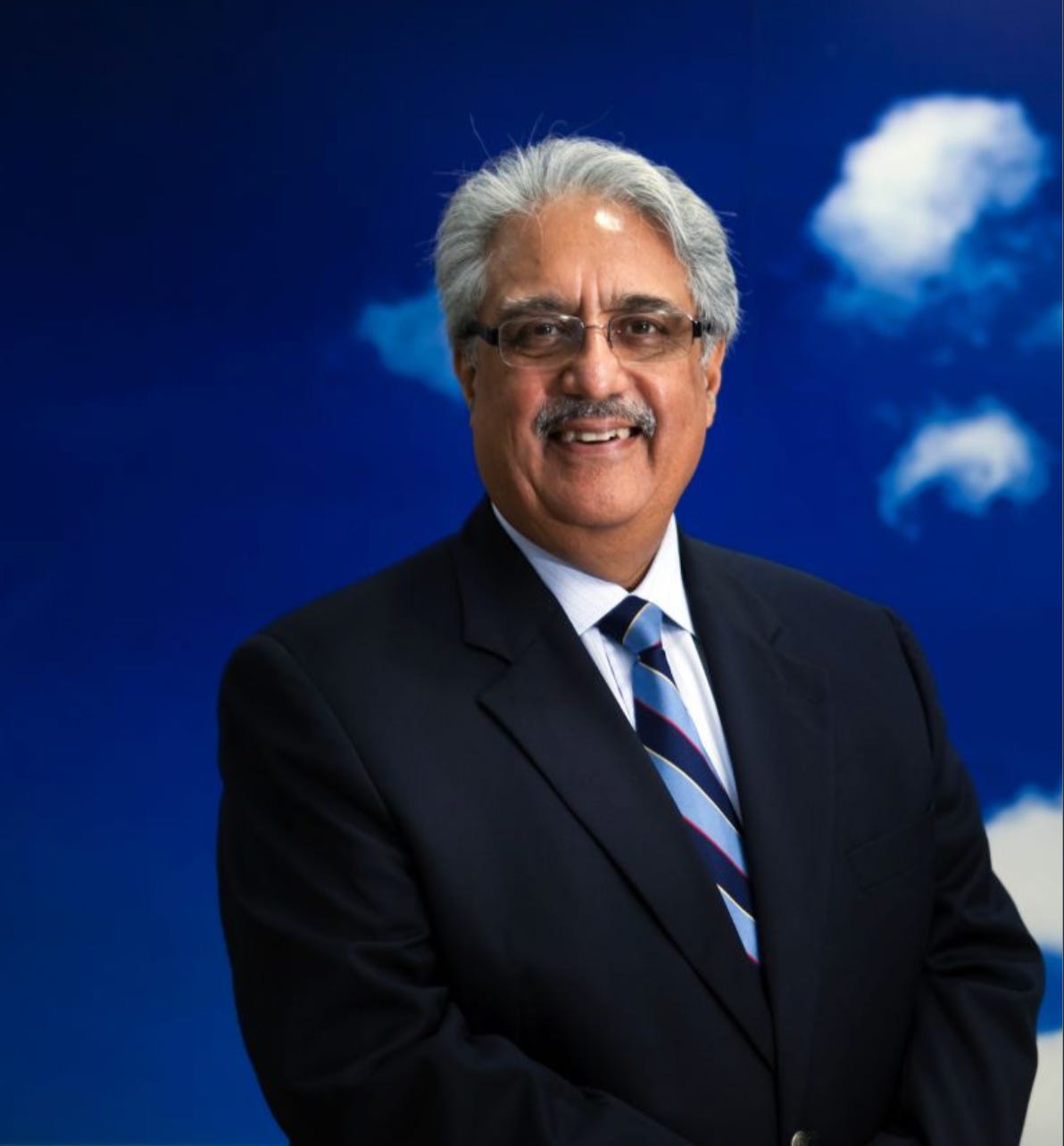
This is how the Sunand Sharma (popularly known as Sonny Sharma) story unfolds, at the intersection of materials, transport, and Indian industrial policy. He has led Goodyear, GE, and Alstom; shaping how India moves.
Oil, steel, rubber, and the American blueprint
In the early twentieth century, the United States had three things in abundance: oil, steel, and ambition, Sharma says. Build highways. Every American home was built of two things, according to him- a house and an automobile, everything else followed.
“What did the Americans teach the world? To build drawing rooms inside their cars. Giant sofas, giant seats. Oil price didn’t matter in those days. So you build huge comfortable lazy seats in the back and front and you put huge things in the car.”
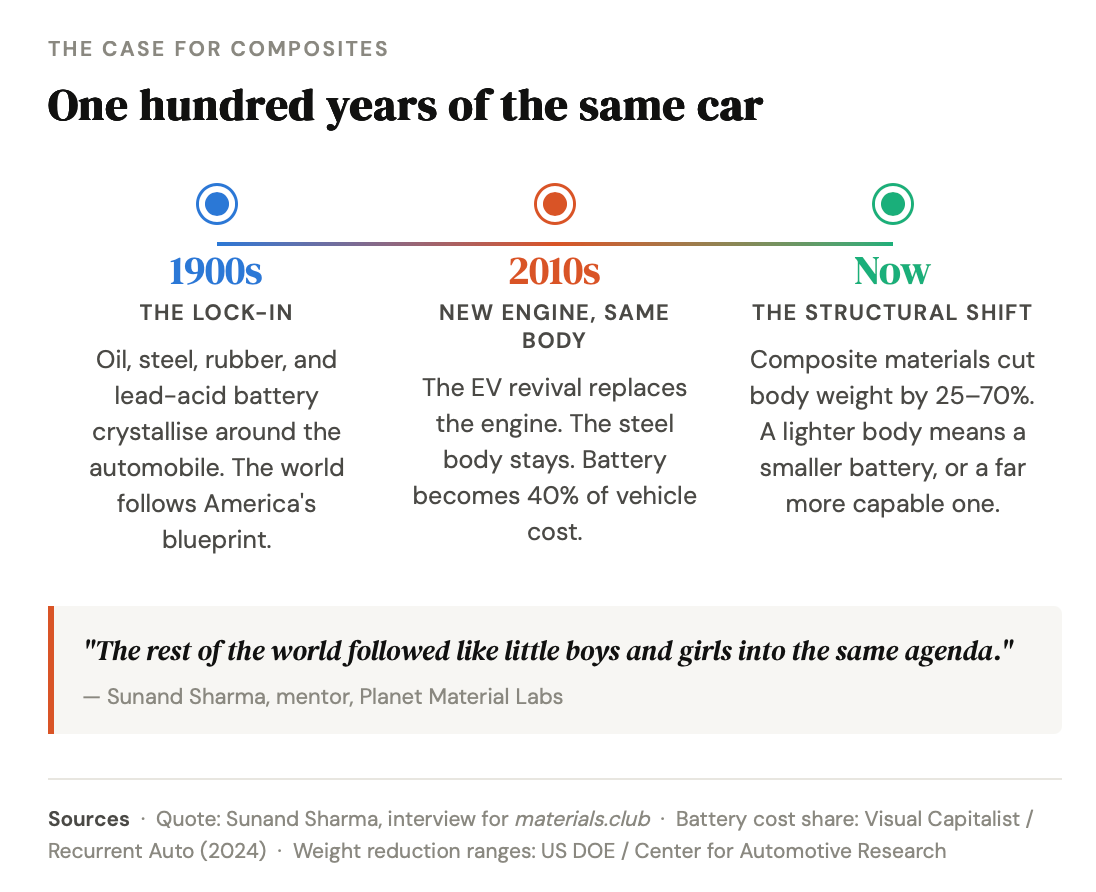
Four industries emerged in lockstep: steel for the body, oil for the engine, Goodyear and vulcanized rubber for the tires, lead-acid batteries for starting the whole thing. Those four defined the automobile for a century. Gas stations spread across the nation. And the rest of the world, as Sharma puts it, “followed like little boys and girls into the same agenda.”
The architecture of the modern car was an artifact of what America had too much of in 1900. It has barely changed since and is now a blueprint that Sharma believes in questioning.
Yet, one of the earliest automobiles was electric. The internal combustion engine came later.
“The founder of Ford Motor Company and his wife had a fight over it. She liked to drive an electric car and he didn’t. I’m talking about over a hundred years ago. The wife of Ford did not want to use a dirty oil engine and she preferred a battery-powered car.”
The electric vehicle is an old idea that lost to cheap oil, heavy industry, and national infrastructure policy. Now, more than a century later, the pendulum is swinging back. The battery in a modern electric vehicle accounts for roughly 40 percent of its cost but the body is still steel.
Now if you make the body substantially lighter, using advanced composite materials, two things can happen simultaneously. The vehicle needs less energy to move, so a smaller battery delivers the same range or the same battery delivers dramatically more. Either way, the economics change.
“Hyundai advertises that their battery will take you a distance 20% longer. Suzuki claims 300 kilometres; I will give you 400 for the same. And I will give you a lower price. Then it becomes a compelling argument. But you have to reach that goal first.”
The boy who hated authority
Sunand Sharma was born in 1949, two years after Indian independence, into an army family. His father served in the Corps of Engineers during the British era, through the Second World War, and later with the Survey of India. A transferable posting. Young Sunand studied in Ranchi, Mussoorie, Mount Abu, then college in Delhi at St. Stephen’s, and finally mechanical engineering at the Regional Engineering College in Warangal, Andhra Pradesh.

Warangal was an unusual choice. The college was new, with few students. The government was actively looking for central government officers to volunteer their children as enrollees and Sharma’s father obliged.
“Even as a young person, I knew that I hated any authority. I absolutely refused to call people sir. And I refused to take instructions. You had to negotiate with me to get my work from me. My next question was always: why?”
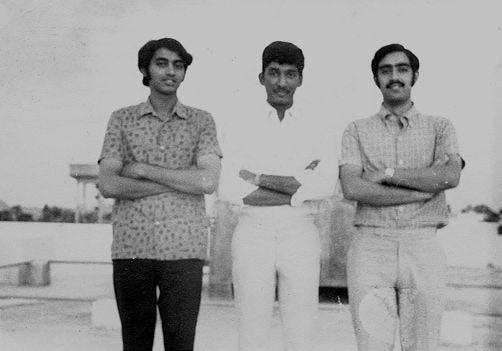
After engineering, he skipped the MBA, “a waste of time for me,” and went straight to work. Goodyear first, in tires, then batteries, then GE.
One decision early on shaped everything that followed: he would stay in Delhi.
“The centre of authority and power in our government-run country is Delhi. I wanted to be within one hour’s driving distance of power.”
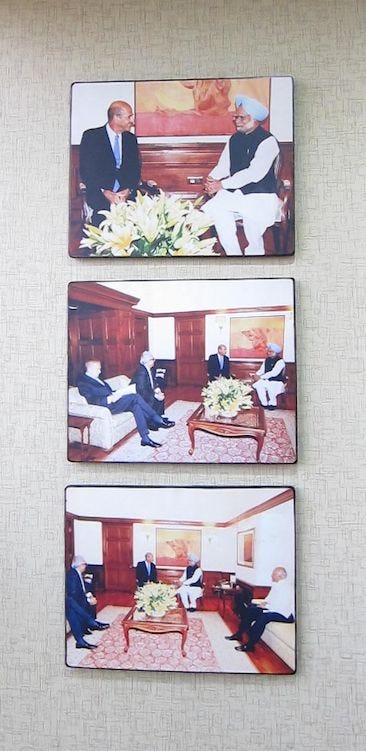
He turned down promotions, better-paying jobs, overseas postings. In the short term, it cost him. In the long run, it gave him something few industrialists in India have: direct relationships with every layer of the Indian government, from prime ministers to railway board chairmen, stretching back to Indira Gandhi.
“This prime minister, the previous prime minister, the prime minister before that, all the way back to Indira Gandhi, I more or less got to know each of them on a direct basis.”
Ultem and the dead weight of an airplane
At GE, Sharma’s team worked on a high-performance plastic called Ultem. If you have ever flown on a commercial aircraft, you have used it without knowing. The overhead storage bins are made of it. It is fire-resistant, lightweight and durable.
“In the old days, those bins used to be made of aluminum. That got replaced by Ultem. The target of every airplane designer, Boeing, Airbus, everybody, is the same: how can I reduce the dead weight and increase the carrying capacity?”
The arithmetic is simple. For every 70 kilos of dead weight removed from an aircraft, one additional revenue-generating passenger can board.
“A dead weight of a seat is paying me nothing. The dead weight of a storage bin is paying me nothing.”
Ultem became the standard for aircraft interiors across almost every commercial airline in the world. The same principle, reduce dead weight and increase payload, applies to every vehicle that moves people or cargo. Cars, trains, aircraft, ships. The physics does not change.
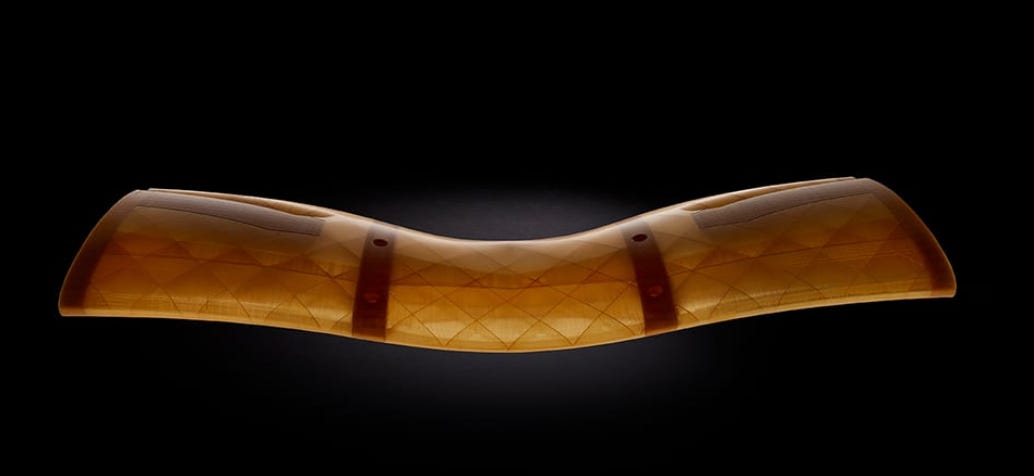
Over coffee in early 2021, Sharma posed a version of this question to Gagan Agrawal, a space engineer by training.
“Why do you need 1,500 to 2,000 kilograms of mass to move a 70-kilogram person from A to B?”
That question, and the decades of knowledge behind it, set Gagan on the path that became Planet Electric, and then Planet Material Labs.
A letter from the Prime Minister’s office
In 1983, Sharma received a communication from the office of Prime Minister Indira Gandhi, asking him to meet someone in the Ministry of Defence. He went.
The man across the table was an Additional Secretary. He opened with a statement Sharma has never forgotten:
“We know who you are. We know your company. I’m going to say something to you. You will never repeat it outside this room. Because if you repeat it outside this room, I will deny that I even met you.”
What followed was a conversation about India’s need for a delta-wing fighter jet, what would eventually become the light combat aircraft Tejas. India needed a jet engine for it and GE had one: the F404.
It took four years of negotiation. By then, Indira Gandhi had been assassinated and Rajiv Gandhi was prime minister. In approximately 1987, GE signed a deal with HAL and the Aeronautical Development Agency to supply the F404. As part of the technology transfer, GE offered India the entire know-how to manufacture the engine domestically.
Then came 1999. Vajpayee conducted nuclear tests. International sanctions followed. The jet engine program was disrupted. HAL and the Aeronautical Development Agency failed to absorb the technology offered to them over the preceding decade.
The Light Combat Aircraft finally entered service 43 years after that first conversation in the Ministry of Defence.
“We offered the entire technology. India had the full opportunity to take over the entire know-how to make a jet engine. As long back as 1987. And we still don’t make it.”
Twelve thousand horsepower in Bihar
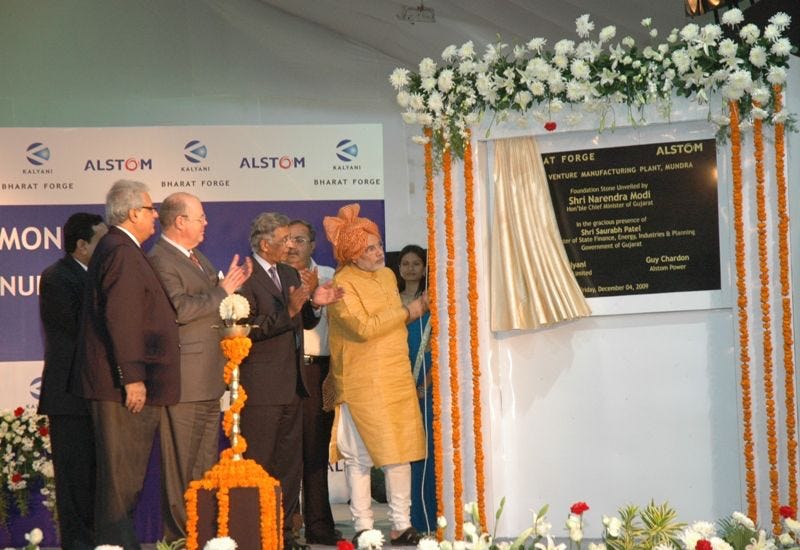
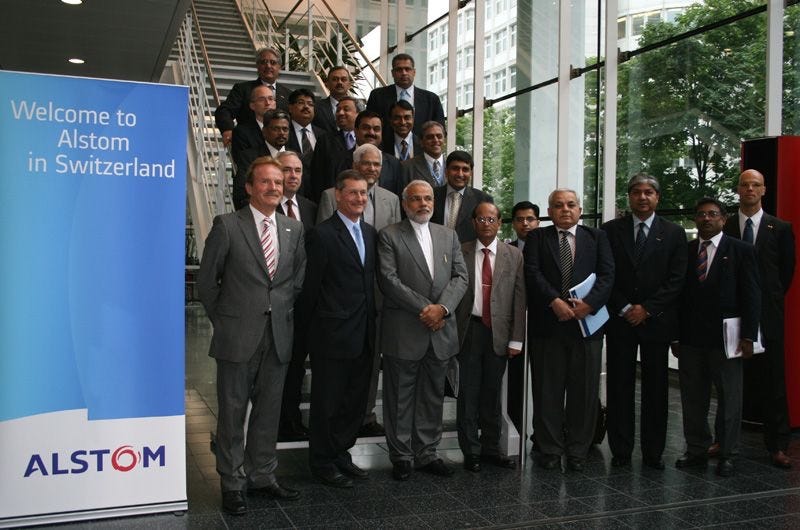
After GE, Sharma became Chairman of Alstom India. And at Alstom, he built things that move a country.
In 2006, he began working on a project to build India’s most powerful electric locomotive, a 12,000 horsepower machine, at a new factory in Madhepura, Bihar. The order was worth approximately Rs 50,000 crore. Today, these locomotives haul the double-decker cargo trains running on the Eastern and Western Dedicated Freight Corridors.
Getting there took nine years. Two prime ministers. Four railway ministers. Six railway board chairmen. The project stopped and started three times.
The pattern was always the same. Sharma would spend months building a relationship with a railway board chairman, explaining the technology, aligning on a plan. The chairman would be transferred. A new one would arrive, review his predecessor’s decisions, and cancel the project. A third would come along, examine the cancellation, and restart it from scratch.
“If I’m chairman of my company, I may be there for nine or ten years. So I’m still there to be accountable. But say I’m a government man. I promise you I will deliver this in five years. Next year, I’m transferred. The next person comes and says, ‘I don’t agree with the man who was on the chair earlier. I’m cancelling the idea.’ Then you try again. The third fellow comes : ‘Oh, but why did my predecessor cancel it? I think it is a good idea. Let’s start again.’ The whole thing starts again.”
Sharma estimates that India lost one lakh crore rupees in notional losses from the locomotive delays alone. He is clear about what drives it.
“After 75-plus years, we have not got rid of colonial administration. Our entire administrative structure is designed to serve the crown. All that happened on 15 August 1947, you remove the crown and replace it with the Lion and Ashok Chakra. Everything else remained the same.”
The locomotive was built and It was finally launched in 2015. Every time a photograph appears of one of those machines hauling freight across India, Sharma feels something that no bureaucratic frustration has been able to diminish.
“Every time somebody publishes a photograph of that locomotive, either a video or a photograph, I know from which brain that came.”
Four lakh crore, waiting
Around the same time, Sharma was overseeing Alstom’s delivery of turbines for a hydroelectric power project in Assam, India’s largest turbines, bigger than anything BHEL had built. Alstom manufactured them and delivered on time.
The Government of India could not build the dam.
For fifteen years, those turbines have been sitting in a warehouse in Assam. Sharma estimates the opportunity cost, the electricity not generated, at four lakh crore rupees.
“This is what should be discussed in Parliament. This is what is never discussed. It’s all going from your pocket and my pocket. Nobody writes about it, nobody talks about it, nobody points it out.”
Nuclear, too
In 2008, Prime Minister Manmohan Singh signed a nuclear deal with the United States, opening the door for foreign companies to supply nuclear power technology to India. In the seventeen years since, no foreign company has managed to navigate the Indian system to deliver on that promise.
No company except Alstom, under Sharma’s leadership.
He found a way for Alstom to supply equipment to Nuclear Power Corporation of India. The result: four nuclear power plants operating today in Rajasthan and Gujarat.
“I followed it from 2008 till 2016. Neither the politicians nor the ministers acknowledge it because it is a shame that a foreign company had to do it.”
Aluminum on the rails
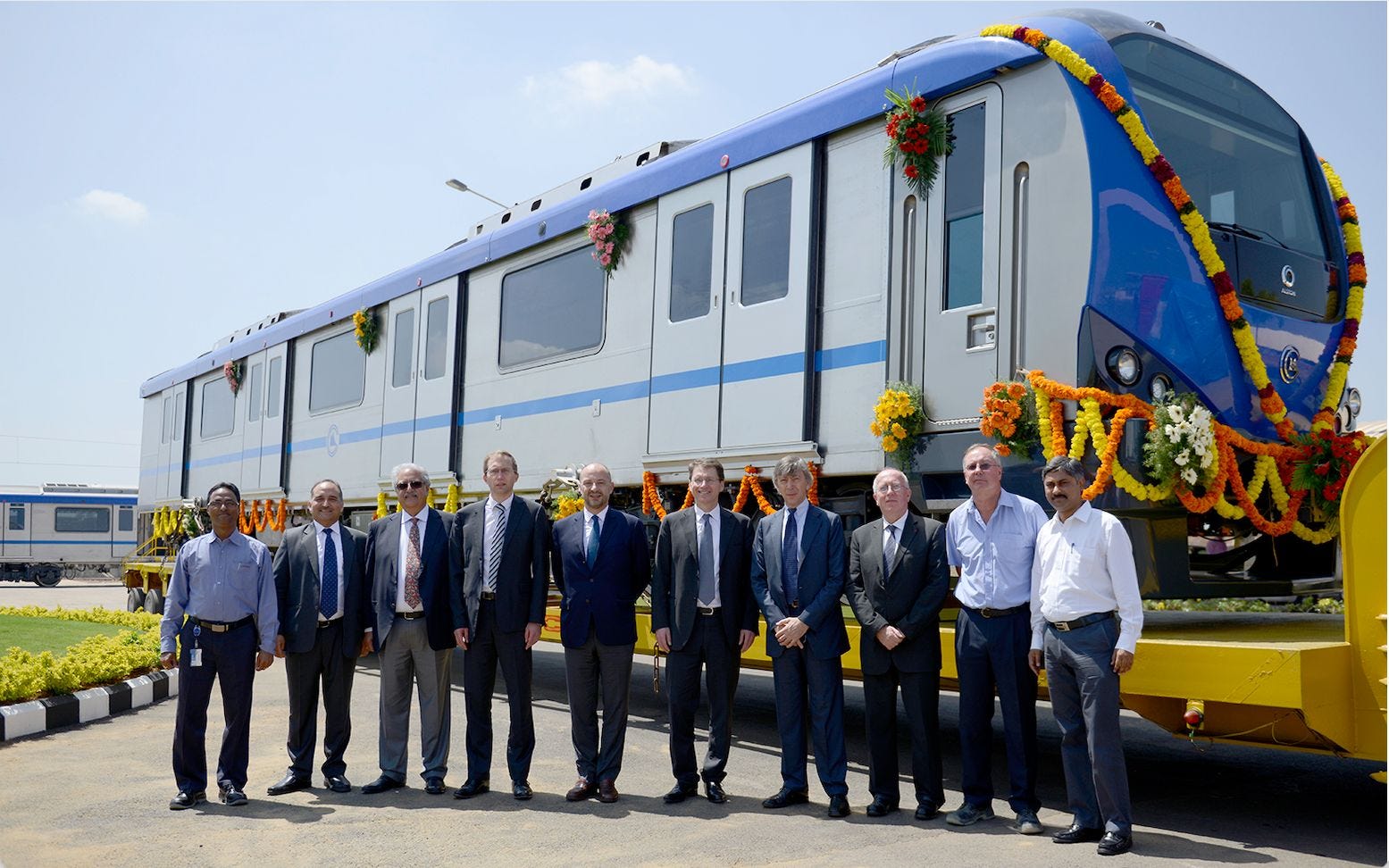
Around 2011, Sharma introduced another first: aluminum-bodied metro railway coaches. Until then, metro coaches in India were steel. He set up a factory in Andhra Pradesh to build aluminum coaches for Chennai Metro.
When the factory was being established, his team discovered that India had no expertise in welded aluminum structures.
“Nowhere where you have energy used for making a movement of anything from A to B, you need to reduce the dead weight. It’s a simple equation.”
Modern metro systems in Delhi, Bangalore, Mumbai, and Chennai now use aluminum-bodied coaches. The Kolkata Metro, running steel coaches from an earlier era, is essentially a relic.
On crutches
When asked about India’s technical capability, Sharma does not mince words.
“We are on crutches.”
He traces the problem to 1956, when Nehru introduced the Industrial Policy Resolution, an apparatus that controlled what technology was allowed to enter India. Indian industrialists became, in Sharma’s telling, traders.
“Their job became sitting in Delhi, outside the government office, begging for a license to produce something. It could be tires. It could be fabric, like Reliance Industries.”
The game was simple. Acquire a license. Go abroad. Ask GE or Goodyear for their technology. Pay a hundred million dollars upfront, then a royalty for ten or fifteen years. The Indian company would replicate what the foreign company had already been making. No value added.
“I did R&D. I did the technology. They added no value. They only captured their share of the bucket.”
India’s largest private sector companies, even today, have what Sharma calls “D” without the “R.”
“If you enter their building, they don’t have R&D. They have D- Development, not Research.”
Take Bharat Forge, one of India’s most respected industrial companies. The wheel, the operational equipment, the forging, all from Germany, Sweden, France, America. None of it Indian.
On top of this, the regulatory environment compounds everything. Indian commercial law contains over 26,000 clauses that can send a person to jail.
“Execute quickly, promptly. Otherwise, matters outside your control will overtake you asymmetrically.”
Cyber coolies
In 1996, Sharma was at a conference in Singapore. Present were Dr. Tidu Maini, former Pro-Rector of Imperial College, London, and former Prime Minister Lee Kuan Yew.
Dr. Maini said something that many in the audience found offensive: “All you’re doing in India is producing cyber coolies.”
When he explained, the logic was hard to argue with. Indian IT companies were obtaining contracts from global giants and staffing them with Indian engineers. No innovation. No original product. Labour arbitrage in a new form.
“My father was sent to East Africa to take labour from India, as coolies, to build the Kenyan Railway. All that you’re doing in Bangalore today is the same thing.”
The question hanging over Indian industry since: if Indians are so clever, why are the Sundar Pichais and Satya Nadellas running American companies rather than building Indian ones?
“They’re not the inventors. They’re the paid police.”
The point is structural. Innovation requires an ecosystem, the convergence of talent, capital, and institutional support in one place.
The island and the continent
At that same Singapore conference, Lee Kuan Yew said something Sharma has carried with him since:
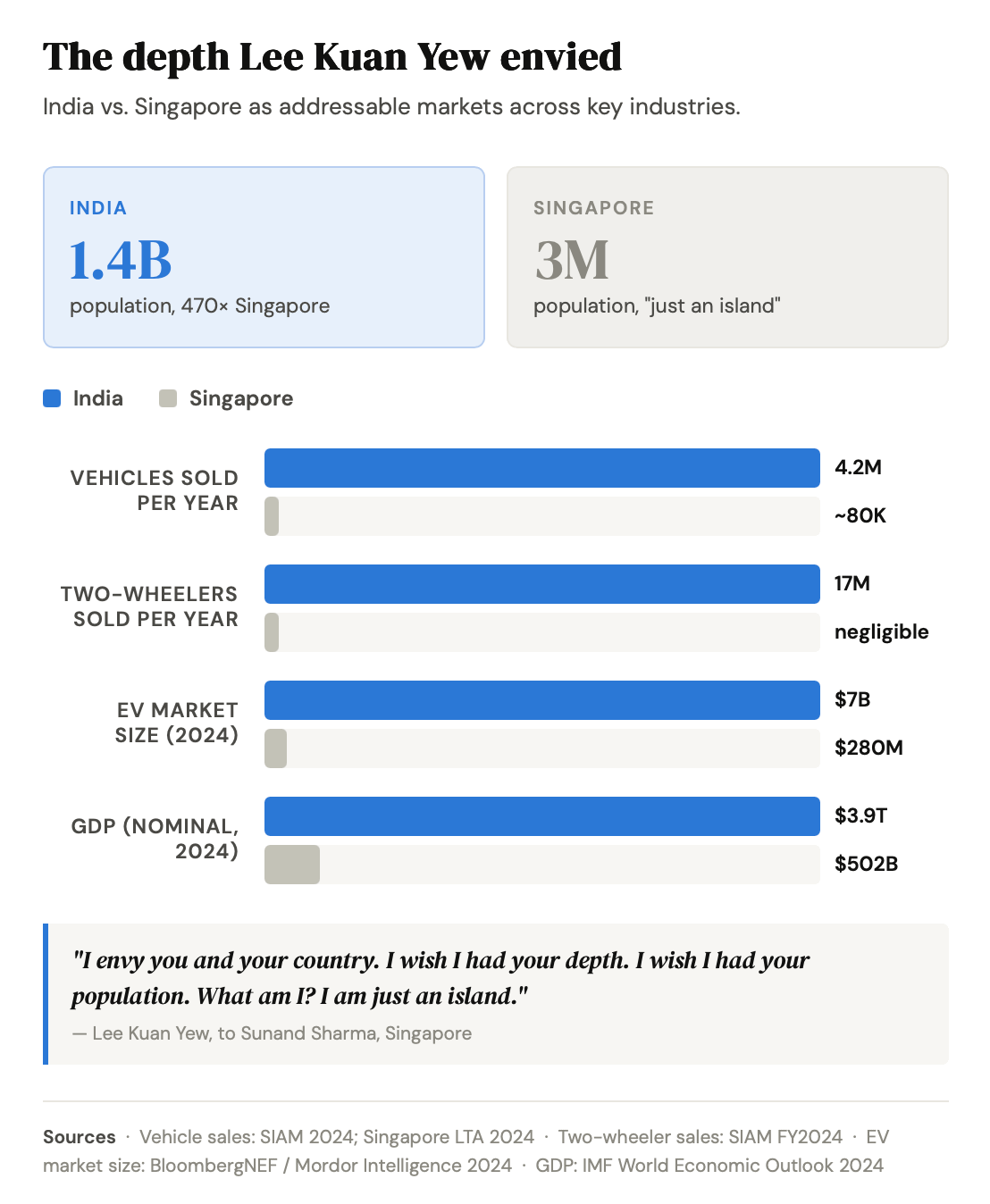
“I envy you and your country. I wish I had your depth. I wish I had your population. What am I? I am just an island with a small population. What is my market? Only three million. I would love to be in your shoes.”
This from the man who built Singapore from a fishing village into one of the world’s wealthiest nations.
India’s advantage is the scale of unmet demand.
“India is a country of continuous demand for everything. Because in India, continuously nothing has ever been done. So it’s up to you to wake up and decide: what do you want to wake up in the morning and do today?”
Within the country’s demographic structure, there are effectively a hundred countries in one, multiple markets, multiple price points, multiple levels of sophistication. At one end, Louis Vuitton and Hermès. At the other, a small manufacturer putting a single battery on two wheels and selling a scooter.
“You have a multiplicity of markets within the same geography.”
How America and China do it
Sharma spent enough time inside the American defence-industrial complex to understand how innovation happens at scale.
In the United States, R&D funding flows through two channels. The government funds research through agencies like DARPA. The private sector funds it through universities; as far back as the 1980s, corporate America put $200 million to $300 million into university programs.
Three companies are given funding to build a fighter jet. Each builds from first principles and a date is set. Then, there is a fly-off and the best design wins. That is how the F-15 and the F-35 came to be.
China took a different path, entirely government-funded but no less deliberate. After Deng Xiaoping became party chief, the Politburo handpicked 30 to 40 engineers and made them mayors of every major city.
“They empowered them fully and gave them a hotline to Beijing. Their task was to bring business to their city, develop the city and make it the most modern city.”
Today, that cohort is running China; Xi Jinping is an engineer. Three hundred and forty of the top members of the Politburo are engineers.
“The logic was simple. They looked at each other and said: at this phase of our country, we have to build the country and engineers are builders.”
Sharma recommends “Breakneck” by Dan Wang and “The Party” by Richard McGregor for anyone wanting to understand the Chinese model in depth.
What the Chinese don’t do
If there is one area where Indian talent has a genuine edge, Sharma found it not in a boardroom but on a factory floor.
At the Alstom metro coach factory, a welder noticed that two welds on the inside of a coach, behind the sliding doors and invisible to passengers, did not require the same level of finishing as the exterior welds. By eliminating the unnecessary step, he saved the company hundreds of thousands of dollars. Nobody told him to look for this.
“Innovation-wise on the shop floor, Indians are extraordinary. The Chinese? Zero. They follow rules to the hilt. If there is a mistake being made, they will repeat it a million times. They will not open their mouths.”
The problem in India is management, not labour.
“If you have a mix of people at the top who have international exposure but are working in India, identical locomotives made in China are more expensive than made in Madhepura, Bihar. Identical coaches made in Andhra Pradesh are cheaper than made in China. I have done it. But you need thousands of people like me across India.”
At Alstom, Sharma brought in Swiss, German, and French project managers to train Indian engineering teams. Within three years, those teams were delivering at the same quality and speed as their European counterparts. Alstom India began winning against Siemens, Hitachi, Mitsubishi, and GE.
What does it take to scale this? Sharma reduces it to two words: volume and visibility. An industrial company needs to predict how much work lies ahead and for how long. Without those, you cannot build the right factory or retain the right people.
“If you keep it uncertain for me, I cannot build the right factory. I cannot hire and retain the right people. That is where the government has to step in.”
Dhirubhai’s ten paisa
Sharma has known the Ambanis since 1975, when he first met Dhirubhai. He watched Mukesh and Anil grow up. He has known Gautam Adani since the early days, when Adani was running a trading operation from a small office in Navrangpura, Ahmedabad.
Asked what these industrialists got right, his answer:
“It’s not what they got right. It’s what they played right.”
He tells the story of a chamber of commerce meeting where North Indian businessmen were complaining bitterly about Dhirubhai, that he manipulated Delhi, that he played the system.
“I said to the group: all of you are complaining about Dhirubhai. But all of you had the same opportunity. They all went quiet.”
What was Dhirubhai doing differently? Working harder than everyone else and thinking at a different scale. In 1995, Dhirubhai was thinking through Reliance’s entry into telecommunications. His framing was simple:
“If every morning when I wake up, I can pick ten paisa from every Indian’s pocket, how much money do I have? Three hundred and fifty-four million people. Ten paisa per head. That is the only business I want to do.”
That vision became Jio.
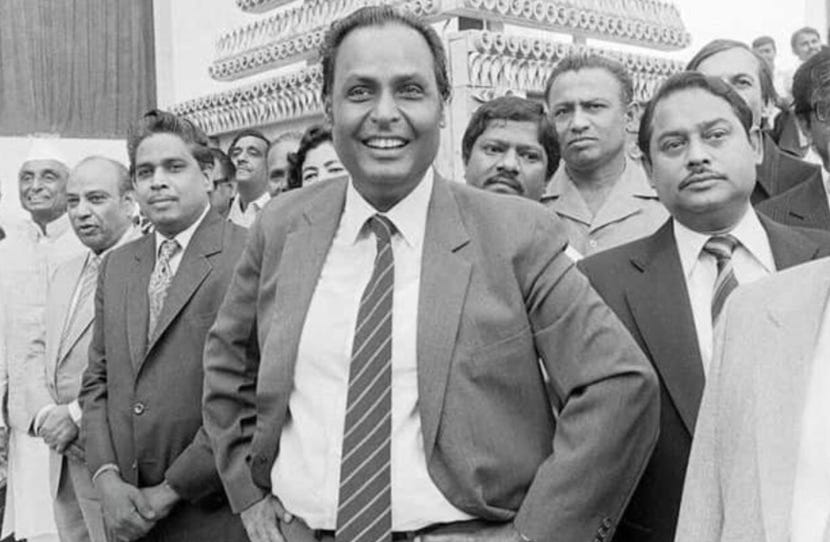
Mukesh Ambani, Sharma says, is a micromanager of the most extreme kind.
“You can wake him up and he will tell you which project in India under his company, what is the latest on it, where is it, what is the status, why is the delay. He has it on his fingertips. I have sat in meetings where he is on screen with 50 people, taking a review at one time. And he knows details of each one of them.”
And Gautam Adani? In 1990, over tea, Sharma asked him about his dream. The answer was that he wanted to be another bhai. A big industrialist in the mould of Dhirubhai.
“And he achieved it. In scale, size, everything, within the Indian method.”
The photocopy
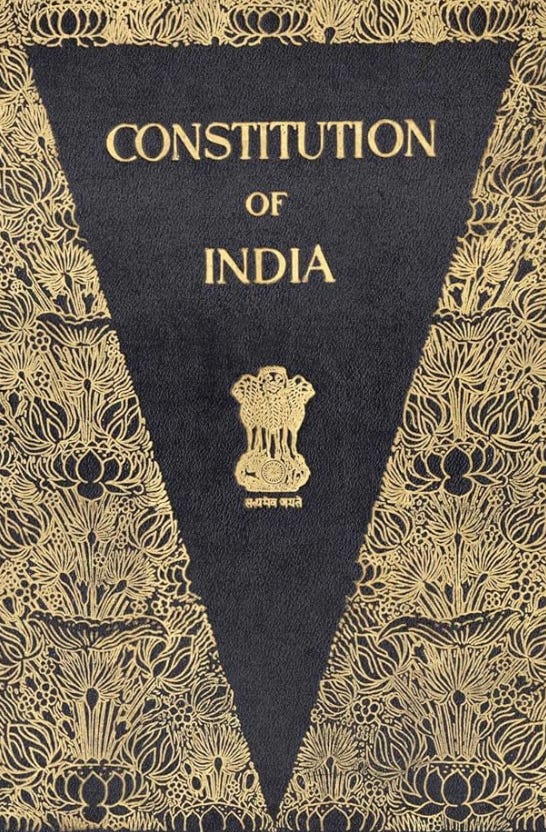
One of Sharma’s more provocative claims is that the Constitution of India was not written by Indians.
He points to the Government of India Act of 1935, an Act of the British Parliament that served as the constitution of British India in its final years. When India became independent, the Constituent Assembly needed a constitution fast.
“They had people sitting with Remington Rand typewriters in a building in New Delhi. Reading out from the India Act, 1935. Dictating from that. Replacing ‘British’ with ‘Indian’ and modifying odds and ends to fit an independent India.”
Sharma claims that 90 percent of the language of the Constitution of India is more or less identical to the 1935 Act, down to definitions of what constitutes an aerodrome, how telegraphs work, the structure of administration. Even some errors in the original Act were carried over.
Constitutional scholars have long noted the heavy influence of the Government of India Act, 1935 on the Indian Constitution.
The implication, for Sharma, is that India’s governance structures were designed by a colonial power to administer a subject population. Seventy-five years later, those structures remain largely intact.
“I am like a doctor who goes to the root cause of the disease. And unless that is modified, the body will still remain the same.”
The power of state
If there is one lesson Sharma wants to leave with the next generation of Indian entrepreneurs, it is this:
“There is no greater power than the power of state. If the Government of India wishes to do something in national interest, no industrialist, no individual, no private person has that power.”
The secret is alignment. You cannot build an industrial-scale company in India without bringing the government along. Not through corruption, he is emphatic about that, but through genuine persuasion.
“The ideas are born at a desk. It is a painstaking task to explain them to government counterparts. And if you are so lucky that for a short period, one year, eighteen months, the same people are sitting on the chair, you say to them: I think I have an idea that is transformative for India. I am willing to take all the risk on my side. These are the areas where I need your support, in policy, in financing, in access to testing facilities.”
Once that alignment clicks, the full machinery of the state comes into play: the concerned ministry, the finance system, the national laboratories, ISRO, the IITs, CSIR, the National Chemical Laboratory.
“Then it is a very fast-moving and a very pleasurable path from there onwards.”
This is the playbook he is helping Planet Material Labs follow. Prove the material, certify it. Start with cargo, where consumer perception is not a barrier and build the safety record. Align with the government at every step.
“Nobody is sending you an invitation. You’ll have to break down the doors. And you’ll have to break down the barriers.”
The dream
How long before advanced composite materials replace steel in Indian vehicles? Sharma’s answer is not the cautious twenty-year horizon most consultants would offer.
“Five to seven years. It needs to be proven. It needs to be accepted. And the agencies responsible for safety certification have to certify it. Once it makes complete logic, someone somewhere is waiting to be a first mover. After all, how did Tesla come about? Everybody said it won’t work.”
On the broader question of how long before India develops a genuine innovation ecosystem comparable to Silicon Valley, he is more sober.
“Two generations. Fifty to seventy years.”
It starts from home.
“Mummy and Daddy. The first thing they teach a classmate: I will slap you if you fail. Failure is taught as a damaging disease. If you fail, society discards you.”
Until that changes, the ecosystem will remain incomplete. But within that system, extraordinary things are possible. Sharma has proved it himself, repeatedly.
“I personally wish I was 40 years younger today.”
He pauses.
“Nothing is easy. Anything that is easy- something is wrong over there.”
If you want to discuss an opportunity with Planet Material Labs, please write to us at arsheeya.bajwa@planetmatlabs.com
Safe Harbor Statement: This article may contain forward-looking statements about Planet Material Labs and the broader materials industry. These statements are based on current expectations and assumptions and are subject to risks and uncertainties that could cause actual results to differ materially.
Methodology: This story is based on extensive interviews with Sunand Sharma, industry veteran and advisor to Planet Material Labs. This is NOT a paid article.