

When Mirik Gogri was four years old, his family took a trip to Orissa.
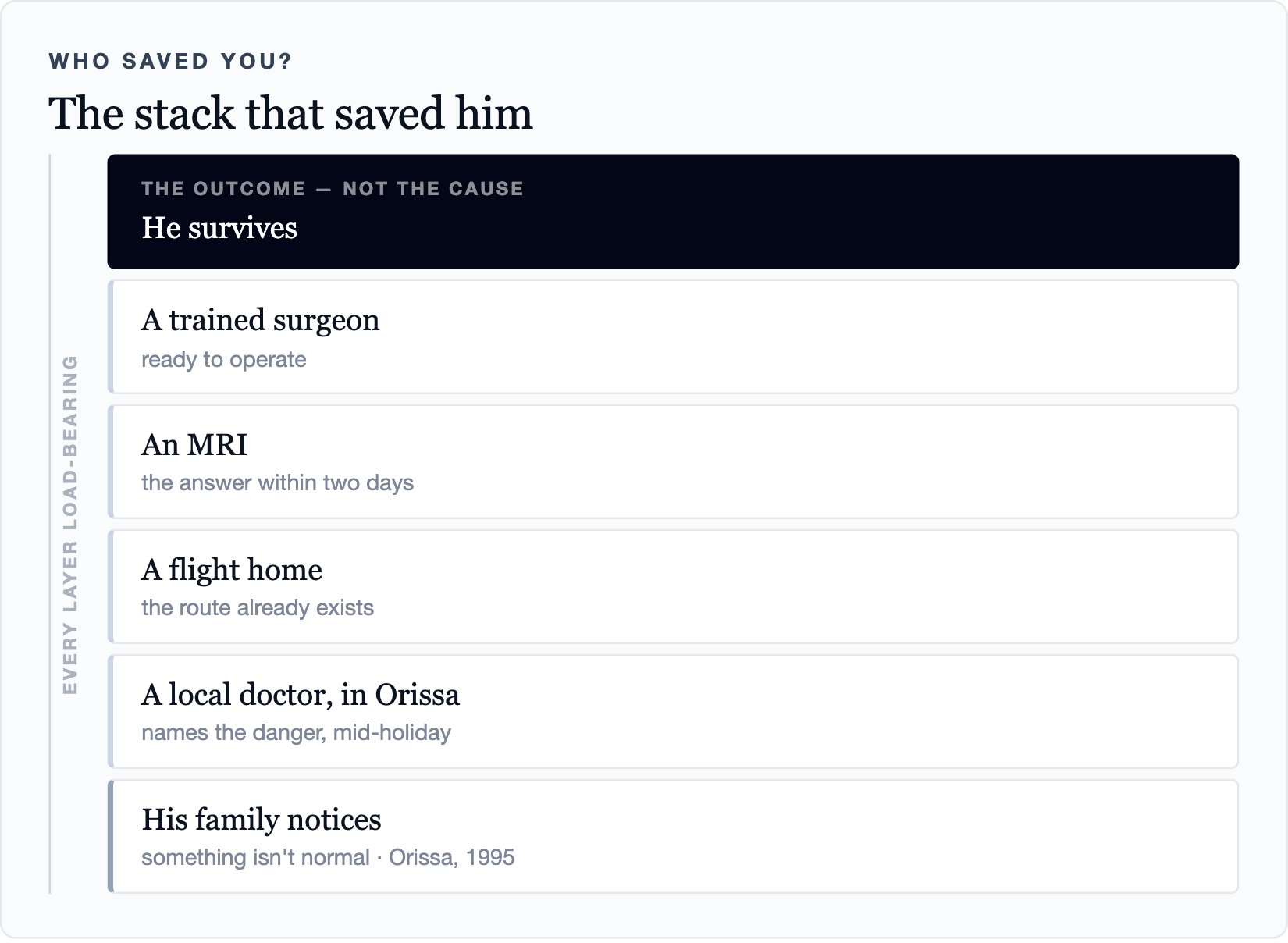
Somewhere on that trip, one of them understood that what was happening to the boy was not normal — so, in the middle of the holiday, they took him to a local doctor, and that doctor found a pressure building inside his skull.
Then a sudden flight home. An MRI. Within two days, the answer — a brain tumour — and a trained surgeon ready to operate. It is the kind of sequence nobody stops to count.
Mirik came out of it with a slightly weak left hand and, much later, a question that would organise his adult life.
Ask him who saved him and he refuses the easy answer.
“For me to have been saved — in India, you don’t survive a brain tumour unless so many things work together. I got identified on a trip in Orissa; that’s when someone noticed there was a pressure in the brain. So now there is a doctor somewhere who identified it. Then I suddenly had to take a flight — the flight exists. You come here, you do an MRI — everything exists. In two days you identify the tumour, a trained doctor is available, and then they do the whole thing.”
“So the question is, who saved you? You can obviously go to the doctor — that is the right answer. But the depth of it is this: it’s a stack. Humanity has evolved to a level where all of these things can work together.”
He didn’t understand any of this at four, or even at twenty.
It surfaced years later, when he started reflecting on what it takes to do anything hard in the world. A stack — layers that each do their job and hand off cleanly to the layer above. Build the layers, connect them, and value flows. Miss one, and the whole thing fails, and nobody can quite tell you why.
This is the idea underneath everything Mirik has built.
He has spent the last decade trying to construct that same kind of stack — for materials, for capital, for the country — and running, again and again, into the one layer India cannot seem to supply. He has a word for the work of building and connecting those layers.
He calls it orchestration.
The boy who wouldn’t run the machine

There is a default script for someone in Mirik’s position, and almost everyone follows it. Your family already runs a large, fast-growing industrial company. You finish your education. You join. You go into operations. You learn the business by running the business.
Mirik read the script and put it down.
There was no rebellion in the reasoning — closer to reverence for what had already been built. He kept coming back to Newton’s line about standing on the shoulders of giants, and he took it literally as a job description.
“You stand on the shoulders of giants so that you can be farther. If the foundation has already been built, then my role isn’t to just run the foundation, to run the routine course. My role has to be to see farther — because someone has done the effort. You have a base.”
To him, inheriting a base carried a responsibility: climb off it and look further out.
“For me, at least, it was an opportunity as well as a responsibility: take it to the next level.”
The Gogris are a science family before they are a business family. His mother is a science graduate, his father an engineer — chemical engineering at ICT, a J-rank holder. His elder brother went to IIT Bombay before him. The dinner table was maths and science, and the idea that Mirik would go down the same path was only natural.
But the family business — the part everyone knew about — sat one layer down from where Mirik wanted to stand. Aarti Industries had been built on aromatic chemistry: take a petrochemical feedstock like benzene, run it through a series of reactions, and climb the value chain. It was real, it was large, and it already had an R&D function of a sort.
What it didn’t have, in Mirik’s eyes, was the foundational layer — research that starts from what the market will need and reverse-engineers the chemistry to get there, rather than improving the molecules already on the shelf.
“I would never have taken any day-to-day responsibilities. This idea that day-to-day operations are the right way to go — for me, at least, I don’t agree with that.”
That gap — between running the machine and building the next machine — is where he decided to stand. But he wouldn’t get there for almost a decade, and the road ran first through a cricket bat, a water-park ride, and a sumo-wrestling match on ESPN.
Bombay or nowhere
The first thing to understand about Mirik is that he is stubborn about places.
In 2007, on his first attempt at the JEE, he got a rank around 5,100 — good enough to get in somewhere, not good enough for IIT Bombay. He went, instead, to ICT — his father’s and uncle’s alma mater, and one of the country’s oldest chemistry and chemical-engineering colleges. (Several of Aarti’s own key people came through it.) He lasted fifteen days.
“After fifteen-odd days, I took a call — no, no, I’ll take a drop. At that time I decided two things: either I go to IIT Bombay, or I go out of India. It was not an option that I get any other IIT. Either IIT Bombay, or outside India.”
What pulled him was the culture — something he’d absorbed during his brother’s years, going to the Mood Indigo festivals, getting glued to the place. He’d seen a slice of IIT Bombay’s social fabric, and ICT, for all its chemistry pedigree, felt like a different world.
So he dropped a year, studied, even took English coaching on the side, and came back with a rank around 2,400 — not brilliant, he’ll tell you, but enough.
He says plainly that he did not, academically, make the most of it.
“I actually did not study in the five years I was in IIT. I hardly studied — got through with basic grades. Most people I’ve met have a similar story.”
What he did instead was learn how networks and culture compound. He was part of the Mood Indigo core group. In 2010, his team brought sumo wrestling to India as an event — and got it onto ESPN’s 8:30 p.m. primetime slot, a proper two-to-three-minute segment.
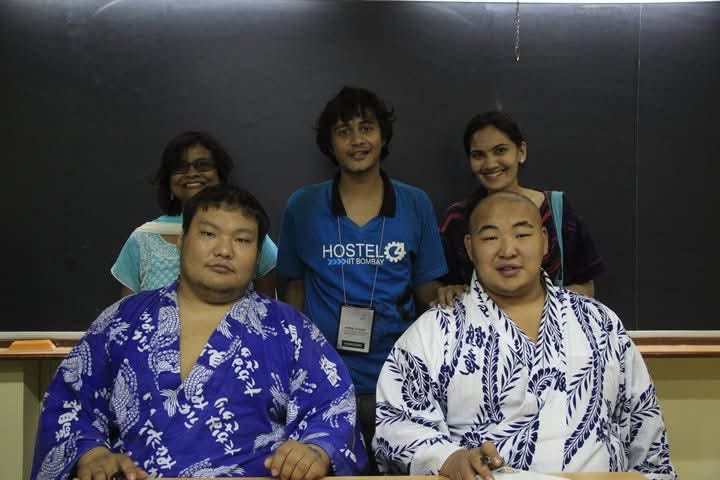
He’ll downplay the technical value of those years. What he walked out with was the network.
“When you talk about folks like Cityflo or Atomberg — along with a lot of our early investments — the trust deficit is very low, because you know everyone. These are alumni.”
The rewritable years
Between finishing IIT and joining the family business, Mirik did something most of the second generation don’t: he ran a startup that was, by design, about almost everything at once.
It was called Hummingwhale Product Innovations — he and his close friend Ayush leading it, a couple of others alongside. The premise was naïve and Mirik knows it: they would innovate on anything, generate the intellectual property, and license it out. India, he’d learn the hard way, does not reward that model. But before the lesson landed, the products piled up.
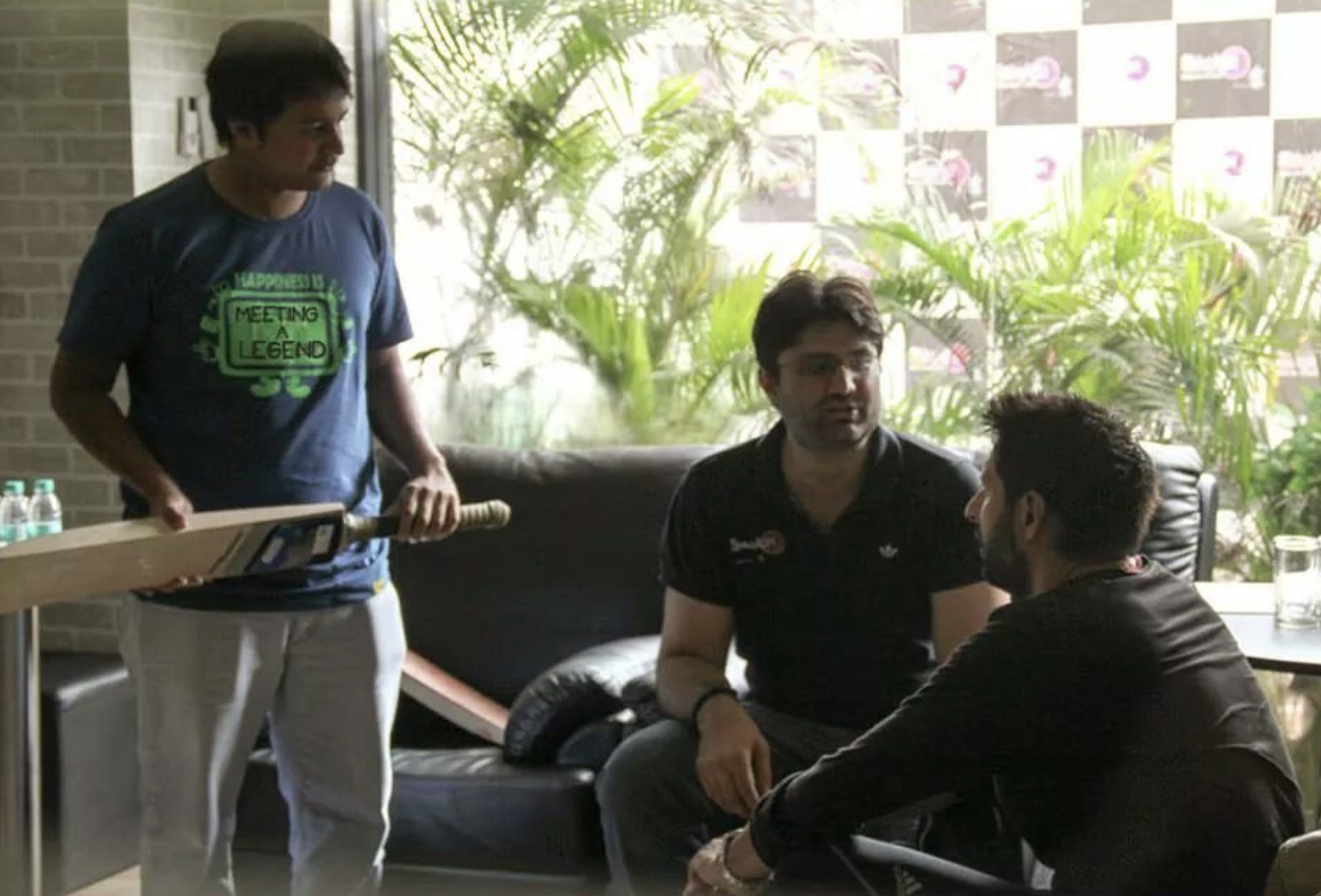
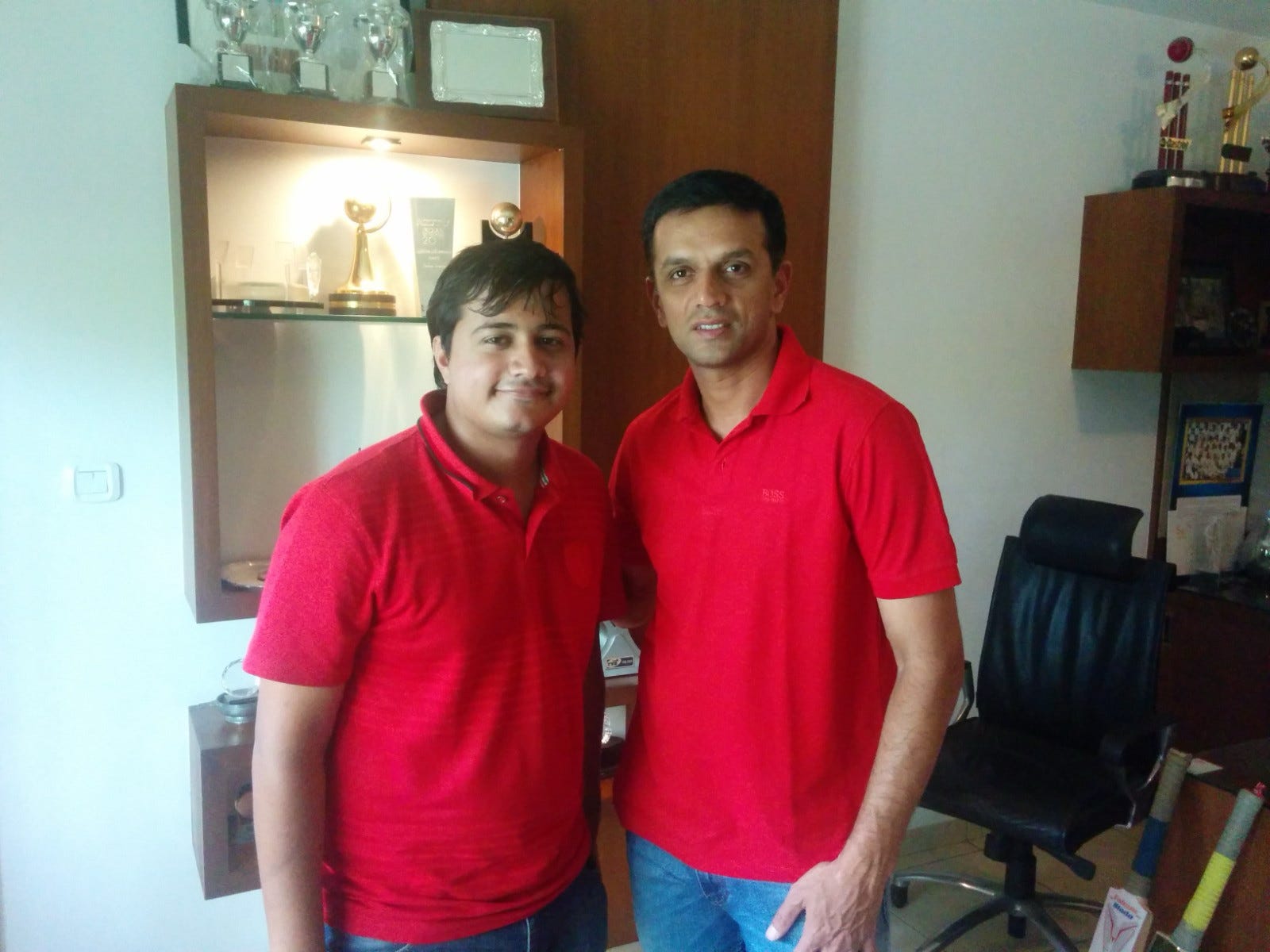
They made a rewritable t-shirt. They made a more aerodynamic cricket bat — and didn’t just prototype it. They got aerodynamic modelling done so the edges wouldn’t carry to the slips; they put a subtle slant on it; they got it approved as a legal bat; and they put it in the hands of Sachin Tendulkar, Rahul Dravid, Virat Kohli, Gautam Gambhir, Shreyas Iyer, Sanju Samson, Shahid Afridi.
Then there was the non-Newtonian fluid — the kind that turns solid under sudden pressure and stays liquid when you’re gentle with it. They built a water-park ride around it at Esselworld: a pool you’d sink into if you stood still, but could run across if you moved fast enough.
“There is a pool of fluid where, if you stand on it, you will dip — it’s a viscous fluid. But if you run fast on it, you can run across.”
It worked, and then it taught them everything they hadn’t thought about. The fluid settled fast, so they had to design the motor and impeller around it. Sachin Tendulkar came to inaugurate it. And a few days later, because the fluid was organic, it caught fungus and began to smell — a problem they eventually solved with salt.
In 2014, around the big election, they took the format of WWE trump-card games and made a political version — politicians rated on parameters like education and years served in government.
“My parents were more like — might as well follow it. If nothing happens, you are learning. There was never a ‘you need to start the business now, or come to the business.’ It was a natural progression.”
None of it scaled, and Mirik is clear-eyed about why. Each idea, to become a business, demanded total focus.
So in 2015–16, they shut it down. Financially it was roughly neutral. But the three or four years installed a reflex he’d lean on for the rest of his career.
“Because I reached out to everyone in the world. If I had an idea, I reached out to all the big companies — whether it’s a Slazenger in the UK or Mongoose Cricket in South Africa, wherever. The inhibition of just reaching out and hearing ‘no’ was not there.”
He’s careful about what the lesson was: the reaching out itself — treating the entire world as a set of people you could simply talk to.
“Rejection is fine — but you reach out. That, I think, was more critical. Talking to unknown people and just reaching out was a natural thing.”
Building the lab
In August 2016, a few months after winding down Hummingwhale, Mirik joined Aarti.
The first months were the obvious ones — understanding the business, getting to the base level. But he arrived with a fixed idea about where he wanted to push, and he started pushing almost immediately. In one of his first meetings, he argued that the company should build a dedicated pilot plant. It was the beginning of a years-long campaign.
The unglamorous work came first. He took the import-export data that sits publicly available online — hundreds of Excel sheets — and ground through it by hand, looking for products adjacent to Aarti’s capabilities that the company should be making.
“Now it seems trivial, in the days of AI. Copy all the Excel sheets, hundreds of them, do some analysis, and try to find the products that are relevant for the company. It was very early.”
He sat in on big deals without leading them — including a twenty-year supply agreement with a large corporate — and absorbed how senior people negotiated. One lesson, from his father, stuck hard enough that he repeats it as a rule:
“Any argument that you want to make, you should make before the contract is signed. Because the moment the contract is signed, it is signed. You might find it uncomfortable, and you can fight as much as possible — but before the contract is signed. Because once it’s signed, you have to assume it’s done.”
And the subtler half of it:
“In a good negotiation, everyone is not happy. That is critical.”
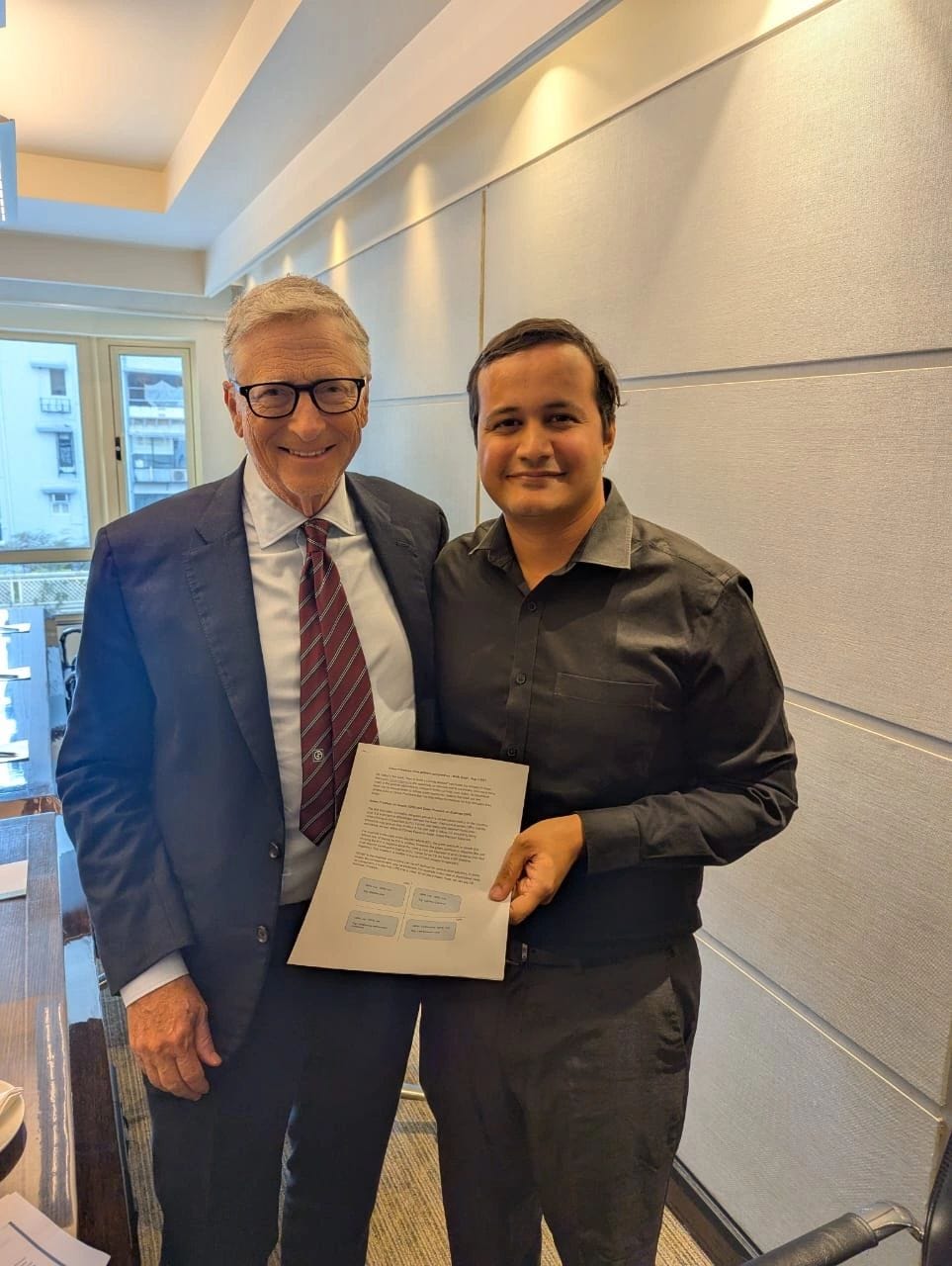
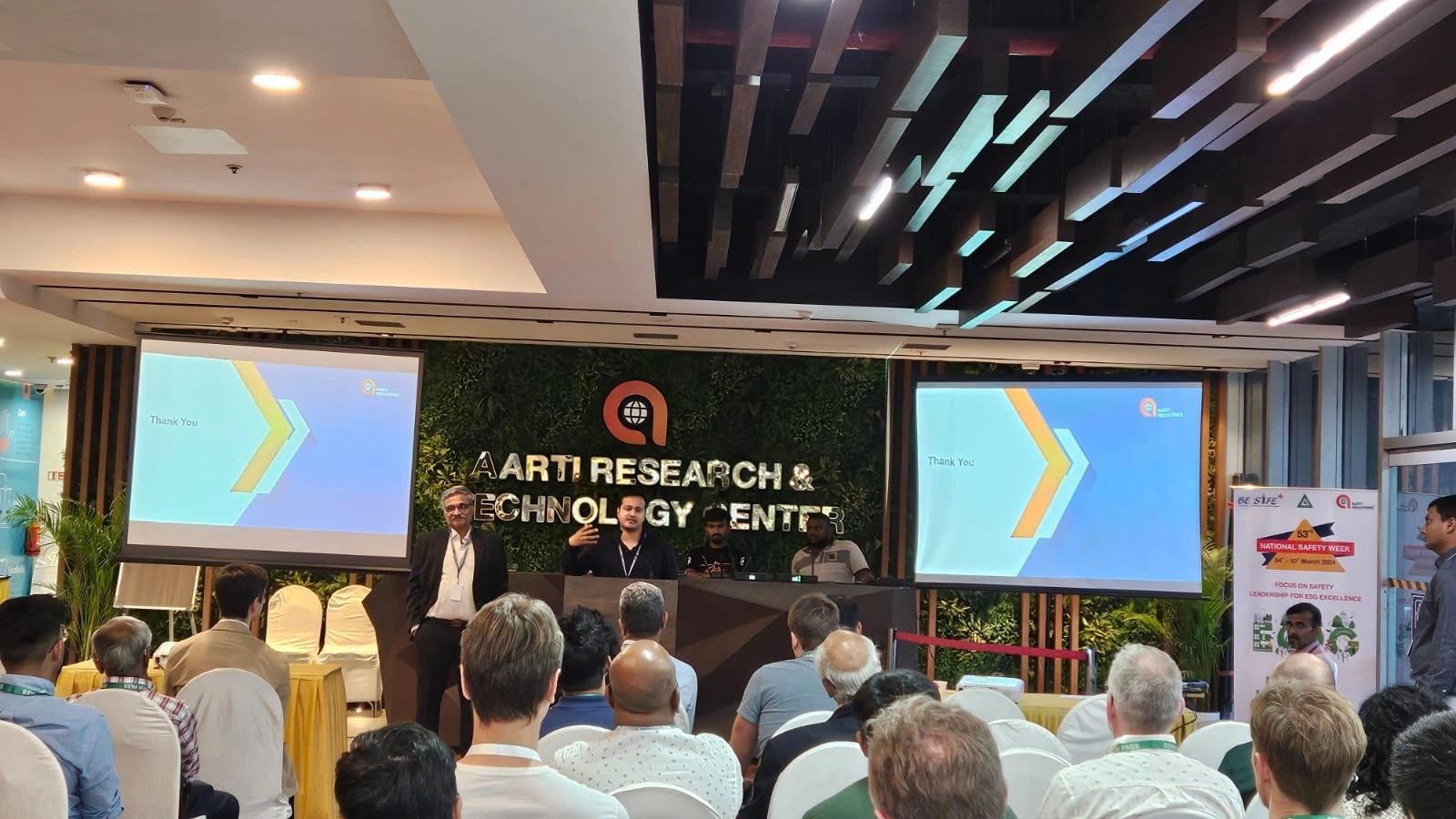
But his real project was the R&D centre. Indian chemical companies are not strangers to R&D — Aarti had had a function since the 1990s. But it was troubleshooting R&D: a team that fixes and extends the products already in the catalogue. Mirik wanted the other kind.
“Chlorination is something we know. Nitration is something we know. What is the most adjacent thing? That was the base on which the whole plan was built.”
It took years, and it took stagecraft — internal alignment first, then more stakeholders, then the question of where to build it.
A site at Jhagadia was approved, then reconsidered. They augmented the existing setup in Vapi. Then, during the Covid pandemic in 2020, they inaugurated the real thing: a roughly 50,000-square-foot R&D centre in Navi Mumbai, followed by a dedicated pilot facility to replace the makeshift one cobbled out of an old commercial plant.
Ask him where a chemistry-led R&D programme should hunt, and he starts past the obvious answer. Pharmaceutical chemistry gets the attention; the money, in his telling, hides in the middle of the catalogue.
“Pharmaceutical chemicals are the most innovative, but there is a bigger range of general speciality chemicals. Every concrete admixture will have some chemistry. Every polymer will have polymer additives. Any tyre will have rubber chemicals. Adhesives. Surfactants. Dyes and pigments is a big space. Even in pharma, if you take out the API — diagnostic chemicals is a space, contrast agents is a space. This may seem niche, but if you start adding them up, if you build a chemistry lens, you can start unlocking. But it also requires product thinking — to understand what to prioritise.”
The ambition runs past catching up. The first wave of projects took new starting materials — toluene where the company had run on benzene — and unlocked chemistries Aarti hadn’t owned. Not new to the world, he says; new to the company. The next phase is the harder one.
“My eventual vision is new-to-the-world. In India there will be very few examples of new-to-the-world.”
The philosophy behind the whole build is the stack again, dressed as corporate strategy: build R&D so that when an opportunity appears — one you couldn’t have predicted — you’re capable of catching it.
“You have to be capable. You have to absorb the opportunities when they’re presented to you. Suppose someone presents me with a brilliant opportunity, but I don’t have a technical team, I don’t have an R&D centre — what happens? The game you’re playing is, you have to be ready. Some of the things we are commercialising right now, we had never thought of at that time.”
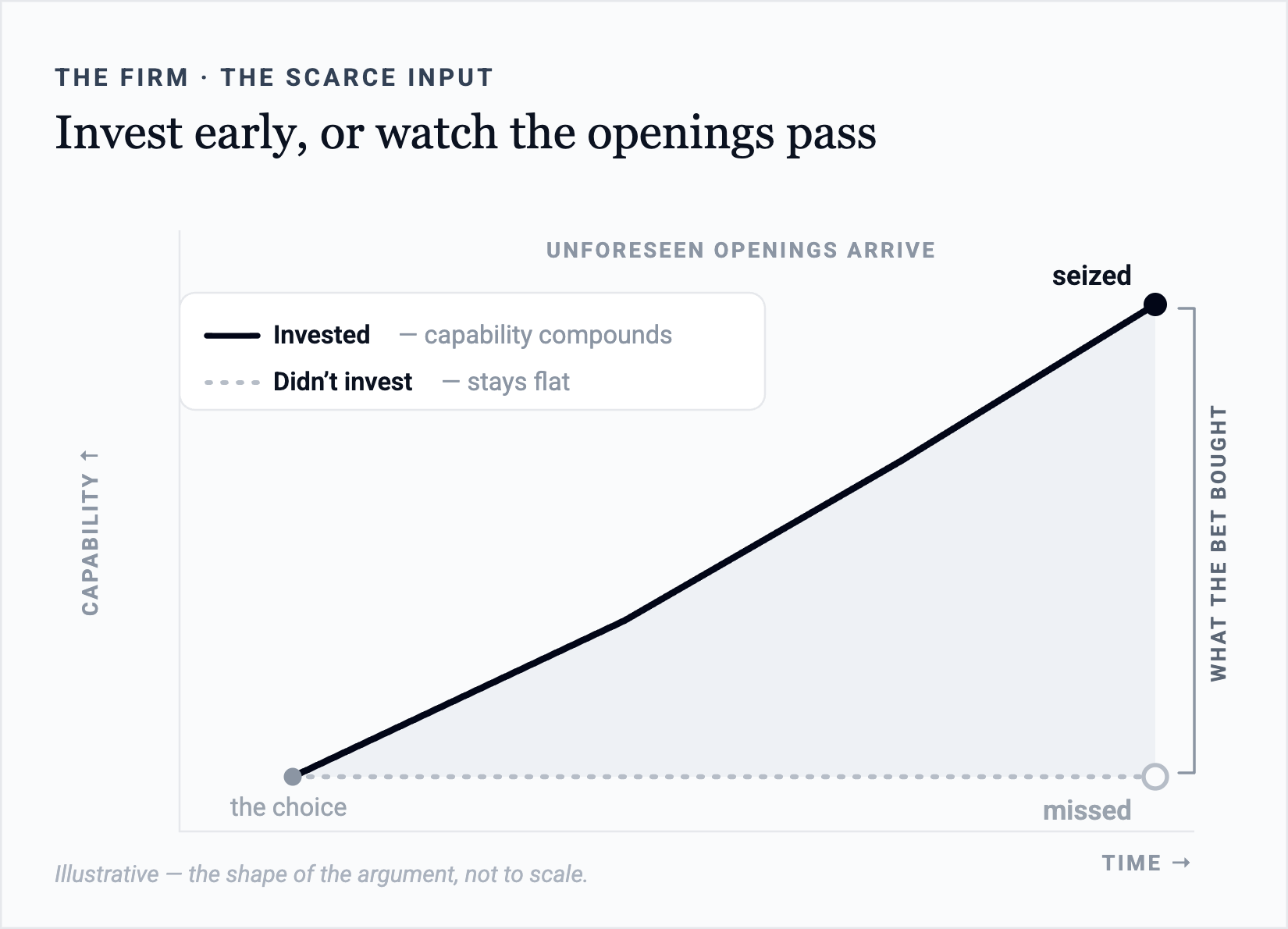
He calls it building redundancy — human and technological capital, a smart team, the right tools — and he’s blunt that in India almost nobody underwrites that kind of uncertainty. The centre has started to pull the industry toward it: peers who had dismissed research as a cost line now come to see the building.
“Two or three of them have visited our R&D centre and their eyes opened up. Some of them wanted to work with IIT Bombay — they reached out, and we gave them guidance on how to work with academia. There is a change. But it is still too slow.”
That observation — capability exists, underwriting doesn’t — would, within a couple of years, become the seed of Spectrum Impact.
Forty courses
Mirik has read non-fiction obsessively for as long as he can remember — science, technology, the history of technology, for no reason other than that it fascinates him. Around 2018–19, the reading found a target.
The subject was climate. It was the era of the Paris Agreement and the first big waves of climate activism, and Mirik started at the periphery and then fell in. In 2019 he began taking online courses — and didn’t stop. Over roughly four years he worked through forty or fifty MOOCs, tracking them in an Excel sheet, writing out each week what he would learn next.
“In four years, I’ve done forty or fifty online courses. Genuine Excel sheets — every week I write out what to learn. It was all curiosity-driven.”
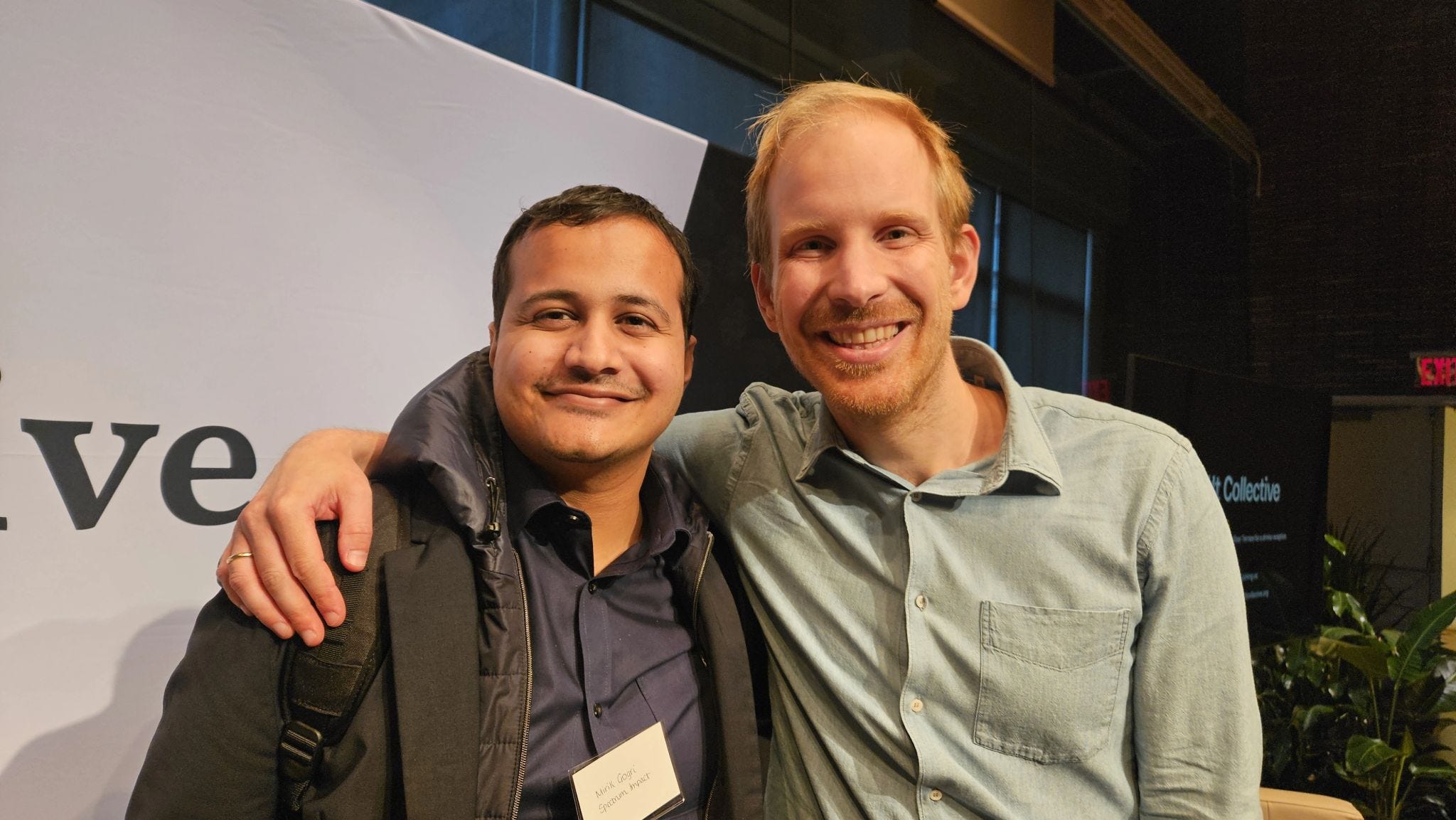
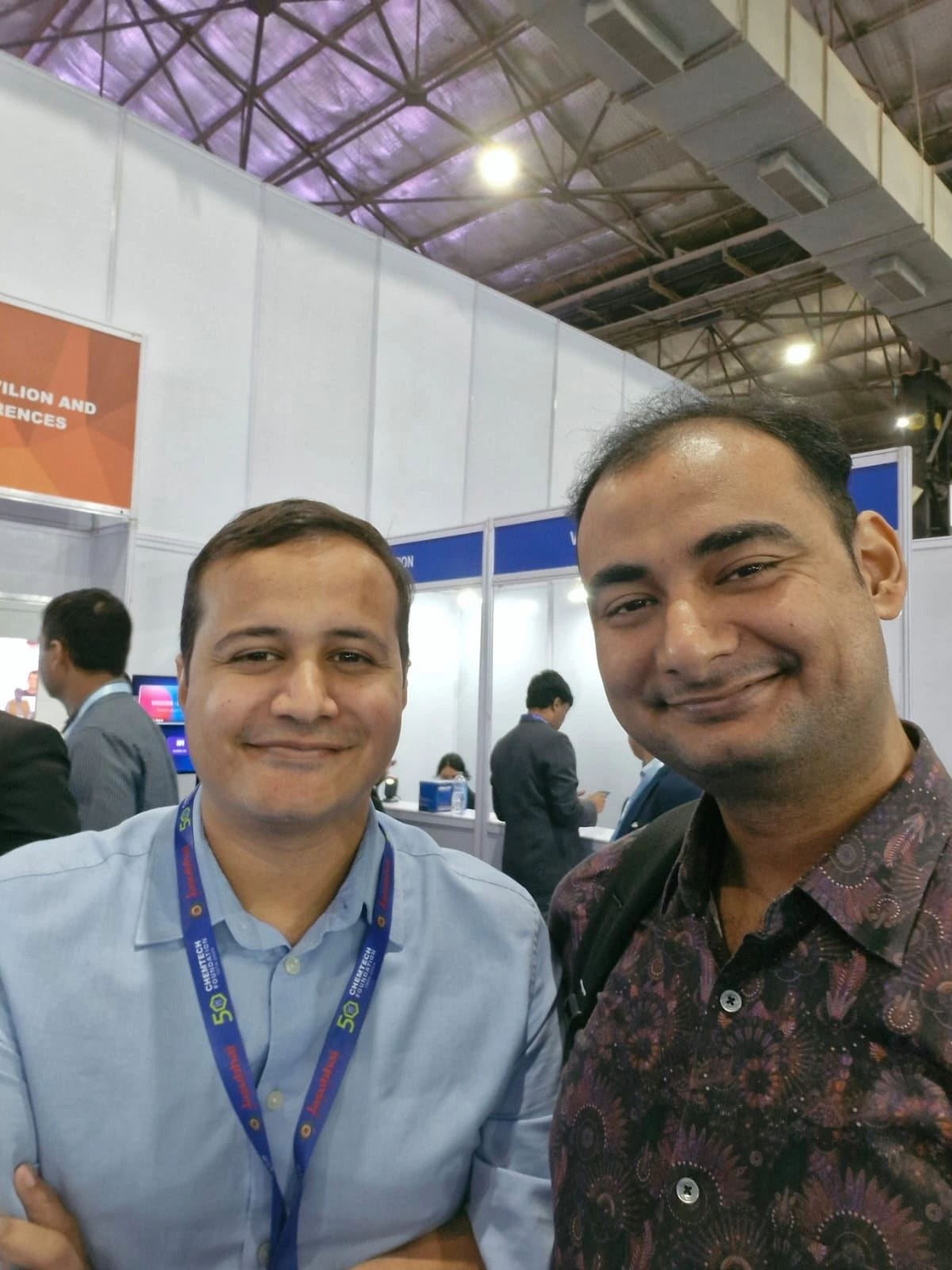
“Rutger Bregman is one of my favourite authors. His writings have influenced my thoughts and shaped my endeavour to work on climate change. His new book Moral Ambitions is now out. It was great to meet him at NYCW.”
The first was a deep course on climate from the University of Chicago, and it changed the altitude at which he understood the problem.
“It taught me a lot about what climate is at a science level, not at a general level. Why is carbon dioxide a greenhouse gas and oxygen not? That level.”
Then COVID arrived and handed him time. The courses were essentially free; he paid for them only as encouragement. He travelled — including a stretch in Europe around this period — and he reached out, cold-emailing climate people across the US and Europe. Two credentials opened the doors.
“When you say you’re an IIT Bombay alumnus, it has some weight. And when you say you’re part of Aarti Industries — a publicly listed, multi-billion-dollar company — people will actually listen. They’ll reply to an email.”
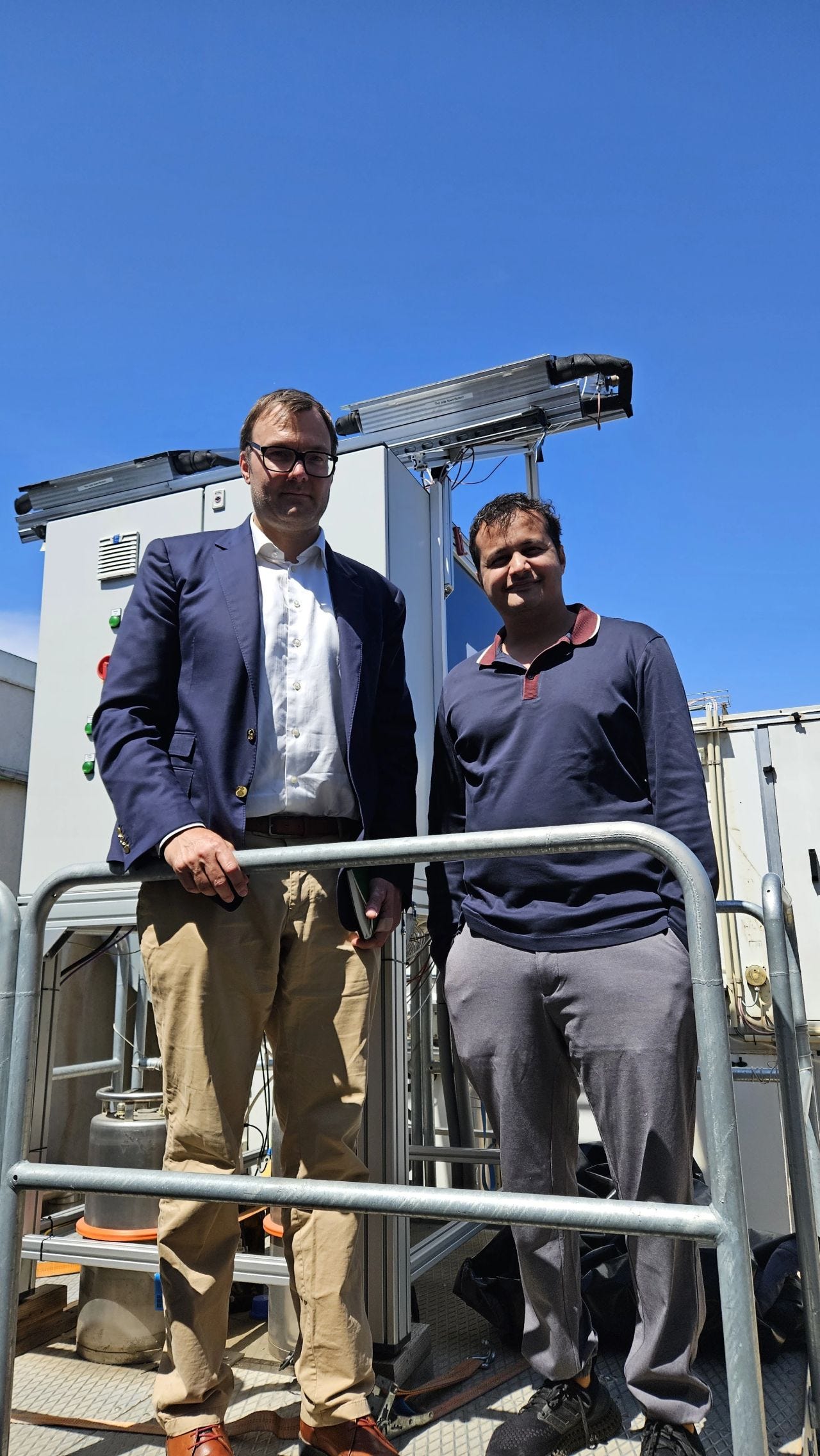
There was a second effect: very few people in India were talking about climate at all, and the outside world noticed. One of those international contacts — a man named Daniel — eventually introduced him to Gagan, the founder of the advanced-materials company that would become one of Spectrum’s defining bets.
A spectrum of capital
The raw material for an institution had been sitting in the family for years. In 2015, the Gogris — who had long done philanthropy and disaster-relief work, almost always without a name attached — set aside a pool of capital for giving. Then it sat.
“We as a family had allocated certain capital for donations — this was in 2015. But we were not doing anything about it. I was thinking: we have some capital allocated, might as well do something. And now this interest started to emerge in climate.”
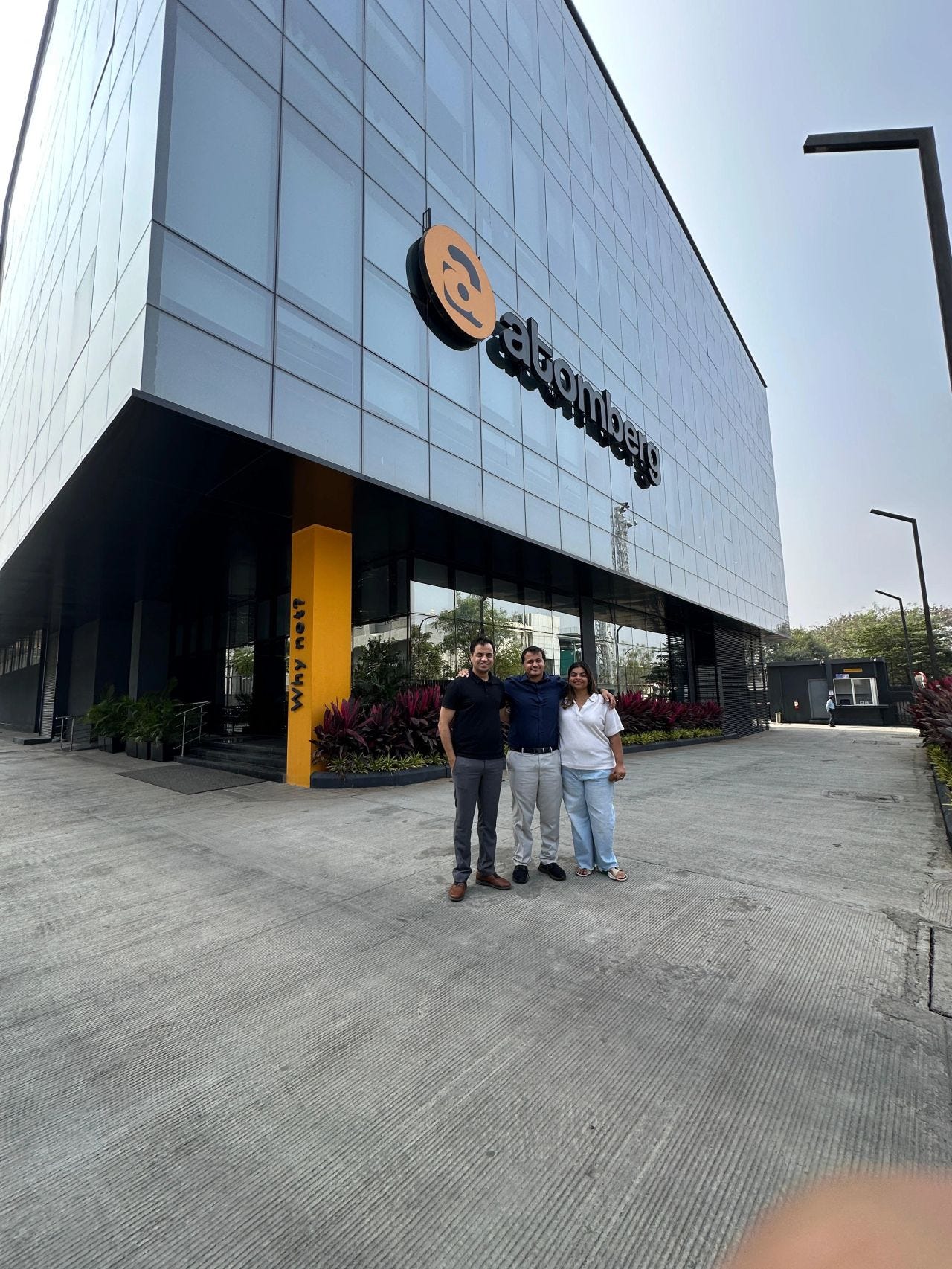
“It was exactly ten years ago that we wrote the first cheque into the company. Their journey has been nothing short of inspirational. They have made energy efficiency mainstream.”
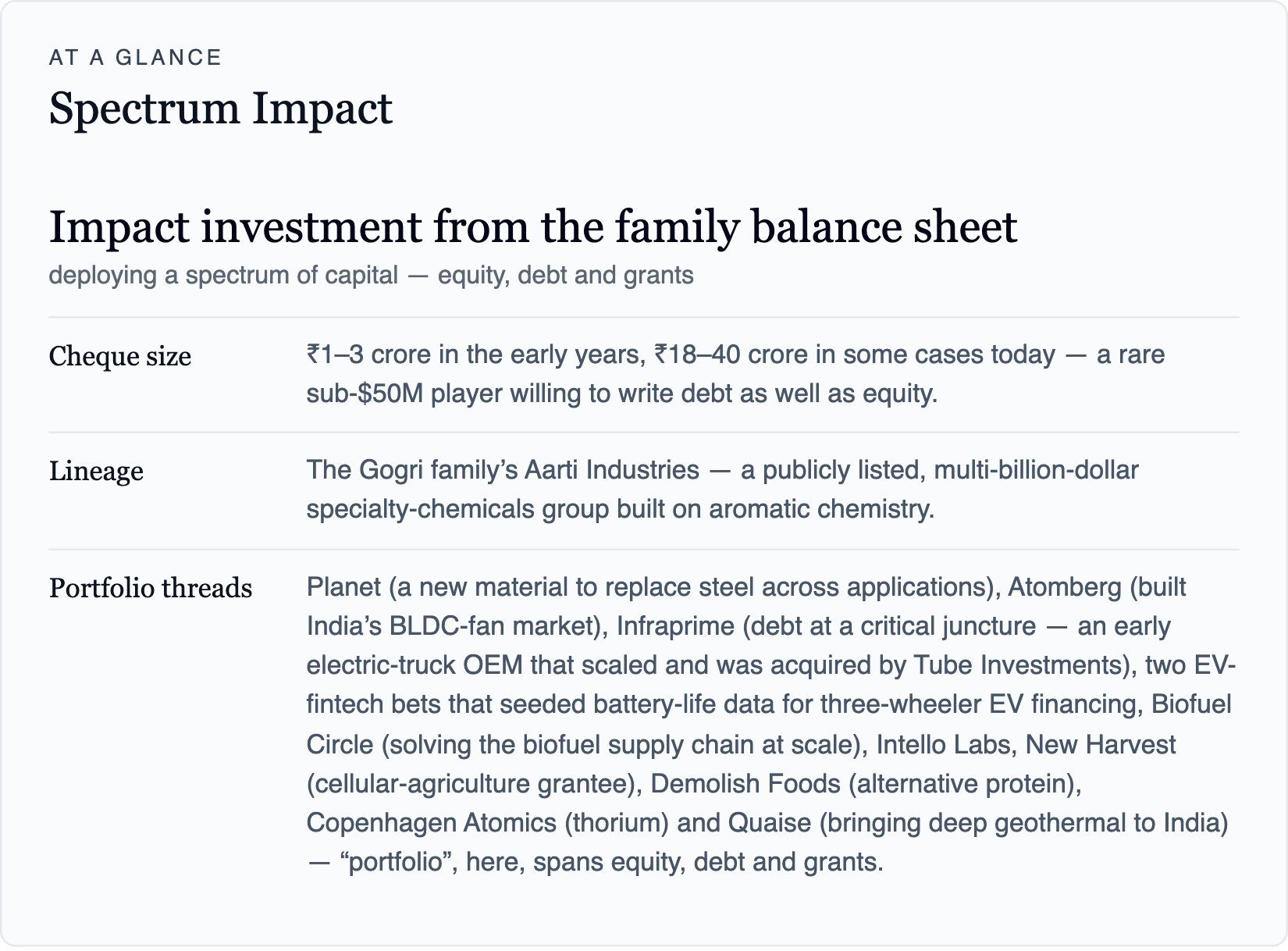
There had been investments before there was a thesis. Atomberg in 2015, and a few others — people from the IIT network, backed on trust.
“Those were not strategically linked to climate. When we invested in Atomberg, it was for energy efficiency — it made economic sense. It was not linked to the bigger climate. That was post facto.”
Which raised a question they argued about: whether to put a name on it at all. All six of them — his parents, his brother and sister-in-law, Mirik and his wife — debated it.
His mother put the family’s instinct plainly:
“You do the work — why do you want to name it?”
But the counter-argument won.
“Our thought was, if we don’t ground it on something, then it diffuses.”
An institution is a layer in the stack — something durable that other things can attach to. They named it Spectrum Impact, and the name was load-bearing in two directions. They would use a spectrum of capital — grants, equity, and debt — and they would work across a spectrum of areas, because climate refuses to sit in one box. None of it is a step away from Aarti — the company remains central to him — but he is not limited by it either. The ecosystem, he says, matters more.
Underneath the name sat a conviction Mirik states without hedging. Profit is not a dirty word in impact; it’s a tool — and so is its absence.
“You need the right tools for the right problems. Profits can solve a sizeable amount of problems. But there will be some problems that profits cannot solve — and that’s where grants have a critical place.”
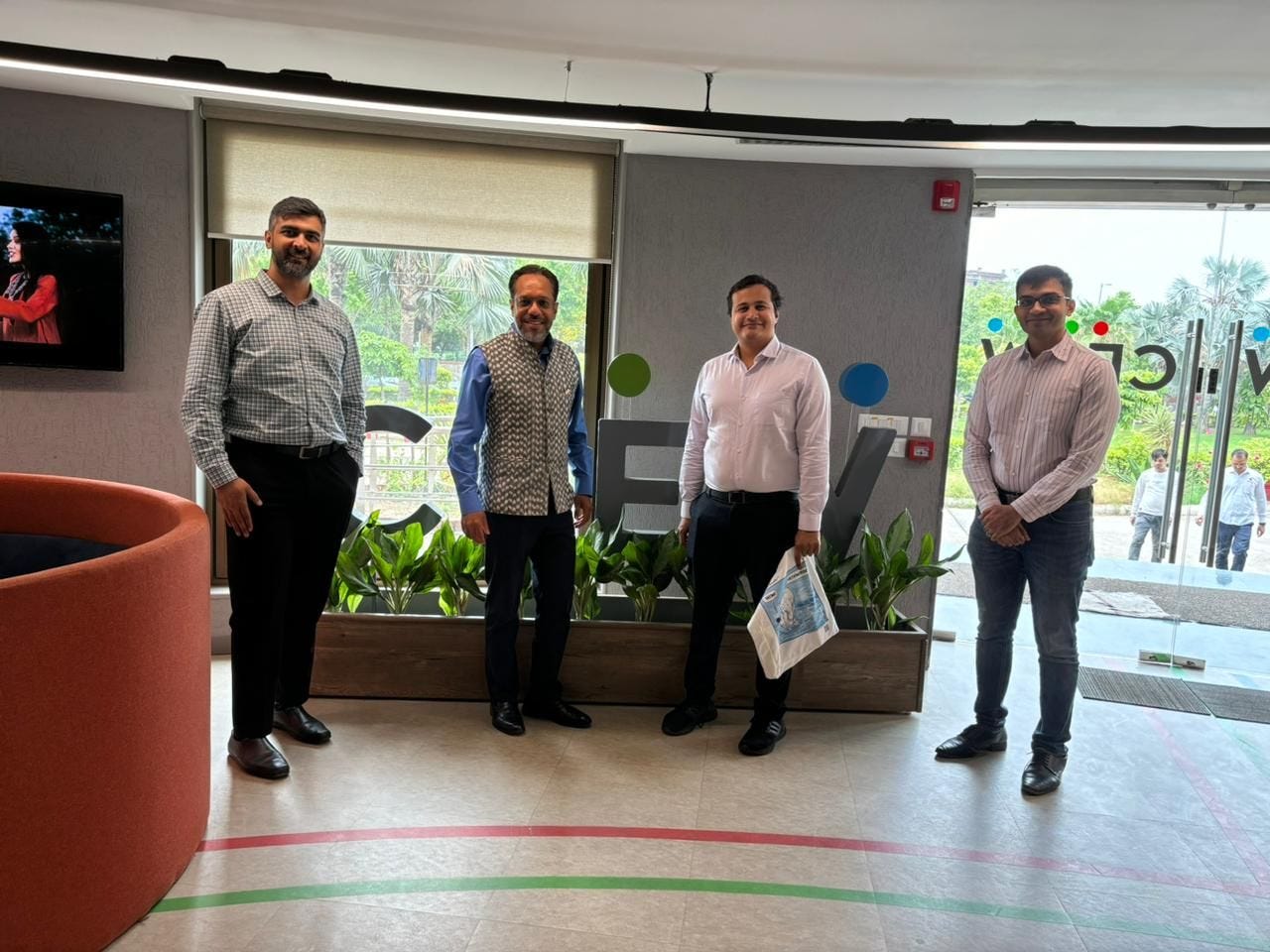
“Climate Data is the ground truth on which any resilience plan gets built. Spectrum Impact has been supporting the Council on Energy, Environment and Water over the last few years to make the data more accurate, contextual and actionable.”
You can’t make a profit standardising EV-charging infrastructure, but somebody has to do it — grant work, funding the non-profits that help the government pick standards that will hold. Technology and business do most of the heavy lifting. Grants fill a gap. And debt is the tool he thinks India’s climate ecosystem misses most.
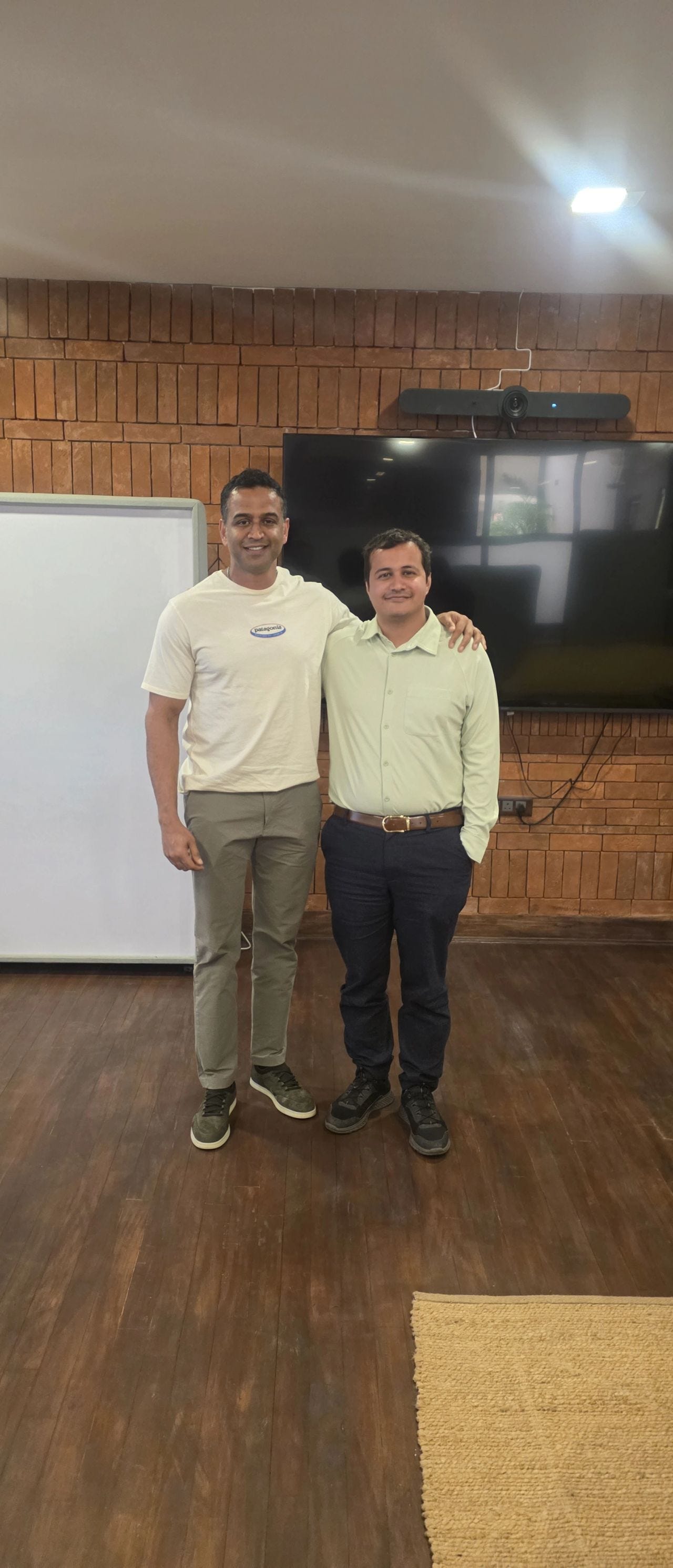
“I was pleasantly surprised to learn that Spectrum Impact and Rainmatter had 16 common organisations funded, in equity or grant.”
Accessibility, not affordability
This is where the years Mirik has spent on the plumbing of capital show.
Start with the shape of the problem. Climate, unlike software, is overwhelmingly physical and overwhelmingly B2B. Factories get built. Assets get bought. Working-capital cycles appear the moment you’re selling to other businesses. And that means debt is the tool that lets a real-world climate company scale at all.
“Apart from passenger EVs, a lot of climate is B2B. And when you have B2B, you automatically start having working-capital cycles. Asset-based leasing, factory debt — it becomes an important tool for you to scale.”
The thesis itself was built the way he prefers to build everything: by doing. Early on, the team drew up a plan to push EV adoption in India — passenger EVs, the obvious target. Then they argued themselves out of it. A private buyer may not drive enough green kilometres to quickly offset the larger upfront footprint of an EV; a commercial operator lives by sweating the asset. A private buyer gets a vehicle loan on his own credit standing; for a commercial operator, the income the asset generates is the basis of his ability to service the loan — underwriting the asset is what matters. So the plan turned to commercial vehicles, and the lending followed the logic.
“I had made a presentation — we want to encourage adoption of EVs in India. We had originally thought of passenger EVs. And then we were discussing — it didn’t make sense. A passenger is not looking at a payback on capex. But the commercial person has a different mindset. A lot of these learnings we got at that time. Thesis building — but thesis building by doing, rather than thesis building on paper.”
So Spectrum decided early to provide debt to young companies — and to solve for debt in a way that creates new business models and markets.
“Debt has two components. Is it accessible, or is it affordable?”
How they priced it is the counter-intuitive move. Most impact-minded lenders, he says, solve for affordability — they want to hand over money at 8% because it feels impactful. Spectrum decided to solve for accessibility instead, and to price debt high — in line with what the market would give next.
“People solve for affordability generally. They say, I want to give interest at 8%, because it’s impactful. We said no — we want to solve for accessibility, but not affordability. In fact, we were very clear we will not solve for affordability, as it would curtail the longer-term scale of the business model.”
The logic runs through what it means for a technology to be “solved.” A new solar technology isn’t solved when it works in a lab. It’s solved when it’s so tested and proven in the market that any bank will lend against it.
“The problem is solved when that technology is so tested and tried in the market that any bank will give debt on it. Someone can go to the bank and get 70% of the debt to put that solar panel up. That’s adoption. The end goal of any technology is that it has to be underwritable.”
Solar scaled when banks finally had enough data to believe the panel would work. Demand risk gone, technology risk gone — the maths started working.
Now hold that end-goal in mind and look at the trap. If an impact lender gives a young company creating new technology cheap 8% debt, it locks the company’s whole business model to a price that the real market — once the impact money runs out — will never match. The next lender prices the actual risk at 14%, and the model breaks.
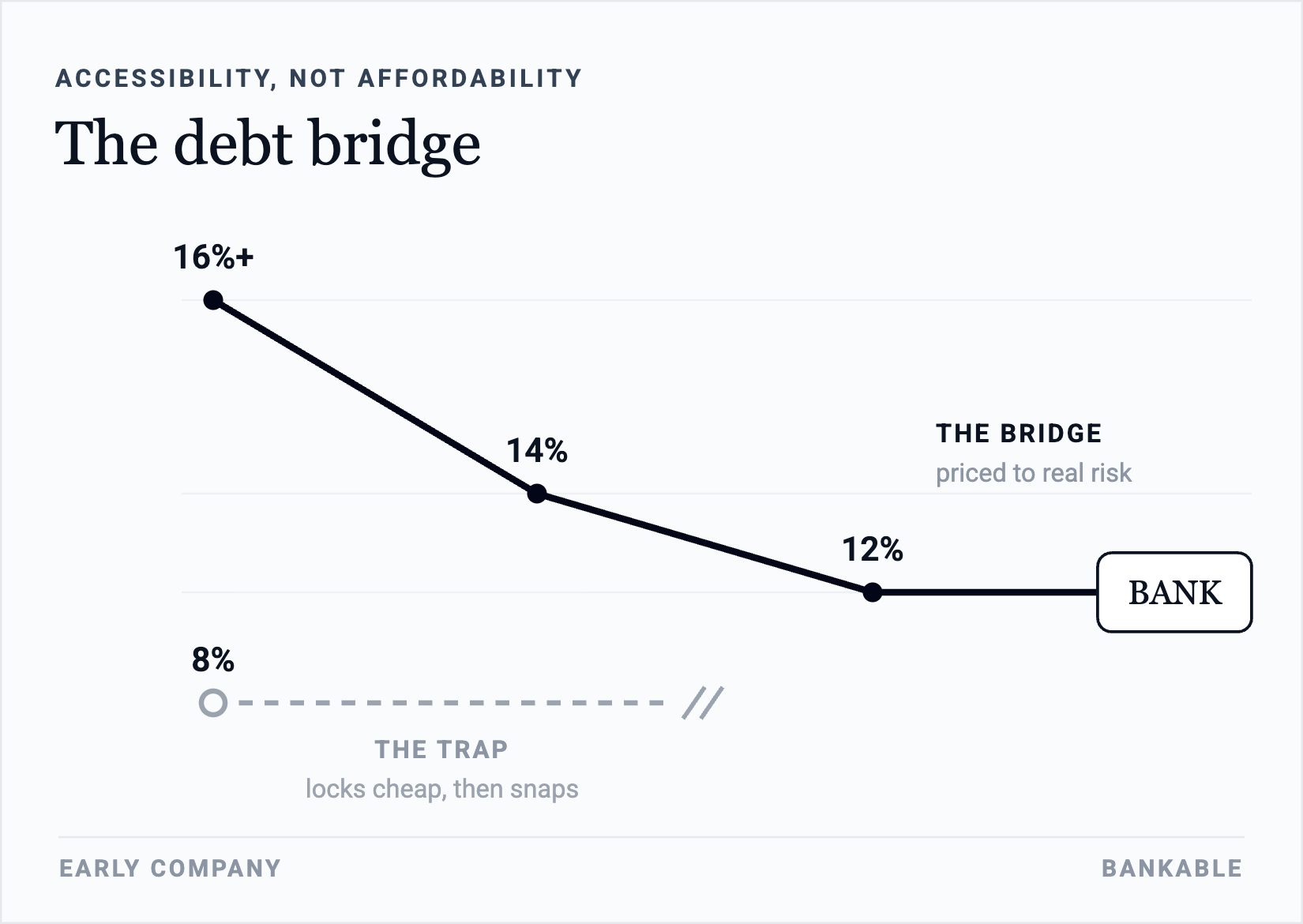
It sounds harsh, but it is actually kind to the scale-up of the company: the logic runs the other way. By pricing near where the market will eventually sit, Spectrum’s capital becomes a bridge a company can walk across — 16%-plus, then a commercial lender at 14%, then 12%, then, eventually, a bank. The point was to make the company bankable and then leave.
“First plant, you may need to fund by equity. R&D, equity. Overhead, equity. But working capital — if you start taking equity for working capital, you’re screwed.”
You need the right capital stack for the right purpose.
The portfolio bears this out. Spectrum was the only supporter and debt provider to two EV-fintech startups that were facilitating loans for three-wheeler commercial EVs — and building a dataset on battery life for better underwriting models. It also lent to Infraprime, an early electric-truck OEM, when funds were needed to unblock supply-chain issues during Covid; Infraprime scaled, and was later acquired by Tube Investments. Nobody, including Spectrum, knew then how long the batteries would last. That was the point of lending.
“We were also not sure at that time — battery life, how much. But our whole process is: if you don’t do it, you will not get the data. Both the companies we worked with got financing from NBFCs and banks. Everyone has financed them. The data was based on the debt that we gave.”
And debt does something equity can’t: it changes the shape of a business. With a 1.5-to-2-year payback asset, debt lets a company stop selling boxes and start selling a service.
“Debt helps you change the business model. You go from an asset-selling business to a service model — so it’s easier for the final customer, because they’re not paying any capex to you, for a technology whose efficiency and longevity they may still not be willing to underwrite. Your deployment cycle becomes faster. At a 1.5-to-2-year payback, your sensitivity to the cost of the debt reduces — and scale depends on how much debt you can raise.”
Intello is his proof case: Spectrum helped move it to a leasing model, and it pivoted hard and is now doing well. The same logic runs through Biofuel Circle and through Ishitva.
There’s a structural complaint buried in here, and Mirik says it plainly: the venture-capital market isn’t built to underwrite companies that carry debt on their books, and that punishes the physical, scaling climate businesses India needs.
The relay race
If you want the single idea that sits underneath everything Mirik does, it’s here, and it comes from a story about his own family’s company.
Years ago, a petrochemical giant supplied Aarti with a critical raw material. Using it, Aarti developed the technology to make a specialty molecule for the first time in India. That, in turn, let an agrochemical company make a downstream product for the first time in India, which then became an export product.
“It’s a relay race across the stack. The petrochemical company makes the raw material. We made the molecule. The agrochemical company made the downstream product. Each one, without the other, doesn’t really work. It can’t.”
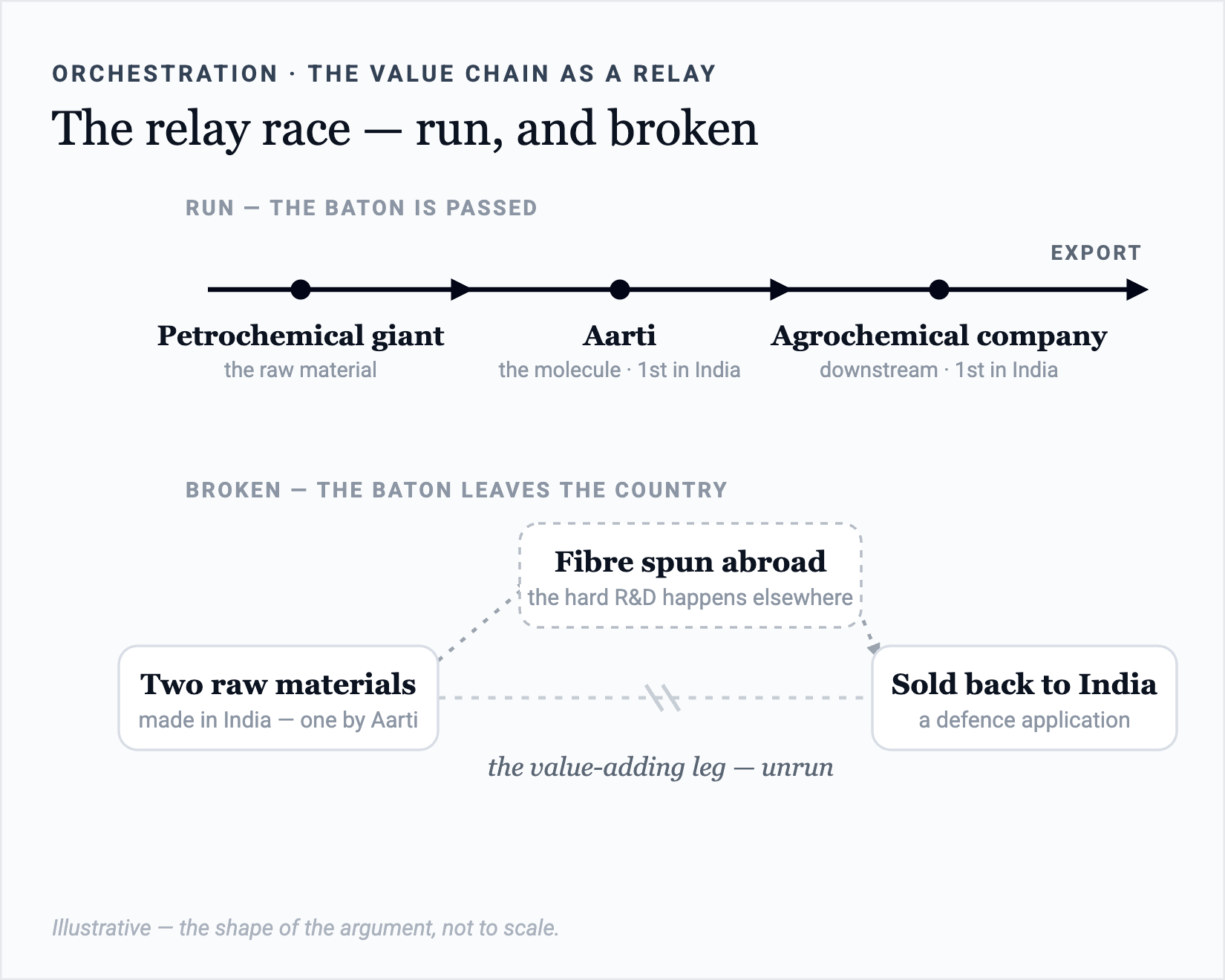
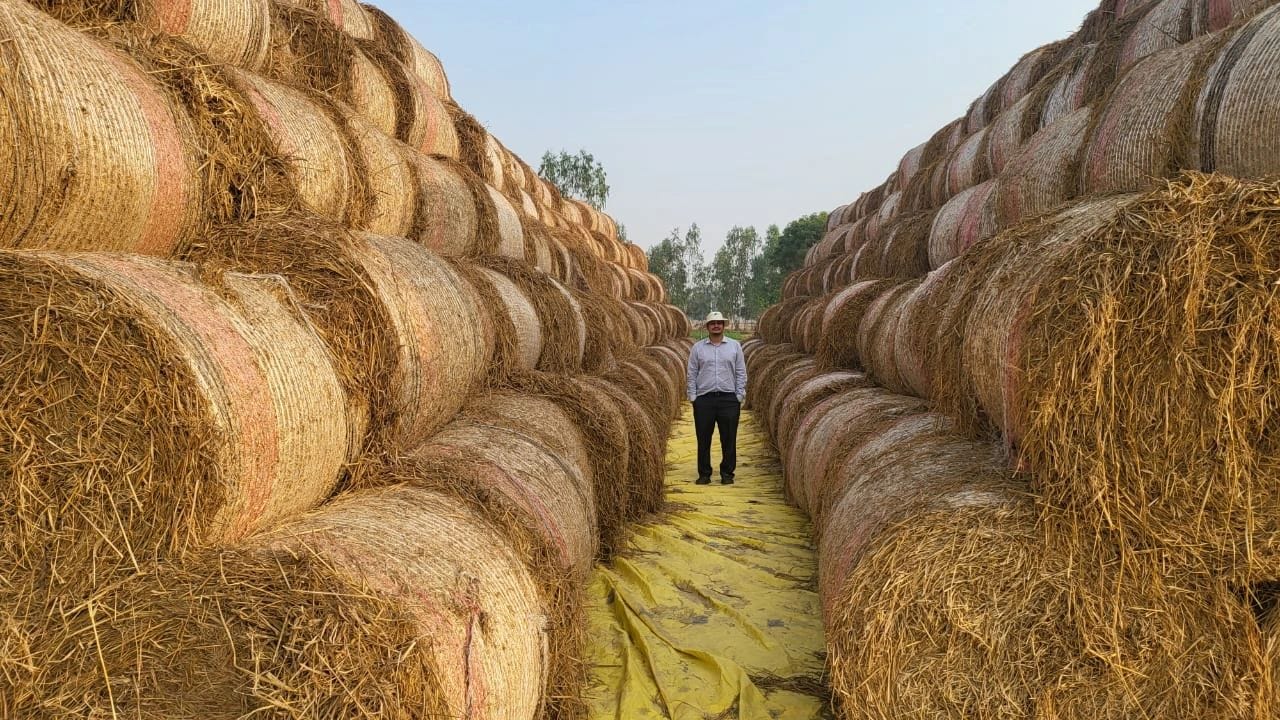
He also carries the counter-example, and it stings more because it sits in Aarti’s own catalogue. There is a high-strength fibre with defence applications whose two raw materials are both made in India — one of them by Aarti, which he says is the biggest producer outside China. Both chemicals are exported. The fibre is spun abroad and sold back to India.
“Both the raw materials are exported from India. He is making it and selling it back to India — and that too is a defence application. To do the whole process is tough. It’s R&D.”
The relay run, and the relay broken. The three runners are different kinds of company, and not one of them can succeed if the others don’t run their leg.
“Maybe one of them is only venture-fundable. Maybe the other is a family business. Maybe the other is an MNC. Three different roles — but all three are needed to make it succeed. One cannot exist without the other.”
So the real question is whose job it is to make sure all three show up to the same race.
Mirik’s word for that job is orchestration, and he thinks India is bad at it in a way that compounds.
“What China did well is — you either create an ecosystem so dense that there is national orchestration, or you have to be active, like what DARPA does.”
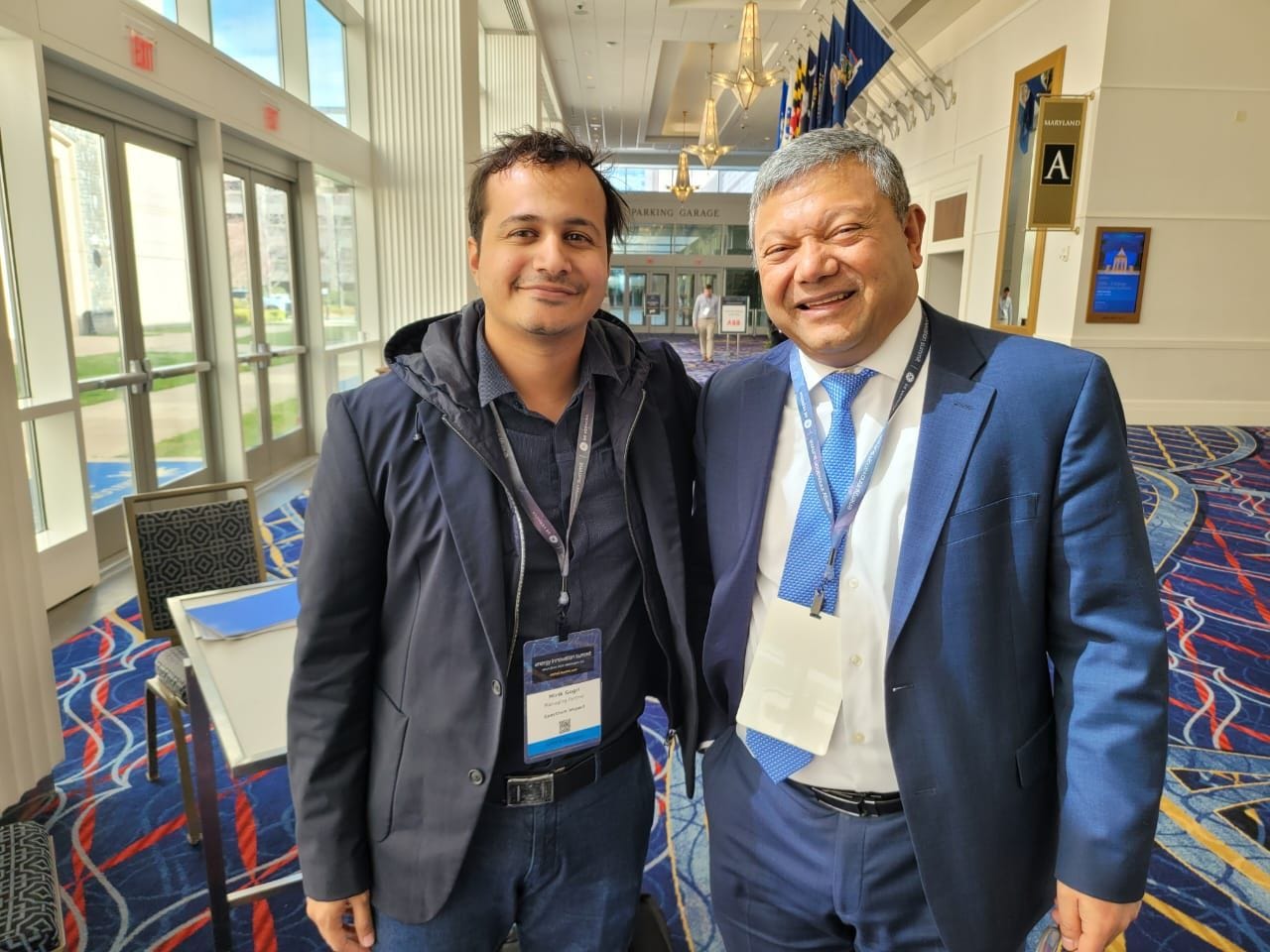
“The ARPA-E summit was genuinely impressive. Some remarkable research was presented — efficient manufacturing of high-temperature superconductors, supercritical CO2 turbines, niobium-based superalloys, muon-catalyzed nuclear fusion, an alternative pathway to photosynthesis. It was great to find opportunities to help scale some of the technologies.”
What he admires in the DARPA model is the design. He has been to the ARPA-E summit in the US and watched how it works: someone sits above the value chain and engineers the collaboration.
“They marry a coating company to a blade-designer company. That doesn’t happen in India. Who does it? So design thinking — orchestration — is the problem.”
India’s current answer, the RDI fund, frustrates him because it mistakes one layer for the whole stack. A fund-of-funds for startups is fine as a piece of the puzzle. But it leaves the core job — orchestration across the value chain — undone. And the mismatch goes deeper than structure: a fund manager needs his returns; a country needs its value chains.
“The incentive of the country has to be to nurture companies like Planet. But the investor who gets the RDI money will have different incentives, because they need to return the fund. The risk profile of a country is different. A VC needs the billion-dollar hockey stick. A country may not mind many small successful companies — because they are such enabling companies.”
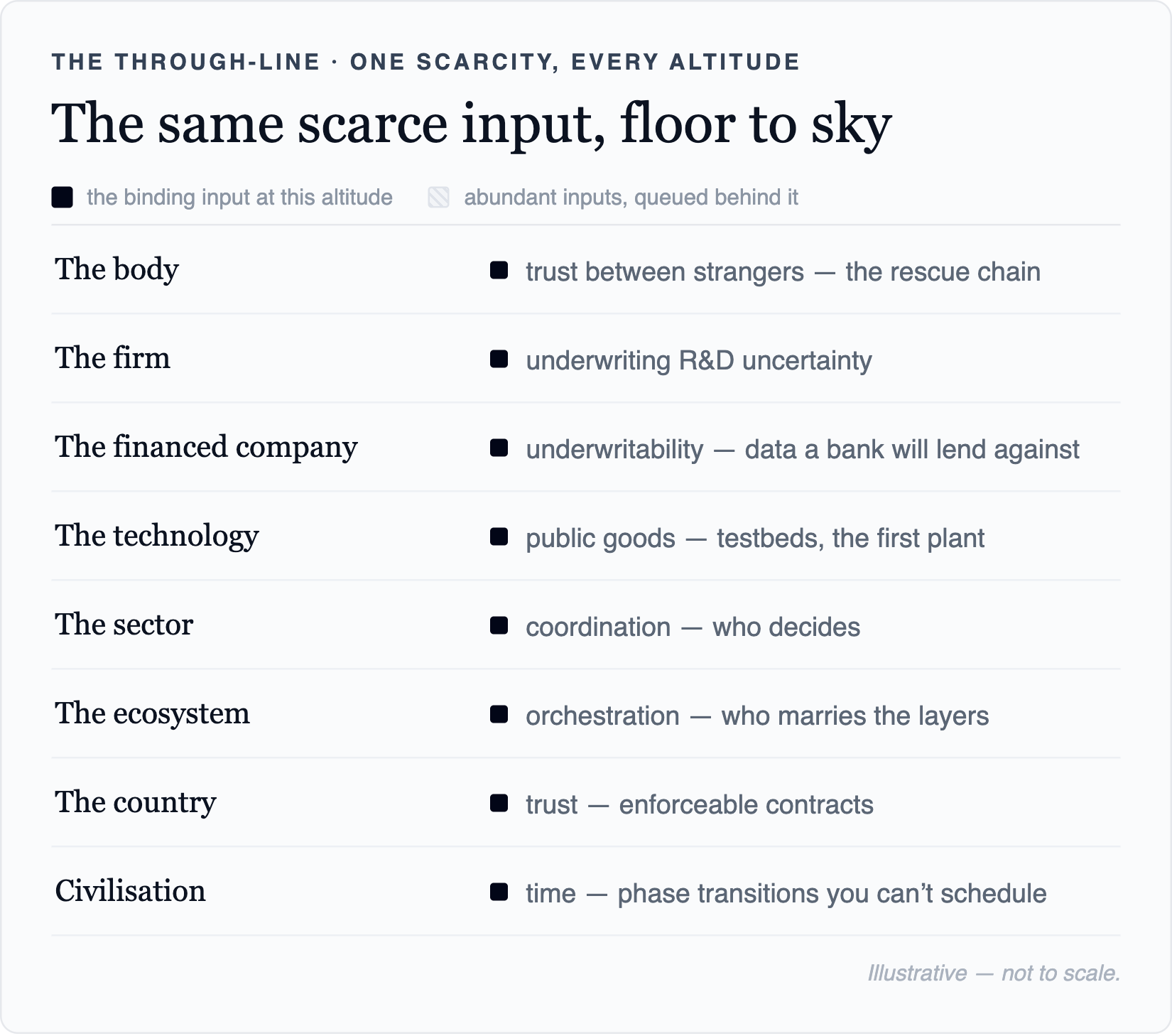
The medical stack that saved a four-year-old; the chemistry value chain at Aarti; the grant-equity-debt capital stack; and, eventually, the country itself — they are all the same shape. Layers that have to exist, and someone who has to connect them so value can flow and each player can capture its share.
The missing public good
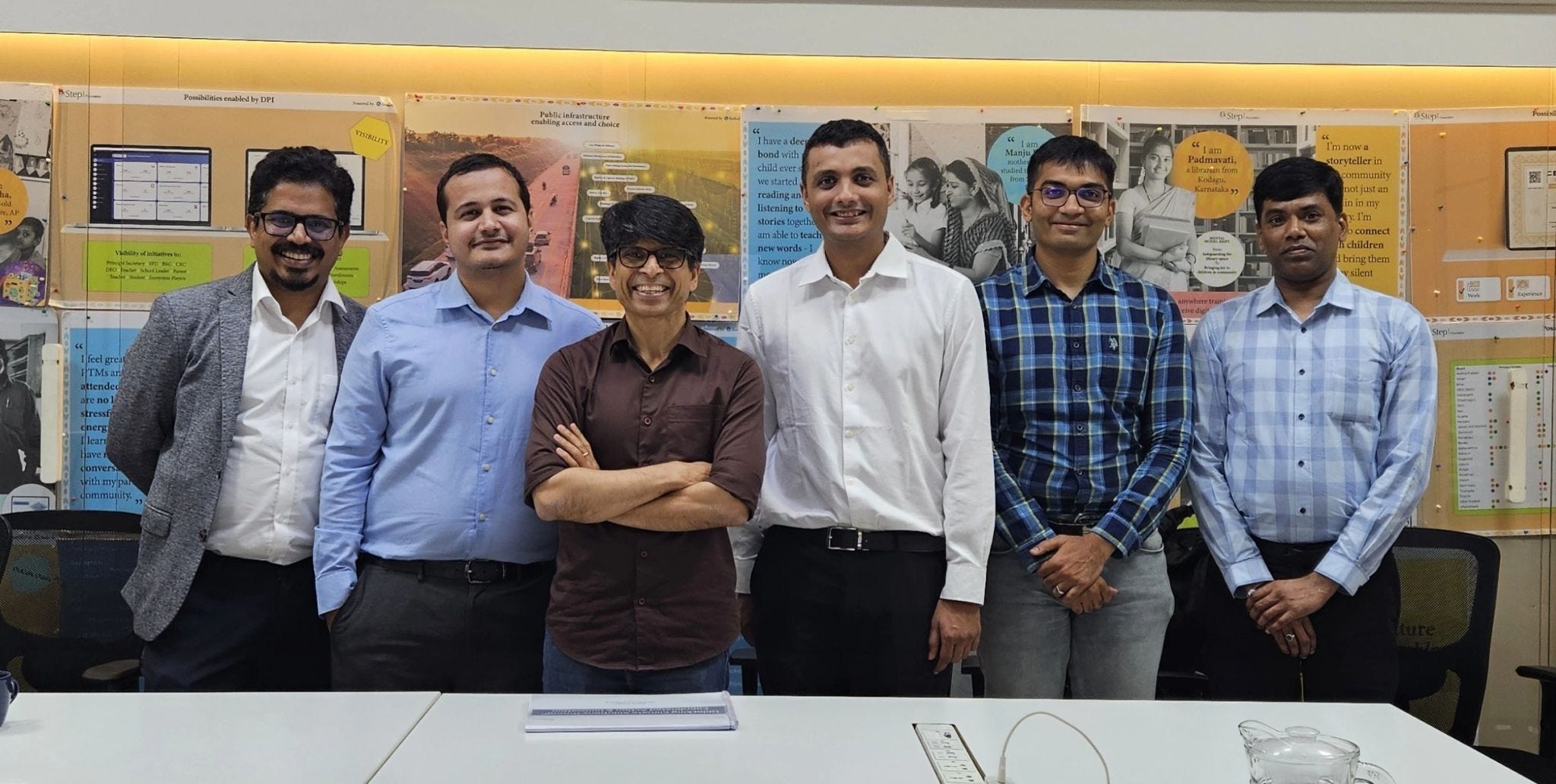
If orchestration is the diagnosis, Mirik has a concrete prescription for the single thing that would unlock the most: shared testbeds.
Suppose you have an idea for a new battery cathode and electrolyte. To prove it, you need a pilot facility. But a pilot facility for deep-tech chemistry costs 200 crore, and no early-stage startup can raise that to test one idea.
“To expect one startup to build this in a deep-tech space — it will require 200 crore. No chance. Zero chance. So this has to be built. It’s a public good.”
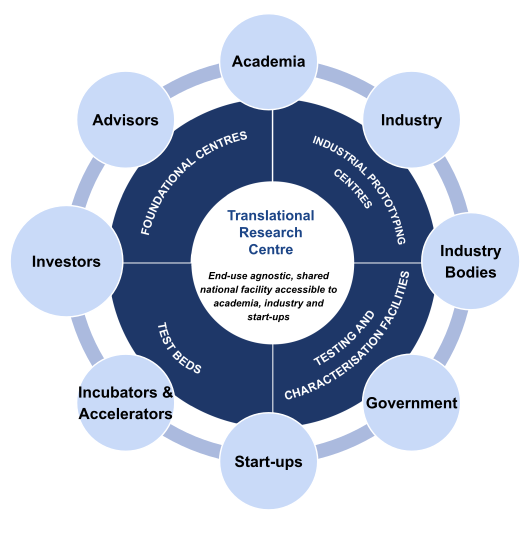
What India has almost none of, he says — and he has now looked across the board — is accessible piloting and prototyping infrastructure: facilities to de-risk in, the rung between a working idea and a fundable company.
He is no longer only prescribing. Mirik helped start ITRI — India’s Translational Research Initiative — a nationwide philanthropic effort to set up and strengthen translational research centres in the country’s leading research institutes: precisely the shared lab-to-market infrastructure he has been arguing for.
“A lot of companies are uninvestable because of these limiting factors. You can never justify building a piloting and prototyping facility to begin with.”
“If there is a pilot facility as a common good — you raise 2–3 crore, build some consumables, rent it for 50 lakh, and do it. Then the amount of innovation will skyrocket.”
Planet is his live example. The company has been able to pilot and prototype at ATIRA, the textile-research institute in Ahmedabad — imperfectly, he notes, but decisively.
“Even in the case of Planet — the role that ATIRA has played. There are some challenges with ATIRA, but in the end, you are able to do piloting and prototyping. If that machine you had to buy, Planet would be over.”
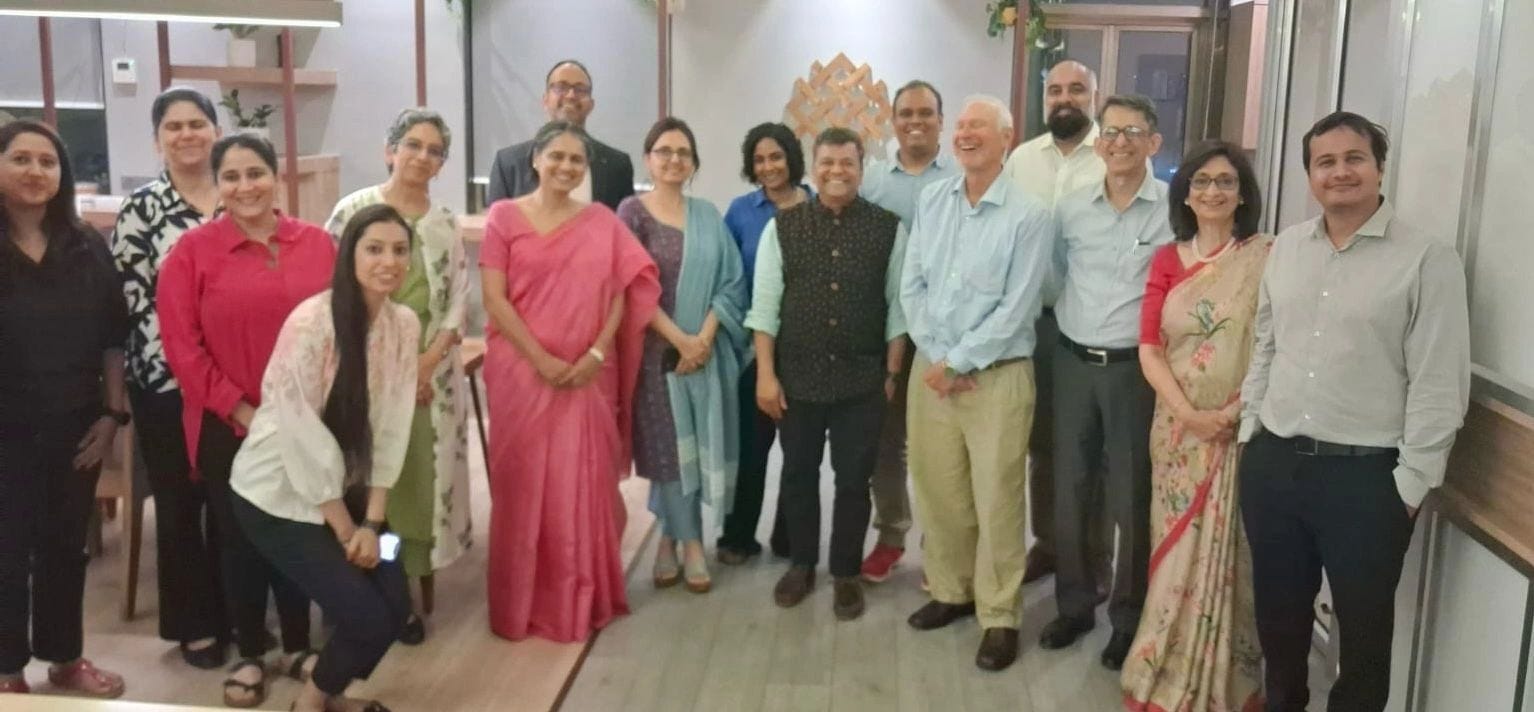
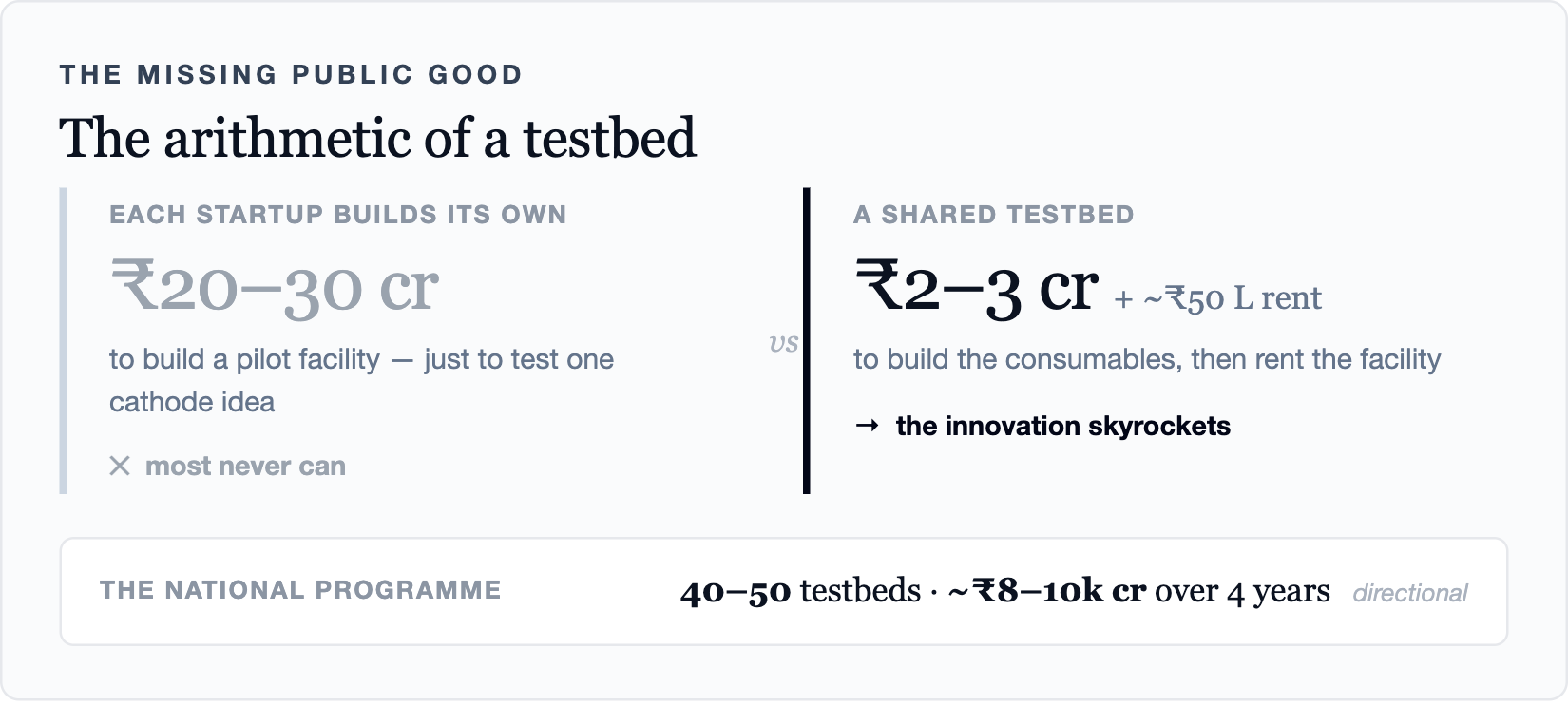
He has priced the whole prescription out. Perhaps 40–50 testbeds across the country would do it. A membrane testbed might cost 20–25 crore across three or four sub-facilities.
A solar one runs 50–60, because the prize there is next-generation chemistry: today’s silicon modules sit at 22% efficiency, perovskites promise 28% at almost the same capex — and the IISc and IIT Bombay groups working on them have nowhere to test at scale.
Agriculture needs its own, for phenotyping. A national programme, he reckons, could build all of it for 8,000–10,000 crore over four years.
“As a country, if you spend 8–10 thousand crores in four years, you can get all of this. Which is trivial. The value it generates — it’s a very critical bottleneck to solve.”
The model has to be government plus philanthropy plus grants, with industry giving not upfront cash but a commitment of use — and Spectrum is already funding pieces of it, including a membranes centre.
“The right way is to partner with the government. Industry should give a commitment of use — that, industry can give. You build the facility. This is the whole catch-22 in India: no one is building it.”
His Plan B is to stop waiting. He and a handful of other philanthropists may simply fund eight to ten testbeds themselves. Philanthropy can move in a few years where government processes might take ten. And, as he says about climate generally, the time-sensitivity is the whole point.
There’s a sibling problem to the testbed: the first commercial plant a new technology ever builds — the FOAK, in his shorthand. The plant, he says, that nobody wants to fund.
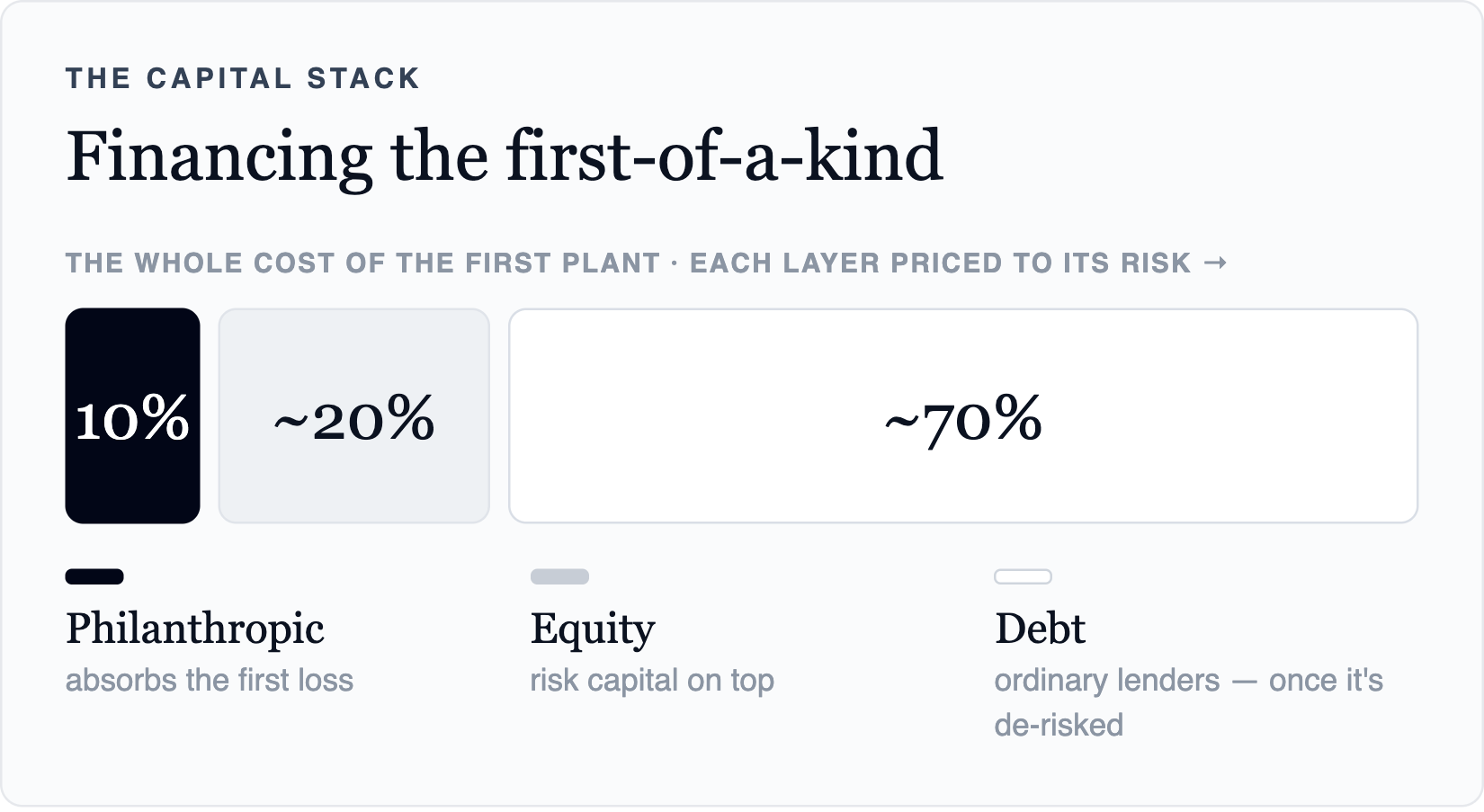
“The first-of-a-kind plant is the most risky. Once you get that running, everyone will come. Here, we took the call — our name is there, and we’re putting a big amount, so people follow. But who’s going to take that first risk? It’s a core bottleneck.”
His proposed fix is, again, a stack of capital — each layer priced for the risk it is bearing, so a first plant becomes financeable.
“You take the philanthropic capital — say 10% — and underwrite the whole thing, so they take the first loss. Then you put some equity on top. And 70% is still debt.”
Breakthrough did something like it in Europe, he notes. India hasn’t, and the shallowness of Indian capital markets makes it worse. The same gap is showing up in Spectrum’s newer interests: in geothermal, nobody knows who funds the first drill.
Those newer interests come from the same conviction that runs through everything he backs: efficiency is the smaller lever, generation is the core one.
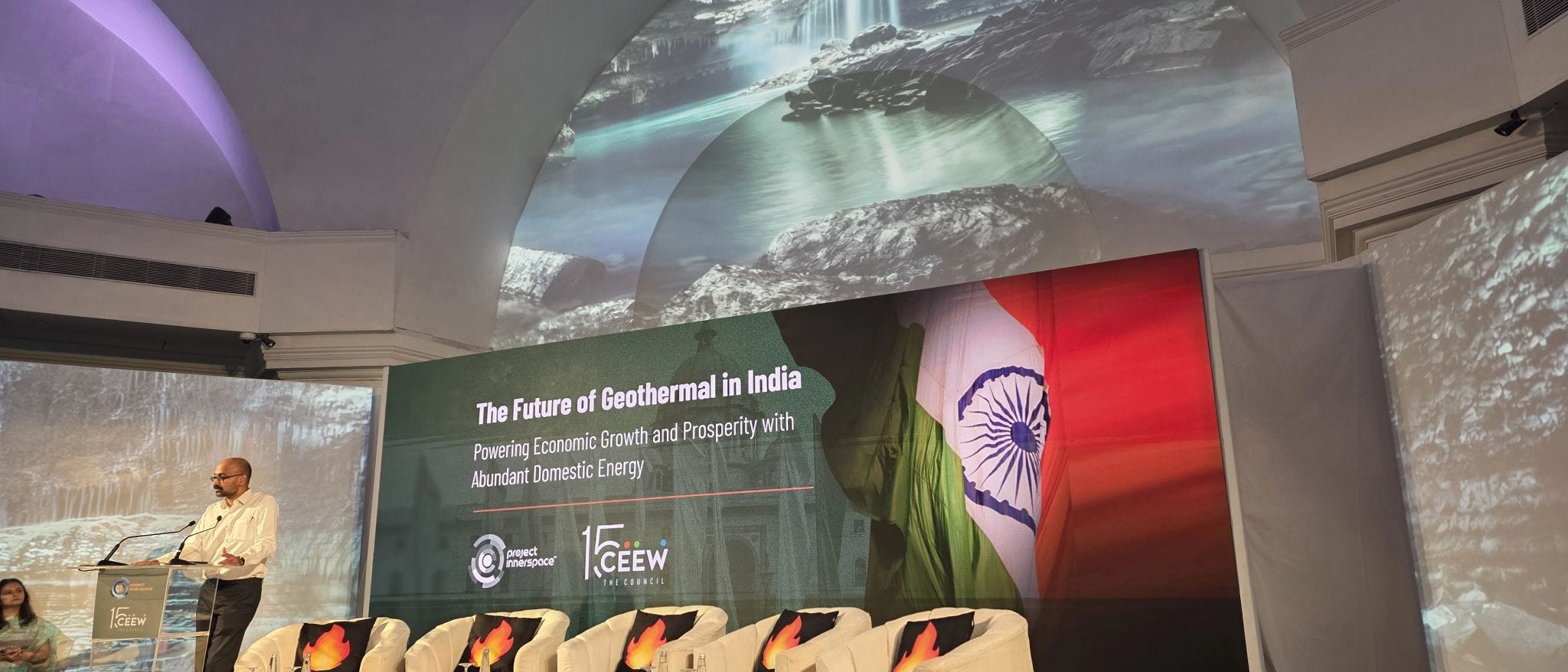
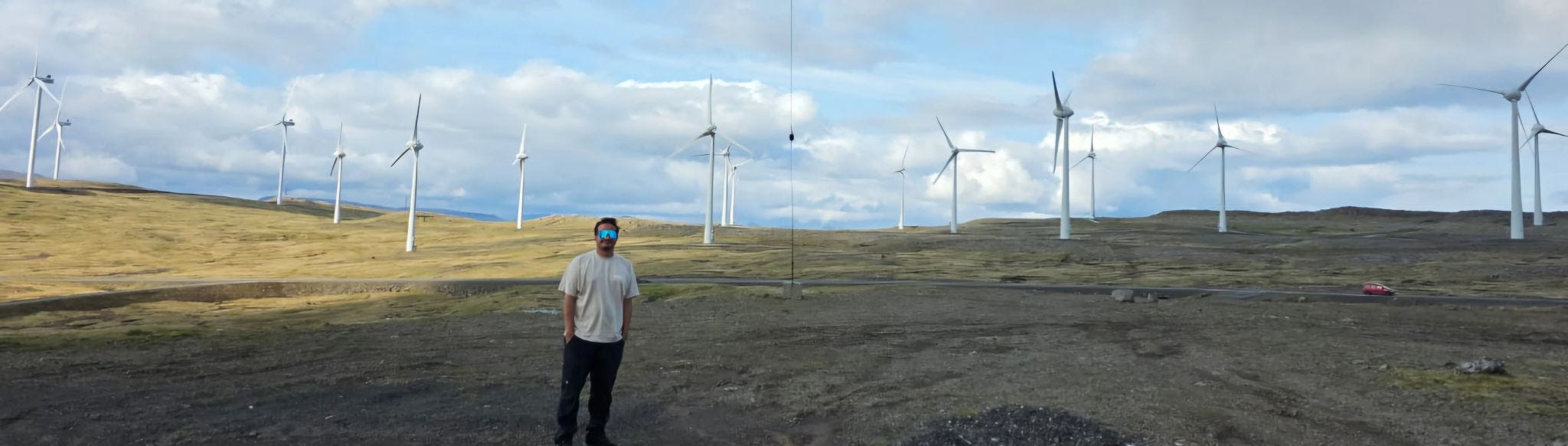
The bets are Copenhagen Atomics, the Danish company building thorium reactors, and Quaise, which is drilling toward deep geothermal — baseload, the always-on power a grid needs underneath the solar and the batteries.
Section by section
Ask him about “the limiting factors in front of climate” and he refuses the premise before answering it.
“Climate has to be taken section by section. In solar, the limiting factors are completely different from something in, say, nuclear.”
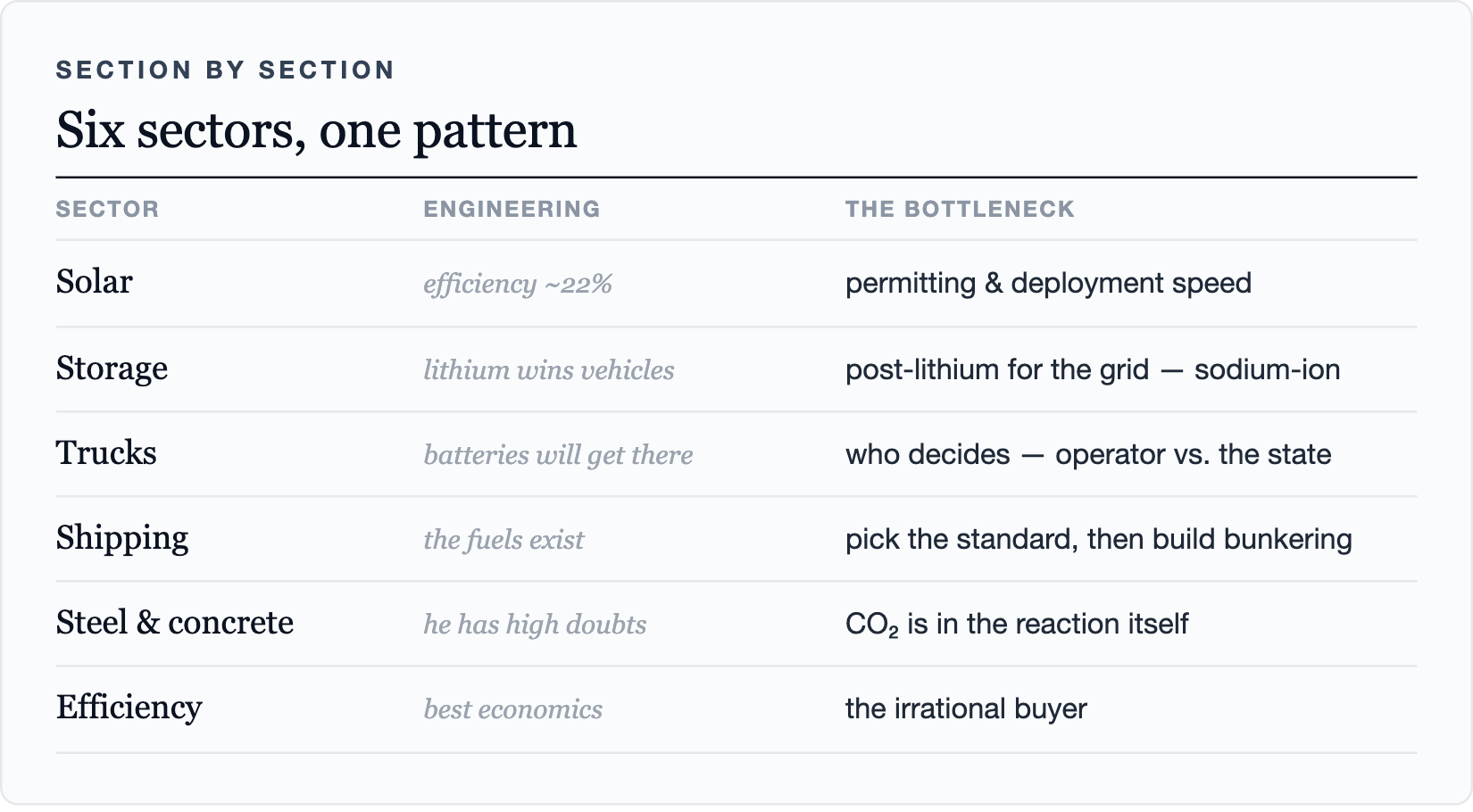
Solar. The technology argument is over; today’s constraint is on the ground and in the paperwork.
“Technologically you are there — you have 22% efficiency. The issues now link around permitting and deployment. How fast you are able to deploy on the ground — that also has automation-related opportunities.”
There are reliability problems nobody owns. And beyond silicon sits the perovskite jump he wants testbeds for.
Storage. Lithium wins vehicles; he doubts it wins the grid.
“Lithium is a concentrated commodity. Eventually you will not be able to use lithium for grid — the numbers will not work out. You need to solve for sodium-ion. That is the most promising new innovation on the storage side.”
Trucks. Batteries will get there. The bottleneck is a mismatch in who decides.
“The decision of a truck is made by a truck operator. The decision of charging infra is made by the government.”
Even Musk, he points out, needed the state; the US charging network is thin regardless, and only China has solved it at scale. Which turns charging into a standardisation problem — and standardisation, in his taxonomy, is grant-and-government work, not equity work.
Shipping. The same theme, further out. Marine fuel will move from fuel oil toward methanol or ammonia; someone must pick the standard, and then every port needs bunkering built to it.
“Someone has to figure out that methanol is the standard. Then you have to correspondingly build all the bunkering at all ports. These are huge opportunities — but I don’t think it’s a startup opportunity. Large-scale chemical plants need to be built. A good opportunity for a company like Aarti. Not all things in the transition are innovations.”
Steel and concrete. The two he will not talk himself into.
“I have very high doubts on steel. I have been studying steel for some time — decarbonisation of steel is very challenging. They call it green steel now; they put everything in green. And concrete has fundamental challenges, because some of the CO2 is emitted in the reaction itself. How do you solve for that?”
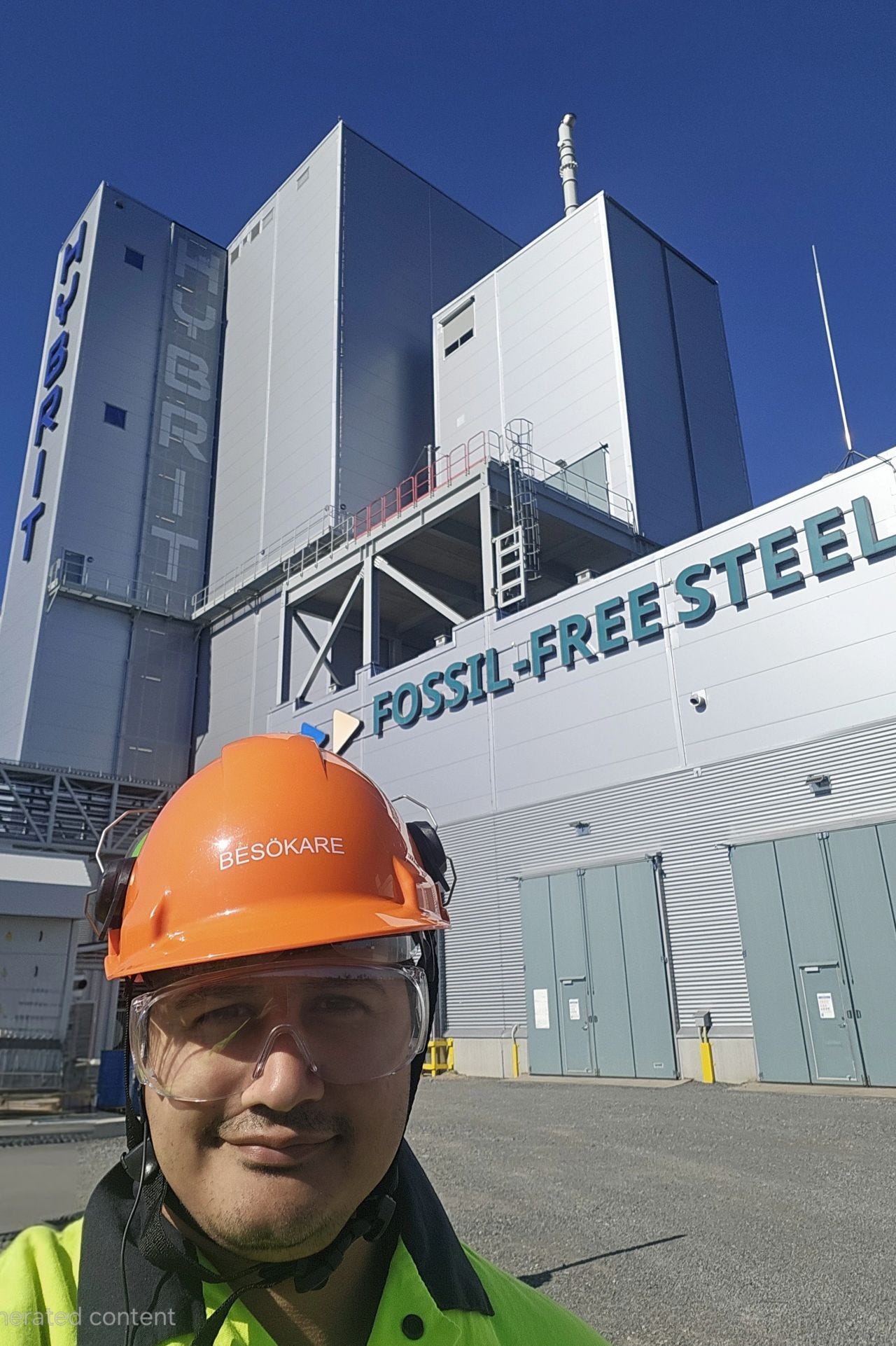
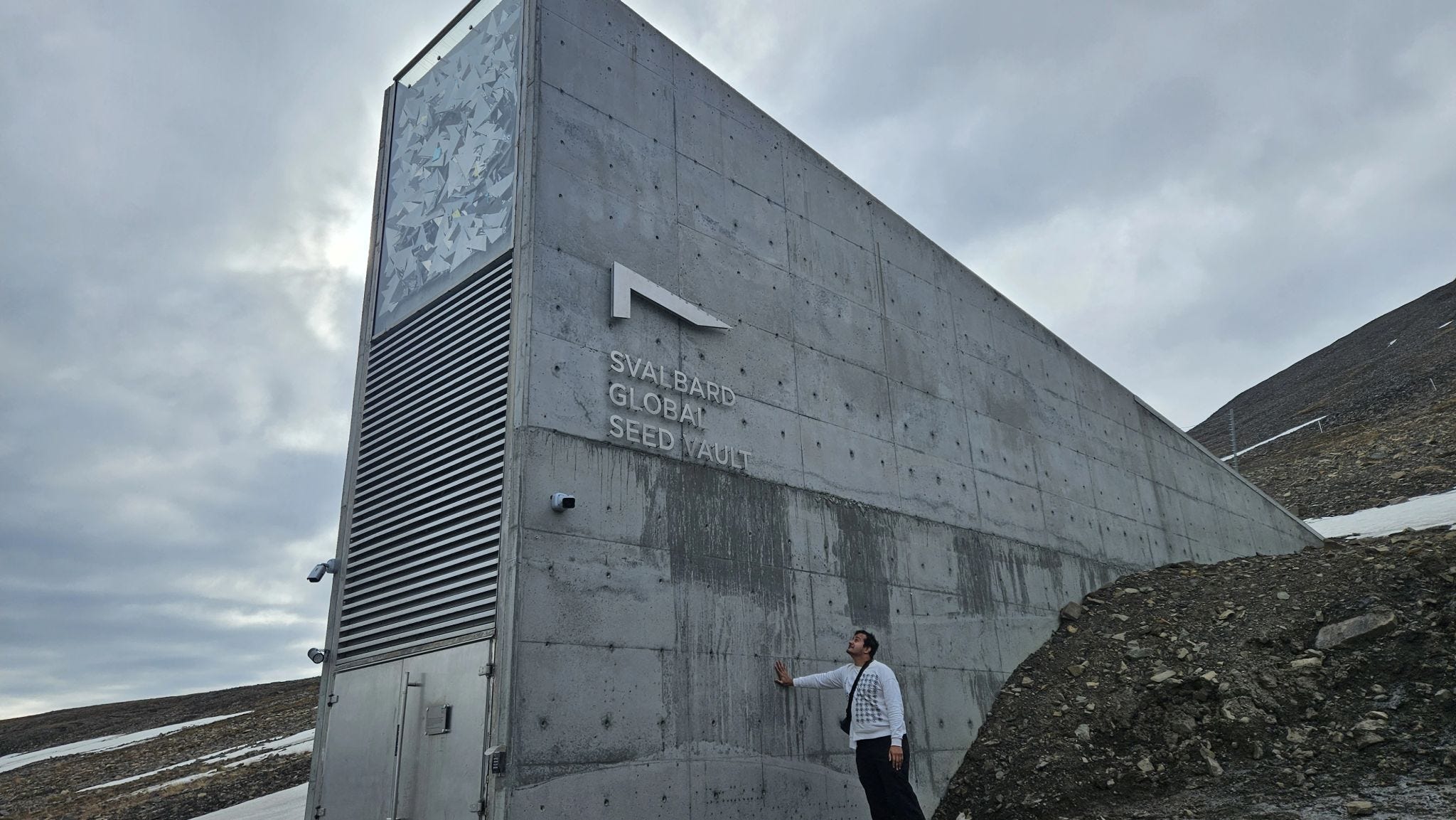
“I had a course on the details of the blast furnace during engineering, but seeing a 2 million tonne per annum furnace live was an exhilarating experience. It also reinforced the scale of the challenge of steel decarbonisation.”
Efficiency. The overlooked section, and the one with the cleanest economics — when the buyer is rational.
“Energy efficiency in the end is a cost-saving play. Higher capex upfront, opex savings after. If the payback is under three or four years, it goes through. Energy efficiency for a rational consumer: very easy. For an irrational consumer: super difficult.”
B2B buyers run the arithmetic; households don’t, which is why fridges and ACs get sold on stars and branding. So Spectrum funds the layer behind the label — non-profits that work with the Bureau of Energy Efficiency on what the next five-star rating should demand. On that basis, he says, the whole country’s appliances get determined.
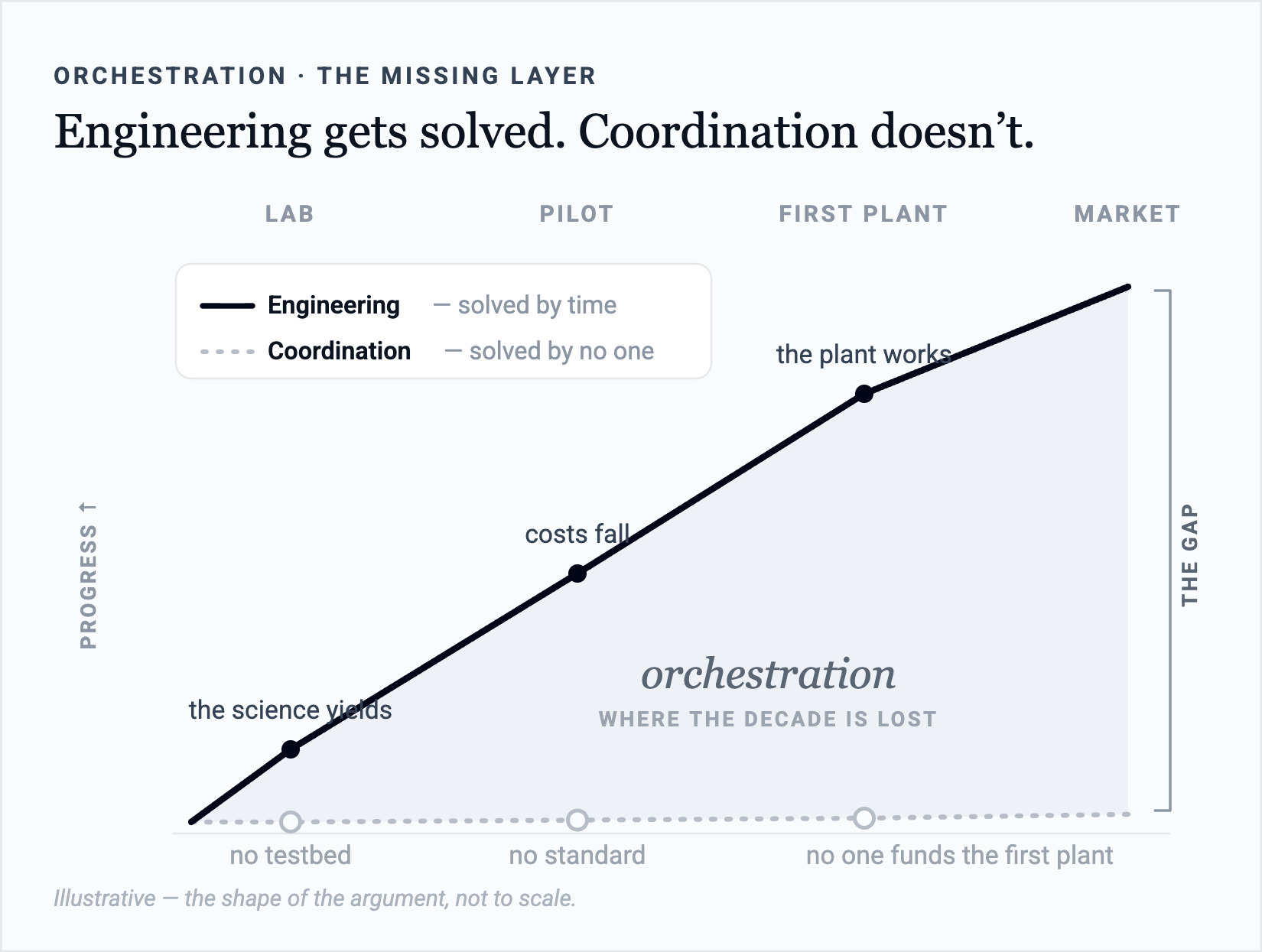
The engineering problems get solved — heat pumps arrive, batteries improve, costs fall. What doesn’t solve itself is the coordination: the permitting, the standards, the ports, the ratings. The stack again — and the missing layers are never the glamorous ones.
Food systems
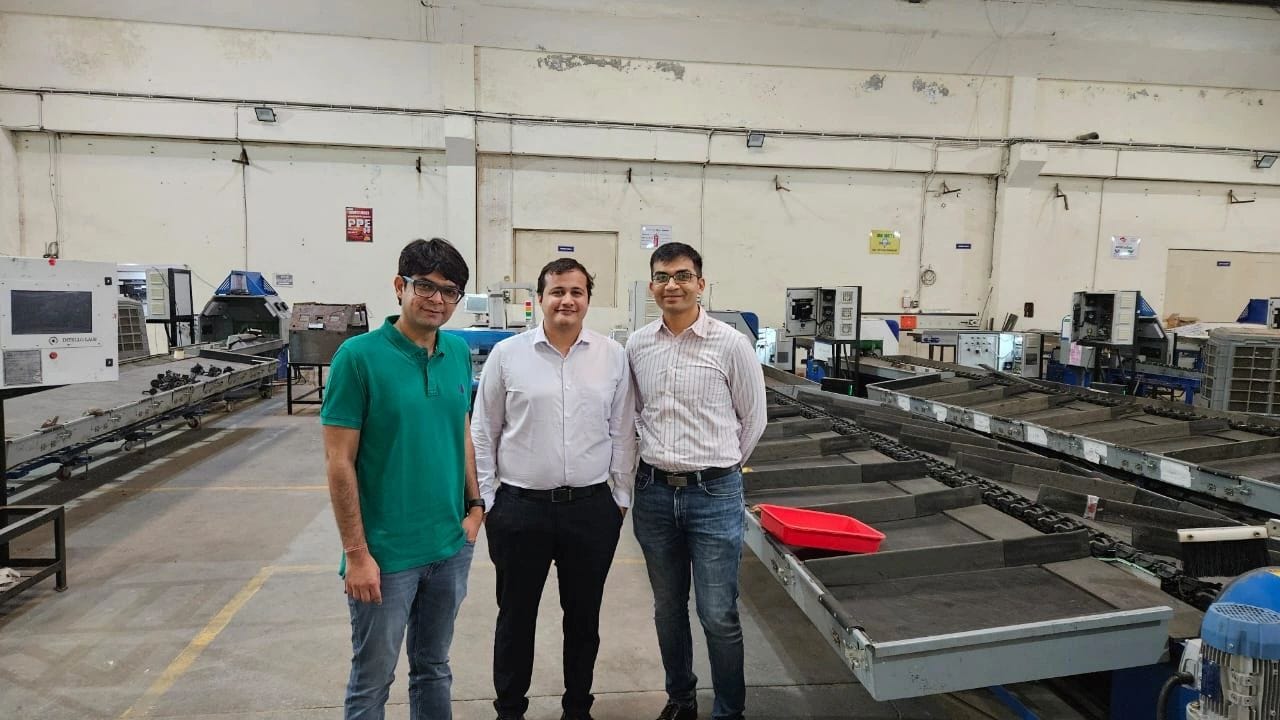
For all the talk of solar and batteries, the bet Mirik gets most animated about is the one he says people don’t talk about: food.
His arithmetic here is about land and diets, and he runs it as a scenario.
“Let’s build a scenario: say you become 15% more efficient across the whole agri-value chain. The rest is still there — in fact, it will also increase, because as affluence increases, people are going more and more into a livestock-based diet, in China and India. You are still becoming efficient — and climate-wise, you are screwed.”
You can’t out-engineer what people want to eat; you have to match taste and texture exactly. But the prize is enormous, and it’s about the land more than the protein.
“If you’re able to get 40–50% of the land out of the food system — just getting it out — then the drawdown from the vegetation growing back will be so large that it will ensure our emissions peak and come back.”
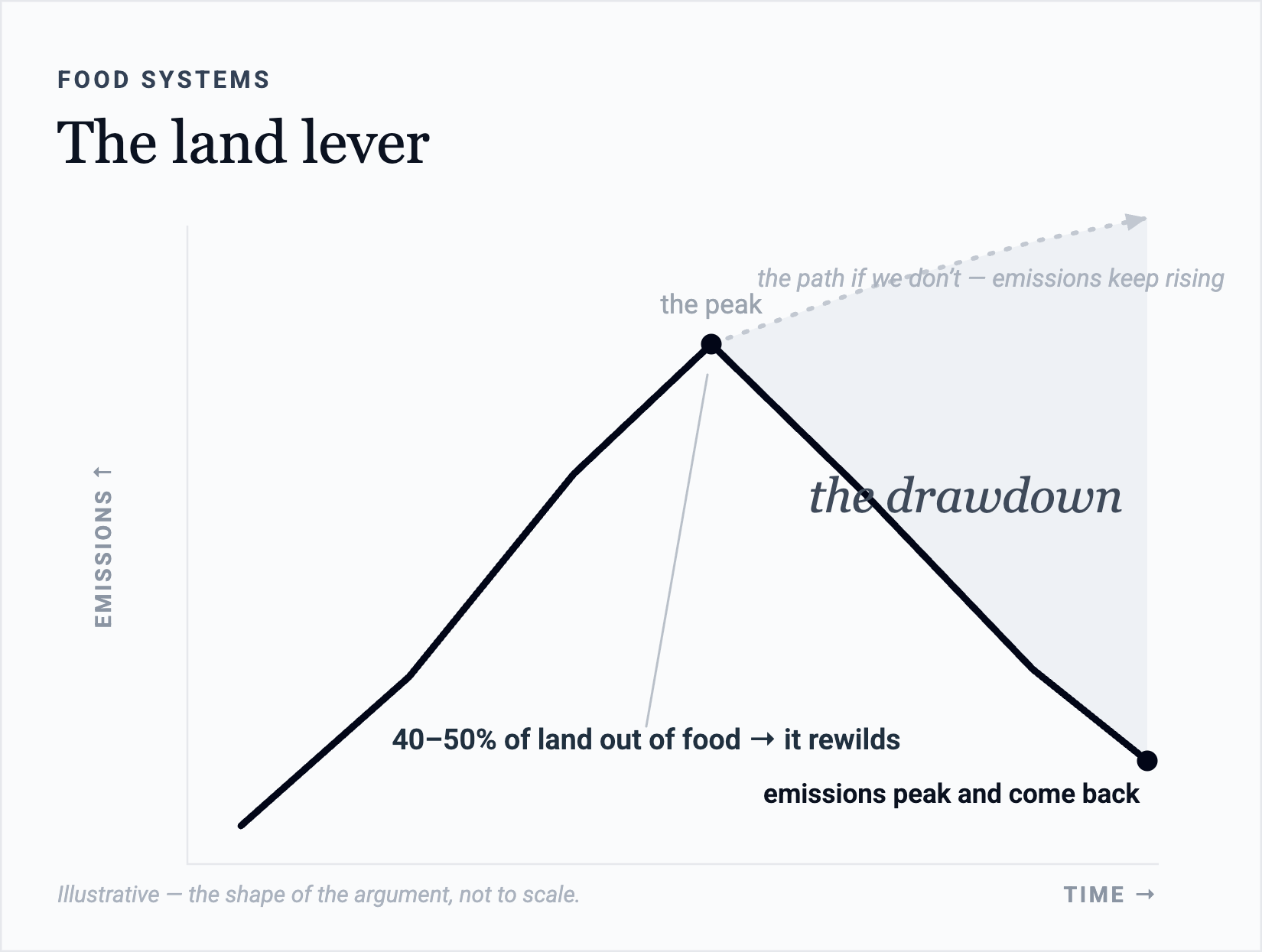
Mirik is fixated on the drawdown — what brings the curve back down after the peak — and freed-up agricultural land, reforesting itself, is one of the few levers he rates large enough to matter. He spent a recent week running climate scenarios with AI to test it: where the peak lands matters less than what pulls the curve down after it.
His reasoning here follows a distinction he applies everywhere.
“This is the classic difference: do you solve for energy efficiency only, or for energy generation? Take the analogy to calories. Same in circularity — do you solve only for recycling, or also for mining? You do things efficiently, that’s fine, it’s good. But the big ugly problem is still at the calorie generation.”
Efficiency plays are real — Spectrum has food-wastage bets, GreenPod Labs among them — but they work at the edges. The core problem is where the calories come from.
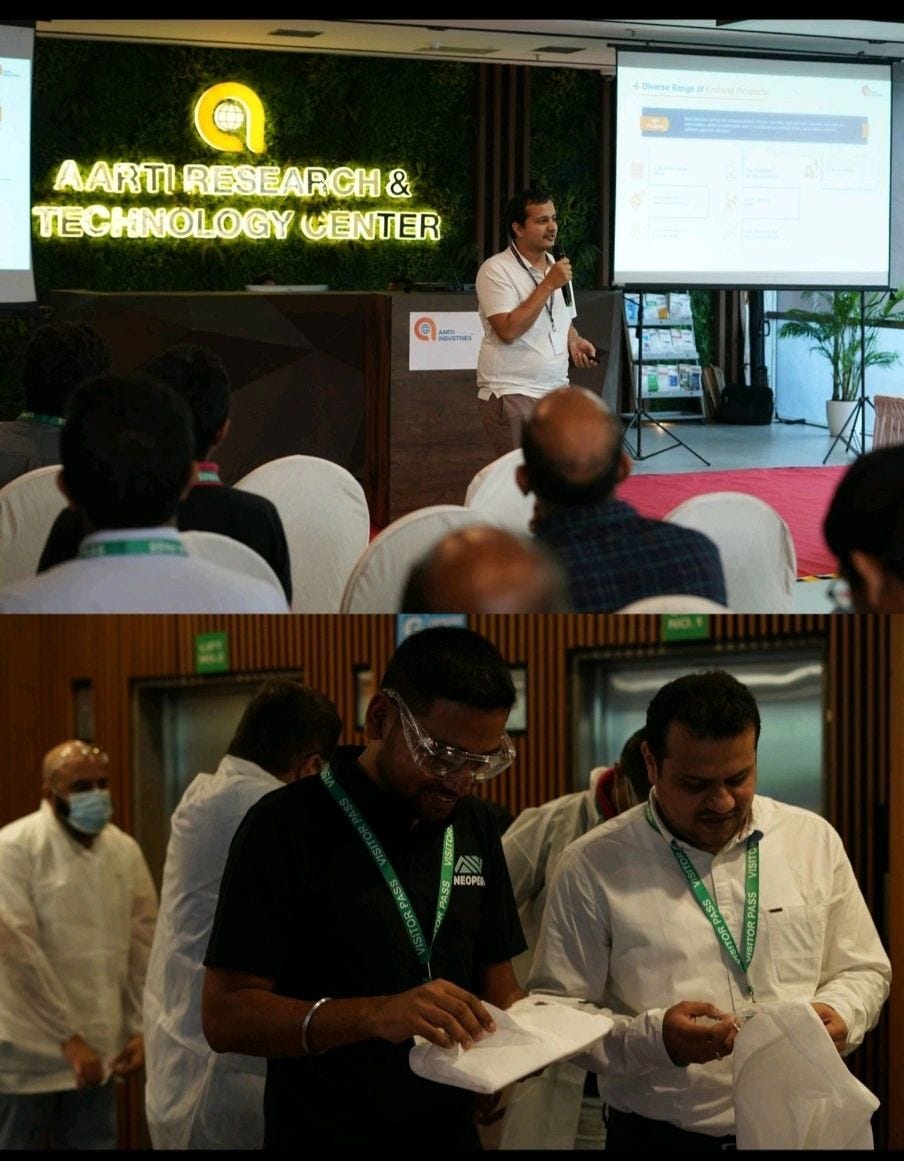
So Spectrum has chased generation on two tracks. First, the technological route: it became a meaningful early funder of New Harvest, the cellular-agriculture non-profit in the US, supporting it through a critical phase.
Then the bigger, current bet — a sizeable position in Demolish Foods, the Bangalore-based alternative-protein company — solving for texture and taste first, and taking its product to the big European players to prove it.
“You really need to solve the texture, the taste, the consumption problem. They’re doing it for chicken — first you go for the most difficult problem, which is chicken. We should be able to do cost parity, with the right taste and texture. That’s the aim.”
The back end
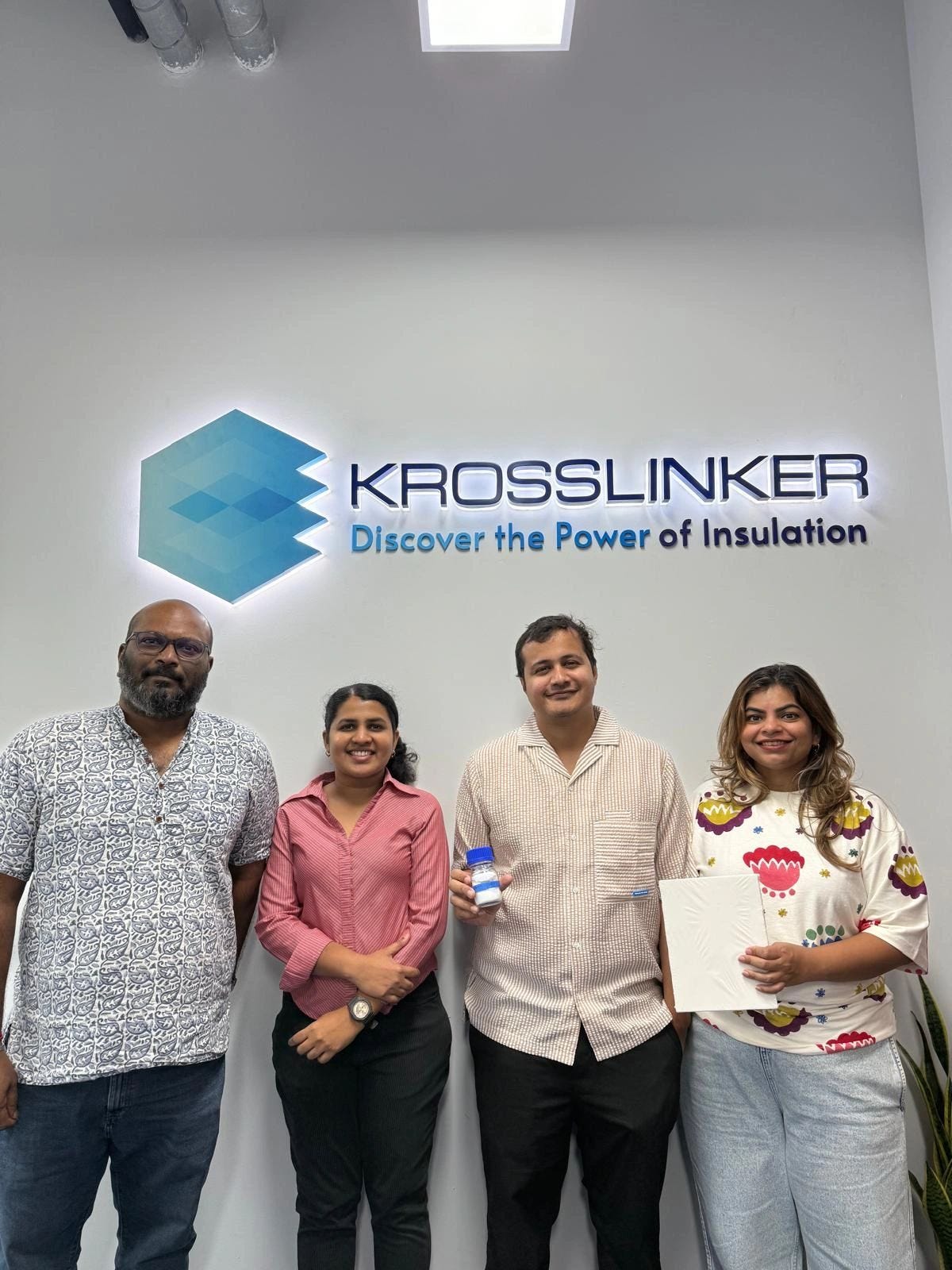
“Aerogel is an ultralight material with extremely low density and thermal conductivity. This makes it useful for a variety of use cases, especially insulation. More efficient insulation leads to energy efficiency.”
There is a reason materials keep surfacing in this conversation: Mirik’s whole climate worldview rests on a single line.
“Climate is a material and energy problem at the end.”
And materials, he argues, are systematically underrated for a structural reason: they sit at the back of every value chain, where nothing is visible and nothing is exciting.
“All the big, important problems are the ones that are actually behind the scenes. The visible problems are the ones everyone gets excited about — but those are not the problems that matter. That’s why materials are always at the back end. That’s not the problem that gets people excited.”
The robots, the space-tech companies, the things investors do get excited about — a lot of them, he says, are materials stories wearing a more glamorous costume. Maybe the real innovation in a launch company is an alloy that holds methane and oxygen together at temperature; the investors will hear the story about space. Which is why the bets are less crowded — and why he hunts there.
“Even till today, I don’t know any lightweighting material company in India apart from Planet. NoPo Nanotechnologies is the only indigenous technology for single-walled carbon nanotubes that I know. It’s not like everywhere there’s a plethora of options.”
This is the lens he brought to Planet, the advanced-materials company Daniel had introduced him to. From day one, Mirik told its founder Gagan one thing, and repeated it until it stuck.
“The first thing I told Gagan on day one: you have to be a materials company. You cannot be a truck.”
The machine in the column
Mirik is unworried about AI’s energy appetite, and enthusiastic about what it does for hard-tech. His favourite proof point happened inside Aarti.
“One 27-year-old, who had no idea of coding, built a digital twin of a distillation column. From that correlation we were able to change the ratios of steam required. Effectively we’re saving crores a year — and more interestingly, that means coal is not being used. Direct climate impact.”
On the worry that AI will gobble the grid: the panic, he says, is an American panic. The US grid has been flat for decades and suddenly has to grow. India and China have been building generation the whole time, and can ride the wave. And the companies driving the new demand are the ones best placed to pay for what comes next.
“Big tech are generally pro-climate. They are able to pay for a geothermal plant, a nuclear plant — so they will actually help de-risk broader climate technologies. A one-gigawatt data centre might cost 50 billion; the energy is maybe 2 or 2.5 billion of that. They will be happy to do that. Google will actually help usher in the next energy transformation.”
Fervo, the geothermal company, has Google as a partner — his case in point. His real worries sit elsewhere. One is water: data centres concentrate their draw in already water-stressed regions, and he thinks that becomes the bigger issue. The other is livelihoods, especially India’s service jobs. On the climate ledger, though, he files AI firmly under positive.
What he backs
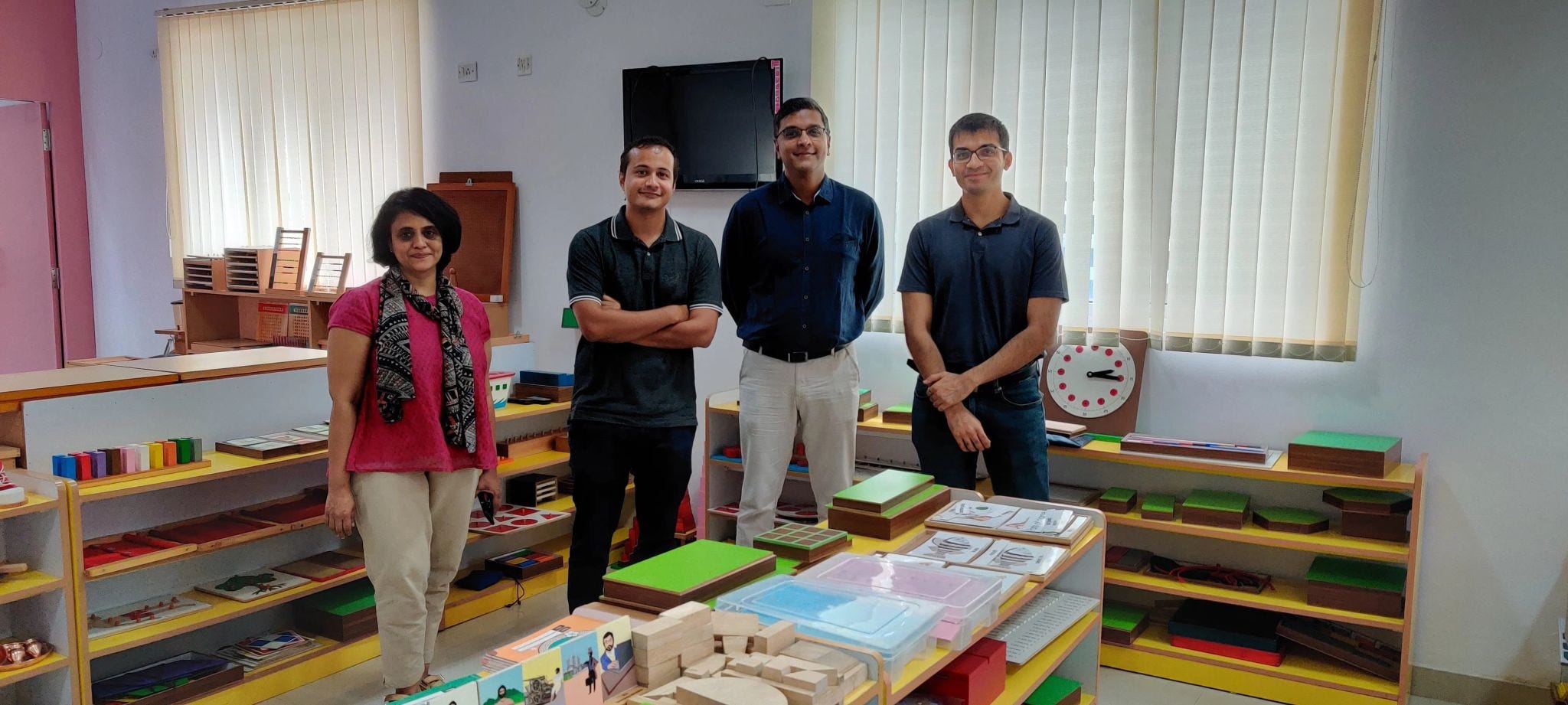
Ask what he looks for in a founder and he starts with the problem.
“The first thing is the problem-statement identification. ‘This is the problem I want to solve.’ That’s how you’re working.”
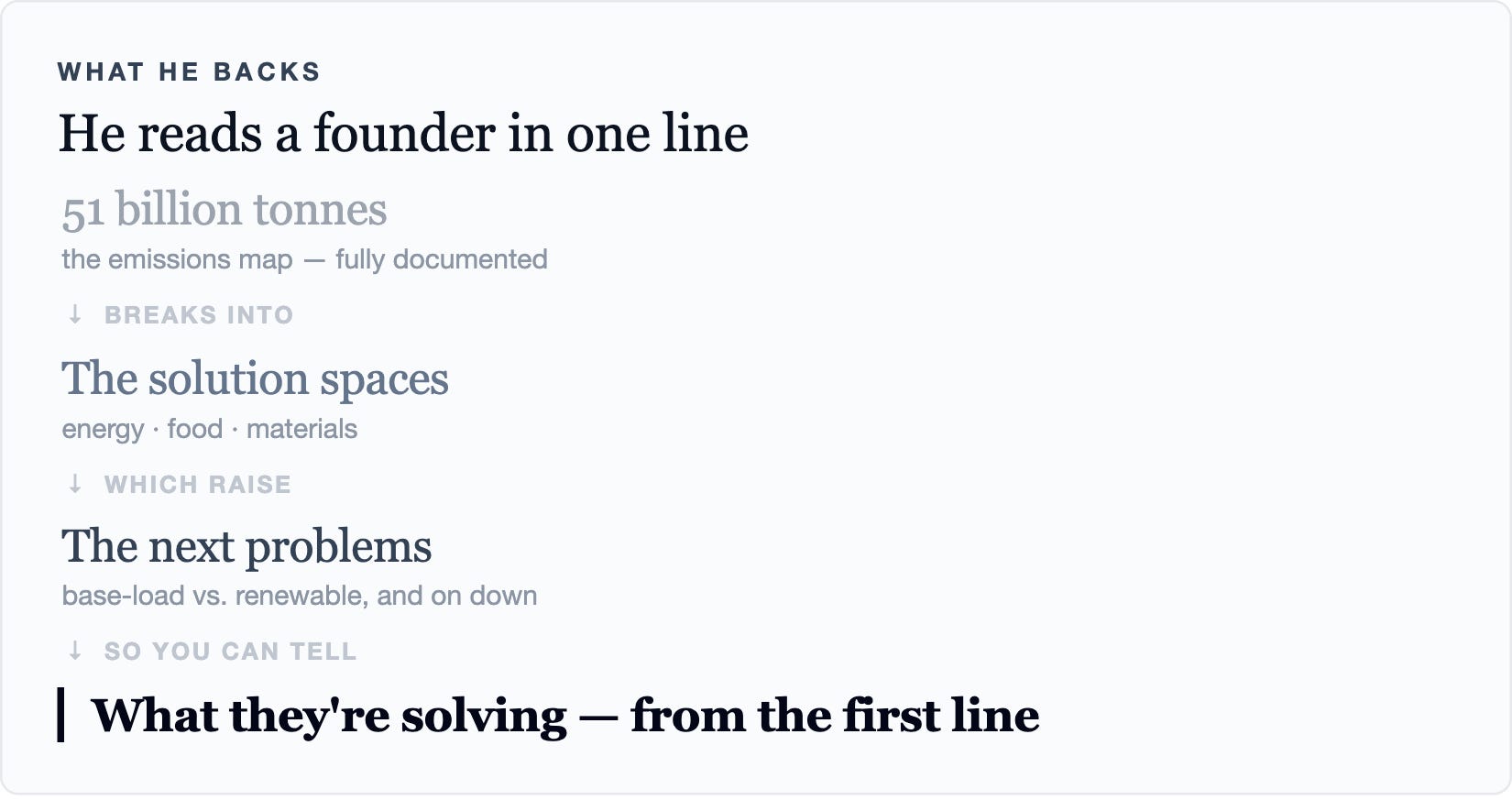
Behind that sits a map he built during the forty courses, and it does most of his filtering before a founder finishes the first sentence.
“You have a list of where the emissions are coming from — 51 billion tonnes. It is very well documented: energy allocates this much, food is this much, materials is this much. Then for all of these emissions, the next level is: what are the high-level solution spaces? And in the solution spaces you start realising new problems — base load versus renewable — and that becomes the next solution set. So the decision of what a person is solving — you can literally know in the first line.”
The map produces red lines as well as green ones. Some pitches end in the first sentence.
“Someone is telling me the hydrogen story — I have a very strong thesis on hydrogen, because I know the first principles. Someone tells me, ‘I will put hydrogen in a car.’ I say you shouldn’t. Whether it’s internal combustion or fuel cells, I am very clear it’s not making sense to me. I will not invest in that. You automatically start getting the red lines.”
India, he thinks, has spent years riding the hydrogen narrative while the depth underneath goes unbuilt. And the same map produces instant conviction when the physics is on the founder’s side.
“No one came to convince me of lightweighting. The importance of lightweighting is about energy efficiency — whenever there is energy efficiency, the problem lends itself first. Then, if someone comes with a lightweighting idea, you benchmark. You double-click. What is the basic technical logic?”
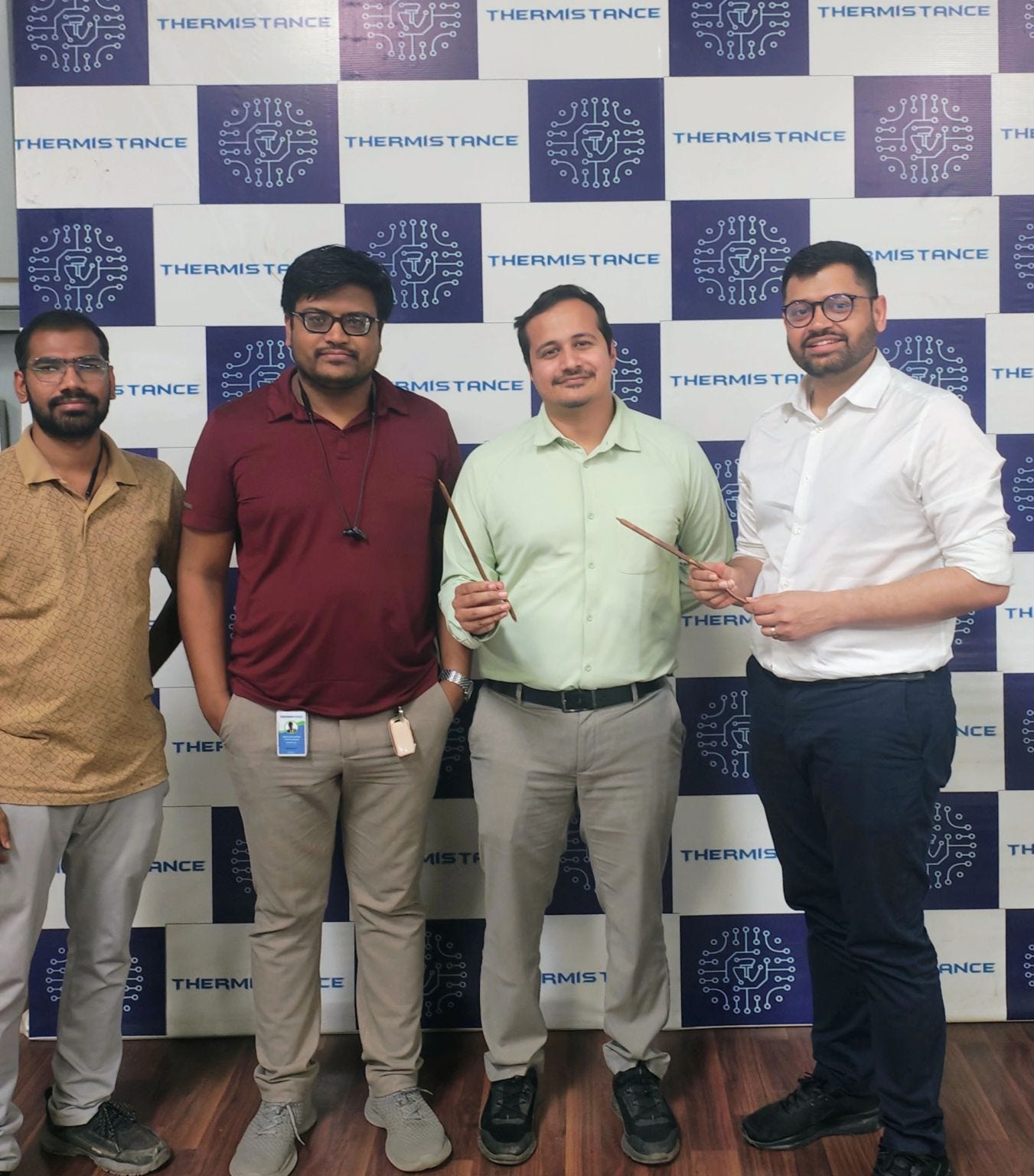
“Efficient heat transfer is maybe one of the most underappreciated properties of a system. Using material science, if the heat can be dissipated better it becomes an enabling technology that unlocks functionality that wasn’t available earlier.”
Because the spaces Spectrum plays in aren’t crowded the way SaaS is, he can take riskier, deeper bets. He has the technical conversation and reads the papers. And he’s scathing about the gap this exposes in the ecosystem.
“There’s nobody in the venture capital ecosystem who understands this at that level — or who’s willing to go deep enough. So it’s a black box for most of them.”
Ten years late
Underneath the portfolio sits a conviction about time.
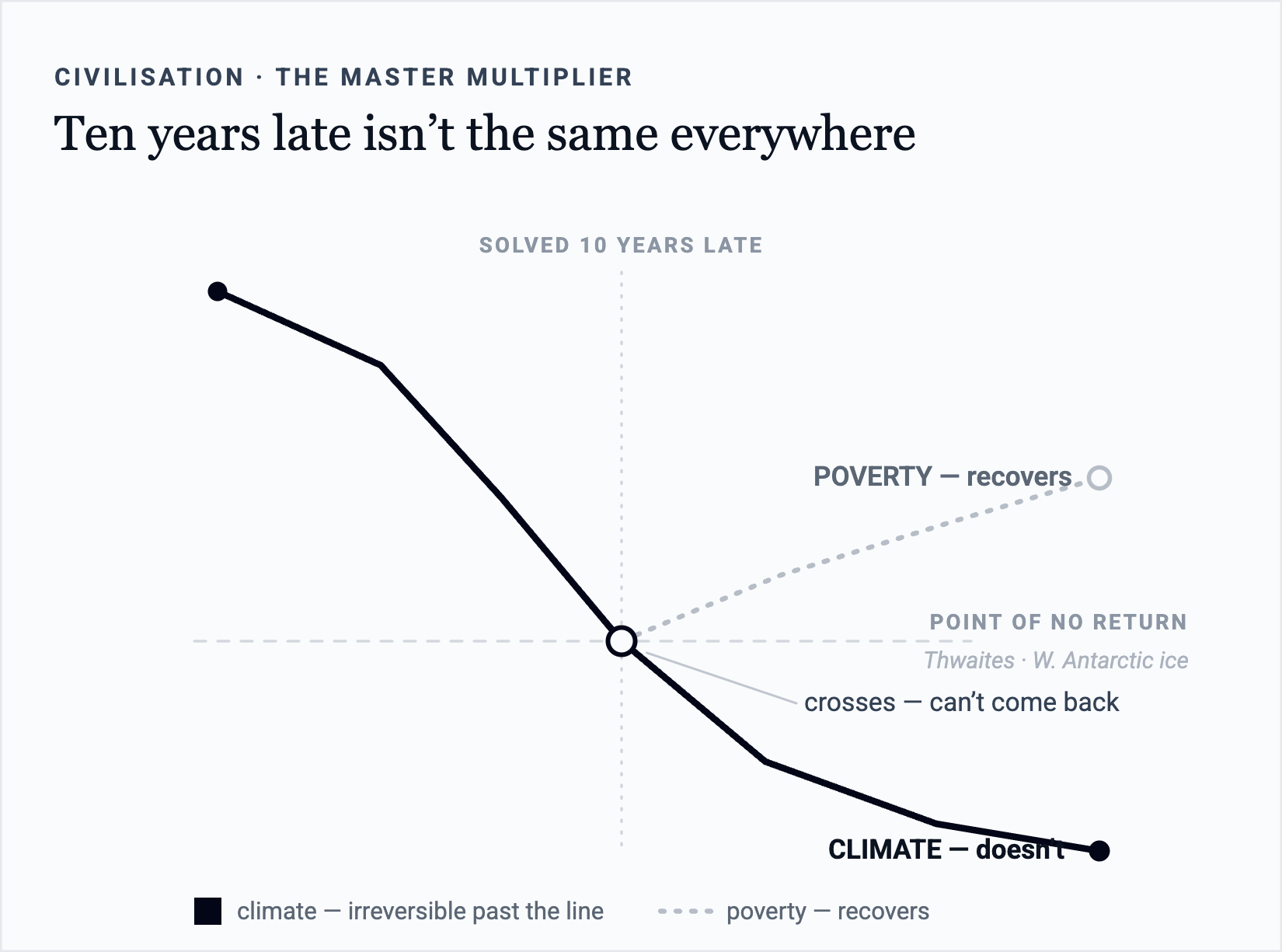
“Say you solve poverty ten years late. That’s obviously not good. You solve child mortality ten years late. But the problem with climate is — if you solve it ten years late, you are screwed much, much more. Because of the time-sensitive nature of the problem.”
The reason is the physics of thresholds.
“You have these peaks in the climate which can trigger tipping points — which will be irreversible problems. Once your West Antarctic ice sheet gets melted, and Thwaites glacier has a problem, that doesn’t mean you can come back.”
He is, on the evidence, calm about the worst case — he has read enough to believe the system self-corrects short of catastrophe.
What makes the deadline harder is that nobody can meet it alone, and the game is built to punish whoever moves first.
“You can’t — because if you move first and China doesn’t, they are better off. If neither does it, both are better off than moving alone. Statistically speaking, the best solution is that both should do it. It usually doesn’t happen.”
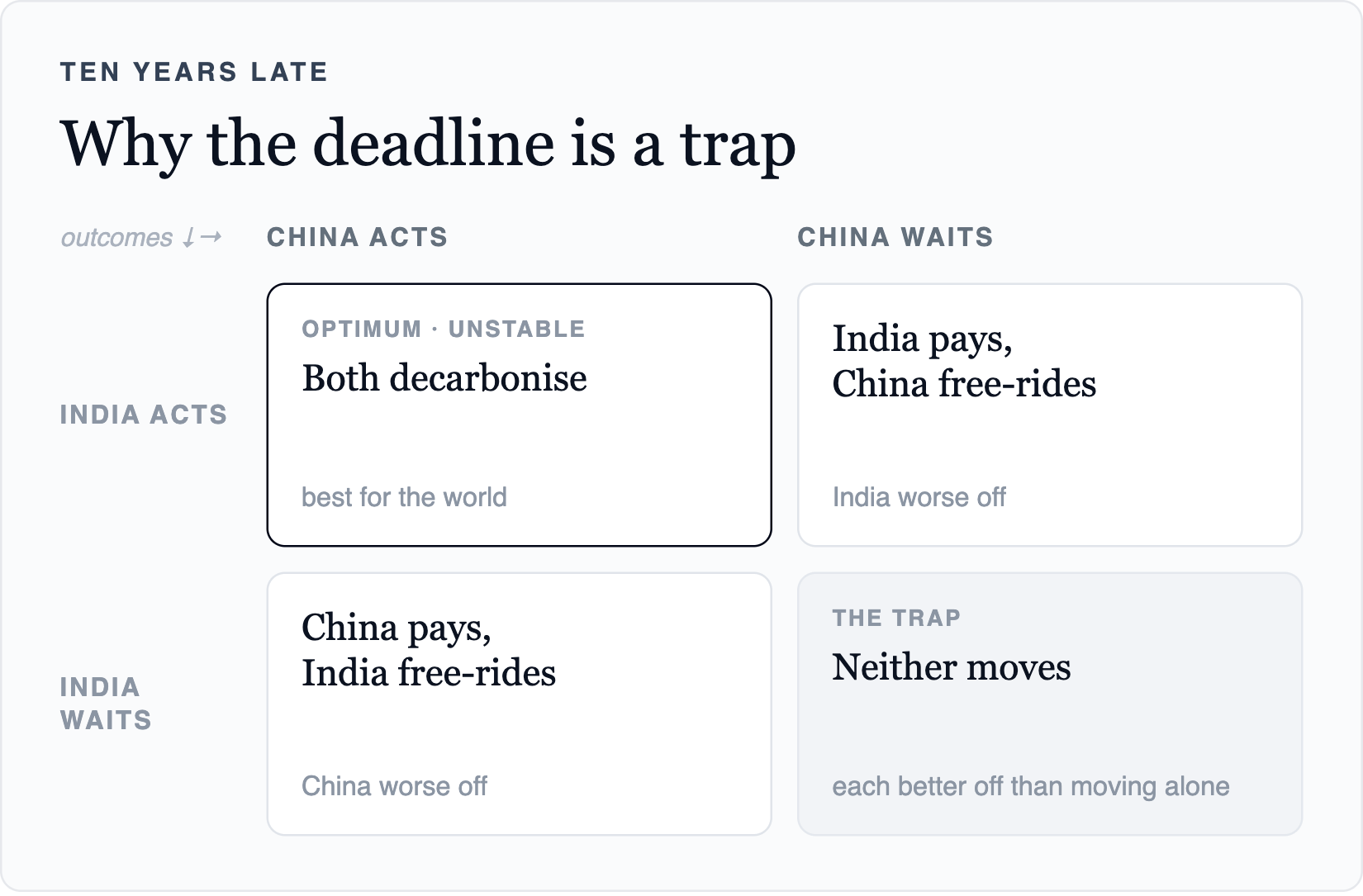
Game theory is one of his favourite subjects and he reads the climate stalemate as a live prisoner’s dilemma. Where he finds hope is in whoever breaks the price logic rather than the politics.
“China is the only big green shoot in the whole system. They are able to reduce the cost of so many of these things that it becomes viable suddenly, everywhere in the world, to get green energy — including India.”
Europe helps through regulation. America, in his reading, helps by accident.
“The only good thing in the US is it is too capitalistic — if your solutions are good, eventually they will adopt. Texas is the biggest wind and solar in the US. And green became cool because of a branding exercise around Tesla. They know marketing well.”
Two refusals keep his thinking clean here. The first is the Indian habit of folding climate into air pollution.
“Half the time when I talk about climate, it’s Delhi air pollution. It’s not climate. Obviously it’s related — I’m not saying it’s not. But you can solve the climate problem and still have an air pollution problem. You can become net zero and still have air pollution.”
The second is the idea that transition costs are a reason not to transition. He takes the livelihoods question seriously — coal communities, dairy farmers, everyone downstream of the old stack — and answers it as a design problem.
“My question will not be, ‘What happens to the community?’ My question will be, ‘What do I do to ensure that the community transitions in a good way?’ But I will still have to do the transition. When the ozone layer — you actually paid people not to make the chemicals. You can have a transition plan. And even after that, if there is a gap, you do direct cash transfer.”
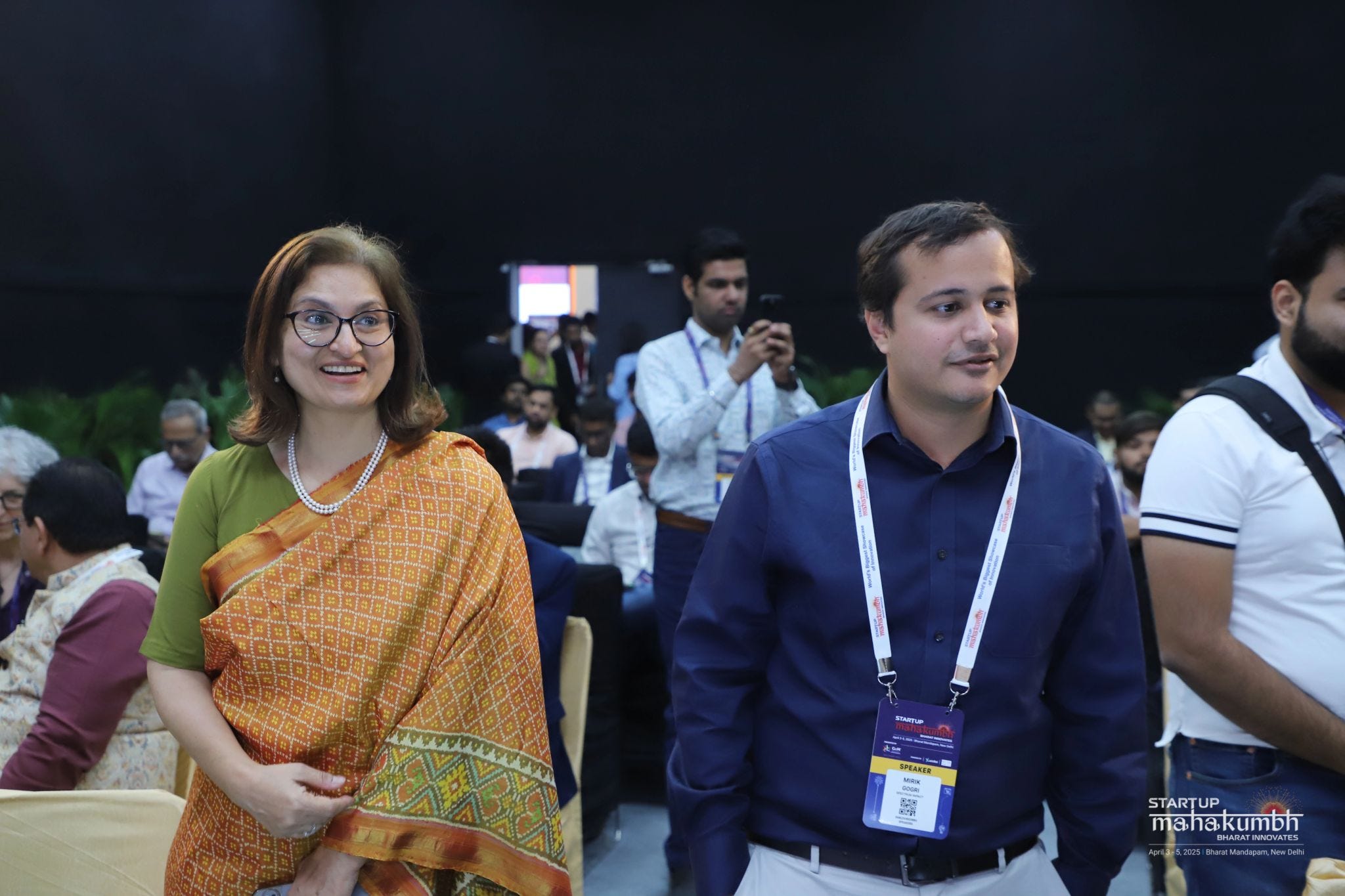
The engineering problems, he keeps saying, will get solved. The coordination problems are where the decade gets lost.
The binding constraint - judiciary
The longer you talk to Mirik, the more every specific problem — R&D, health, manufacturing, climate — resolves into the same root. He’s emphatic that these are symptoms, and the disease is deeper.
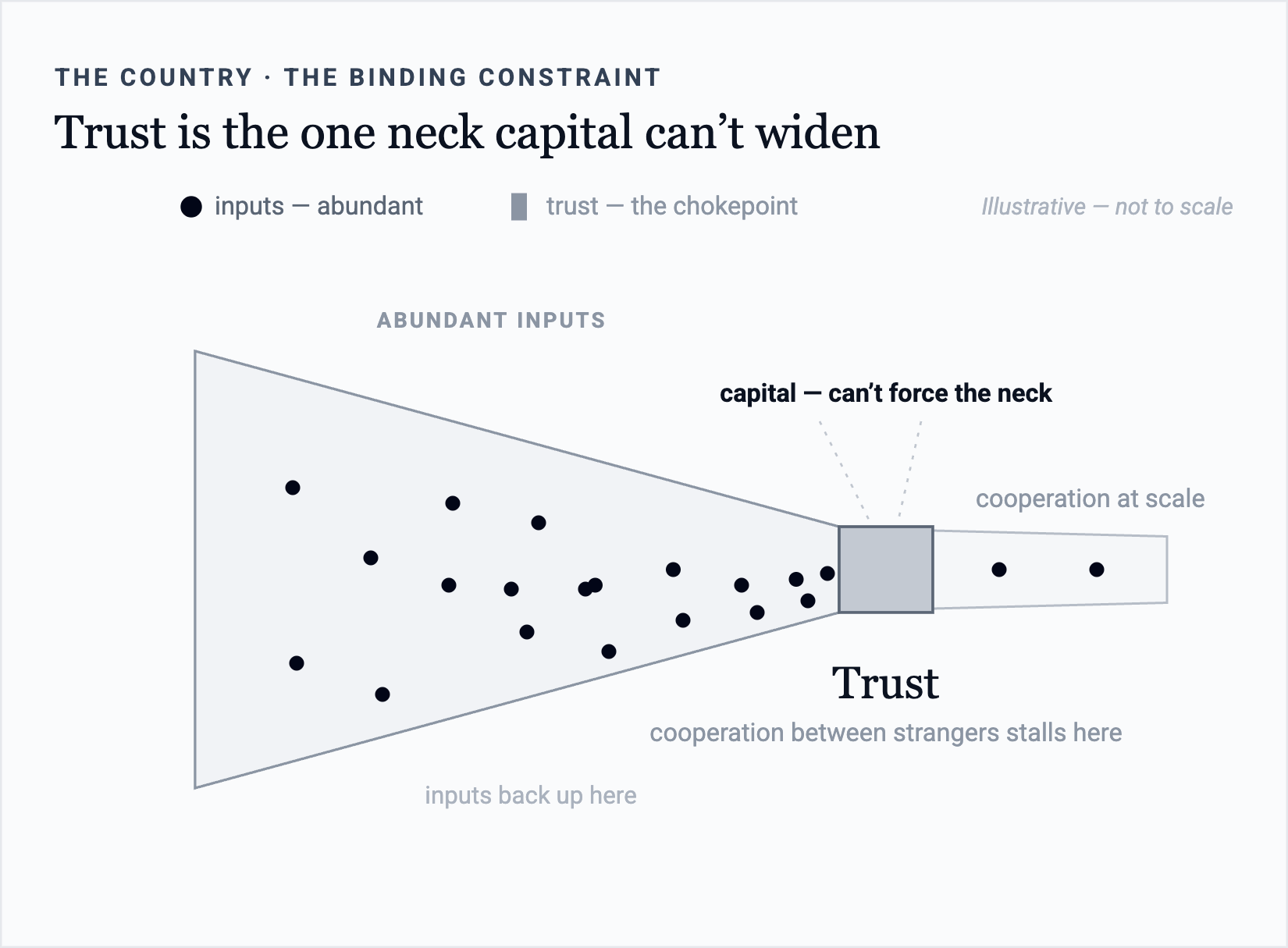
“At the core level, at the hyper-abstraction level — trust. Low trust, resulting in low cooperation. It starts from the system.”
His sharpest illustration is a challenge he poses like a riddle: name one joint venture between two Indian private companies. Not public-sector, not a multinational pairing — two Indian private firms, sharing risk.
“Think about it. That is a symptom of the fact that India is such a low-trust system. Because of the judicial issues, you have such a low-trust system that there are economic problems in your collaboration.”
And so the judiciary, of all things, becomes his candidate for the country’s true binding constraint: contracts are how strangers cooperate at scale, and a contract is only worth the speed and certainty of its enforcement.
“A country growing is cooperation between strangers. Without a very clear, dynamic judiciary, you will not be able to scale cooperation between strangers. Money scales cooperation to one level — but for the next level, you need to enforce contracts. Every contract in India, you’re scared of.”
Worse than slow, he argues, is slow and corrupt, which tilts the field to whoever can outlast the other side — and pushes companies to vertically integrate, trusting no outside partner, until they hit a ceiling they can’t grow past.
“India’s key institutional legacies — the bureaucracy, the judiciary — are effectively a continuation of the British. They were not meant to empower the people.”
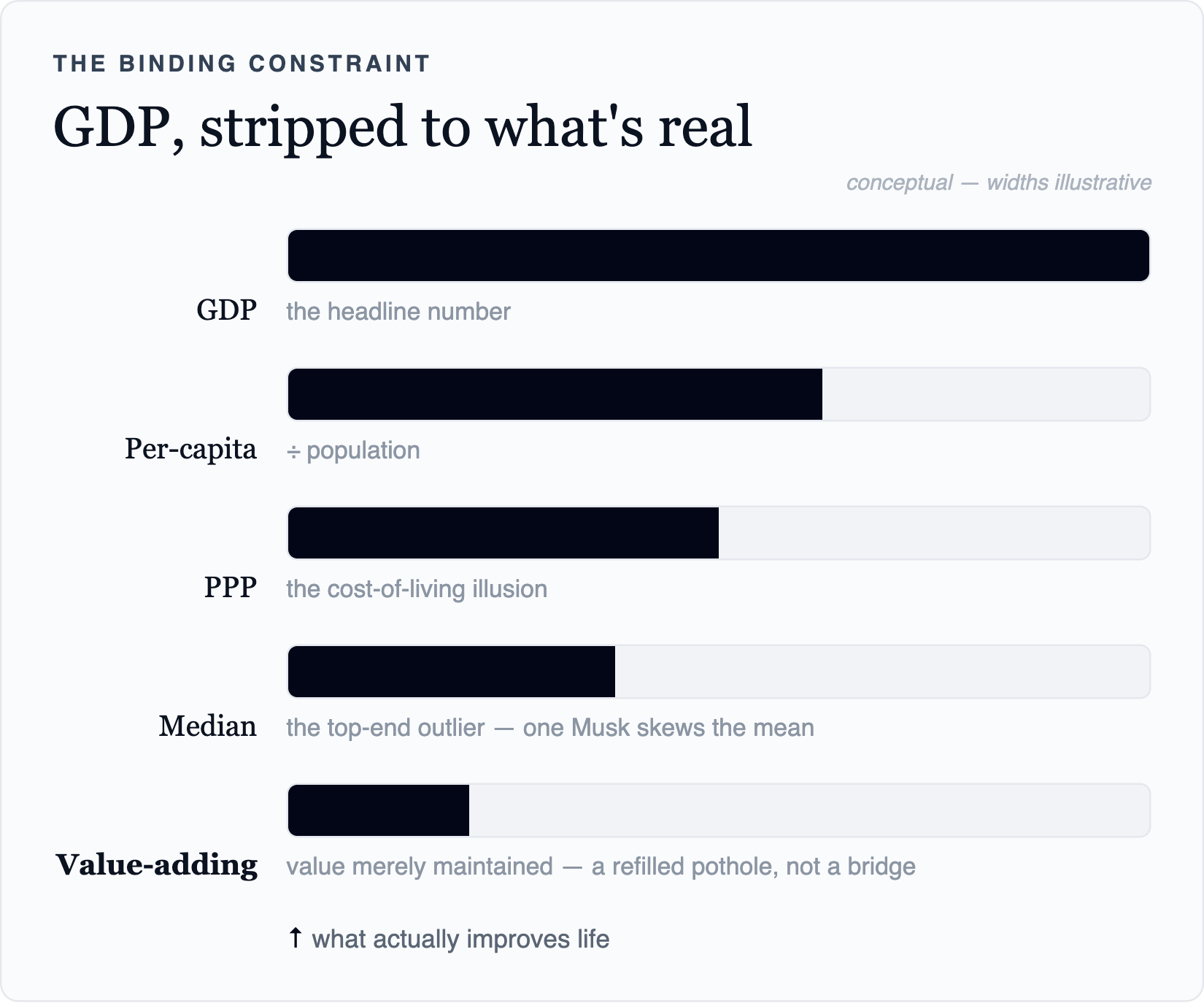
And it’s of a piece with everything else — because a country, in his telling, is just the largest stack of all, and India’s missing layer is the one that lets strangers trust each other.
Build the highway, not the mall
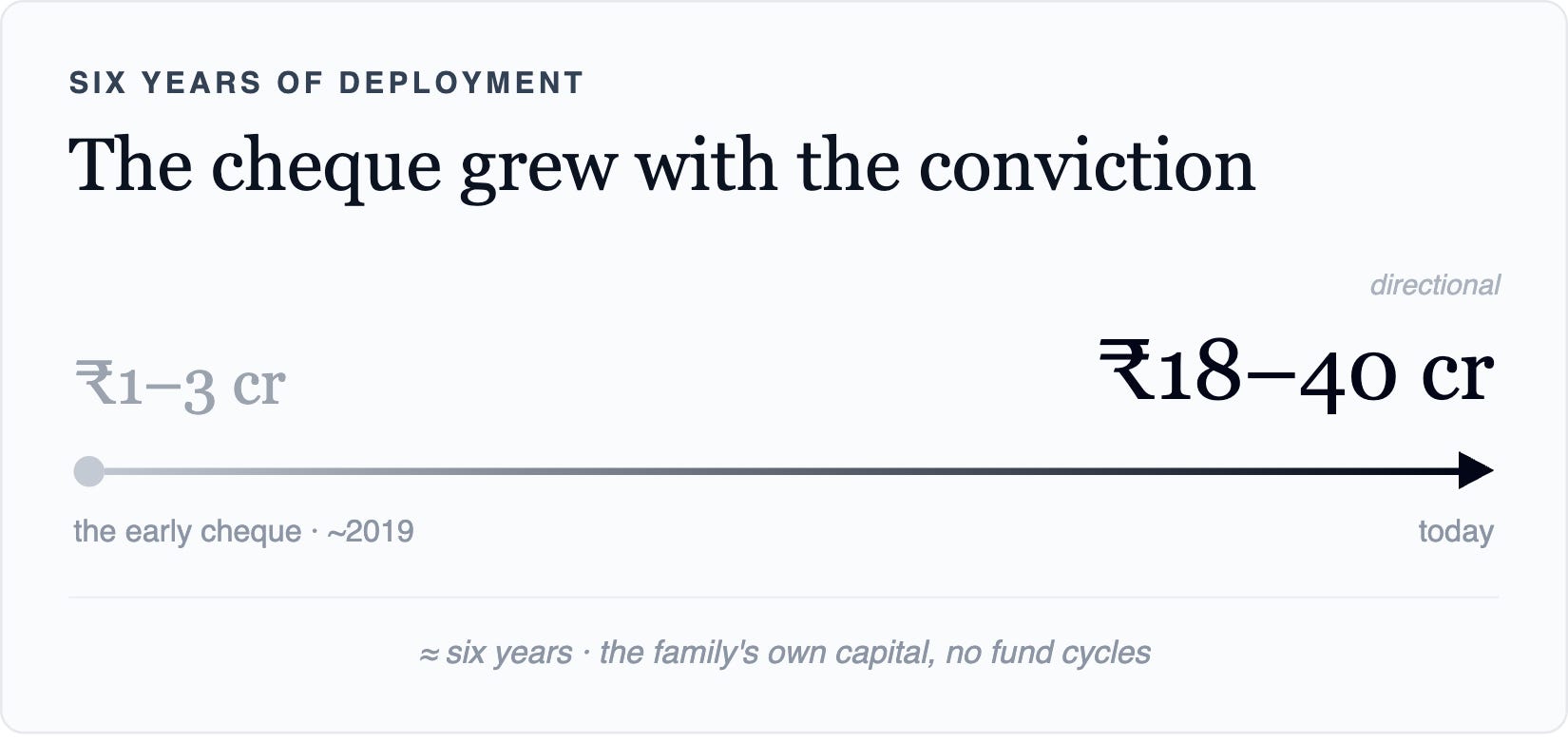
Spectrum is entering its second phase, and Mirik describes the shift without much ceremony. Phase one built the network and deployed a spread of early capital. Phase two is about doubling down on the ones that are working — Planet, Biofuel Circle, Cityflo — rather than spreading thin, partly because India doesn’t yet generate enough hardcore deep-science startups to keep spraying bets at.
One suggestion reaches him regularly: turn the track record into a fund-of-funds — use Spectrum’s name to raise from other families, patient, risk-literate capital that understands physical risk from the inside.
His answer is no. He doesn’t want to take anyone’s capital — not now, and not in any future scenario — because outside money takes away the flexibility that is the whole design of deploying the family’s own.
“A lot of people told me years ago: we will not have the flexibility we have if I take anyone else’s capital.”
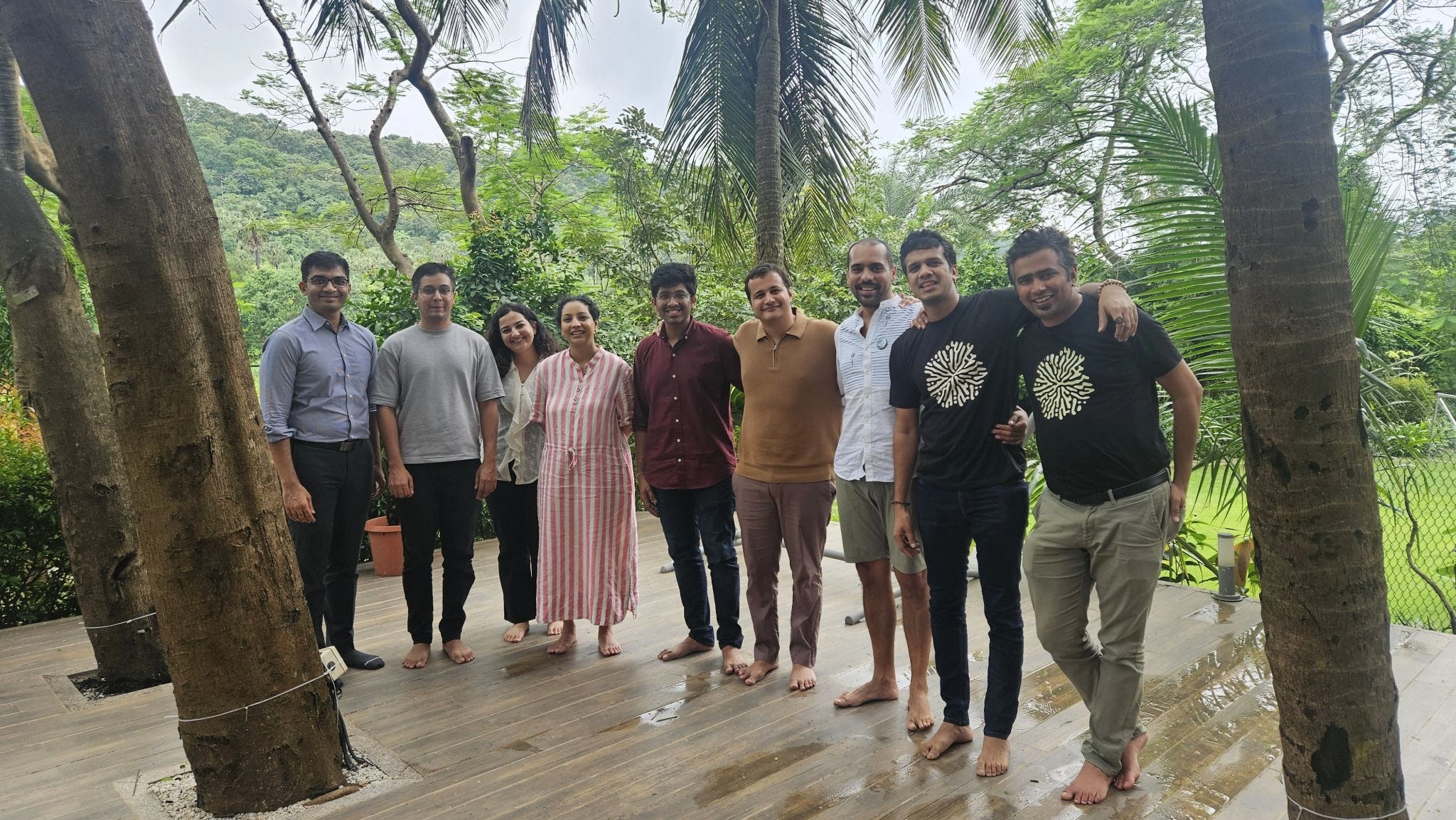
But he also knows the thesis can’t scale on Spectrum alone.
“I keep telling people there should be more Spectrums. But a very specific set of things came together for us — the technical background, the manufacturing background, the different tools in our toolkit. It’s not very scalable.”
What would convince the family offices, he thinks, is proof — a few B2B climate-manufacturing IPOs coming out of India in the next four or five years, so the conversation changes from theory to precedent: people invested in climate early, and they got through.
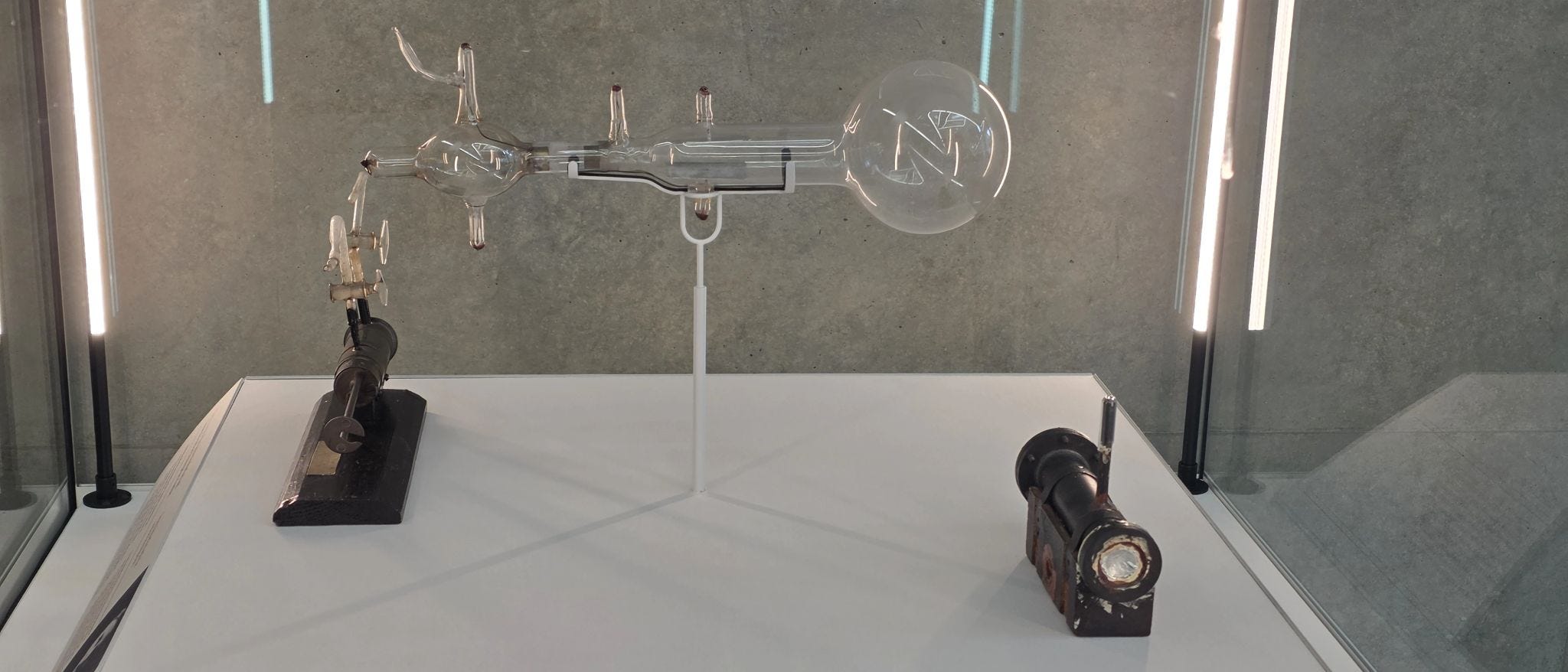
“Interestingly, the discovery of the electron required a collaboration between J. J. Thomson and the most advanced glass blower in Cambridge. The importance of having an ecosystem that can help scientists to further technology has only grown.”
Spectrum is also widening from climate into translational research as a whole — the missing testbeds, the building blocks — funding eight to ten centres across IIT Bombay, IIT Madras, IISc and IIT Delhi. Health, he says, will be the big one beyond climate.
The design principle underneath it: India keeps funding the finished product, he argues, when the scarce thing is the components everyone will need. Map twenty problems against twenty components and you get a many-to-many web; fund the components.
“Figure out the critical building blocks. ‘I want to solve for membranes’ is different from ‘I want to solve for dialysis’ — membrane goes into dialysis. So I’m not solving for a missile — I’m solving for an alloy here, a combustion chamber there. Then whoever’s making the missile can access all three.”
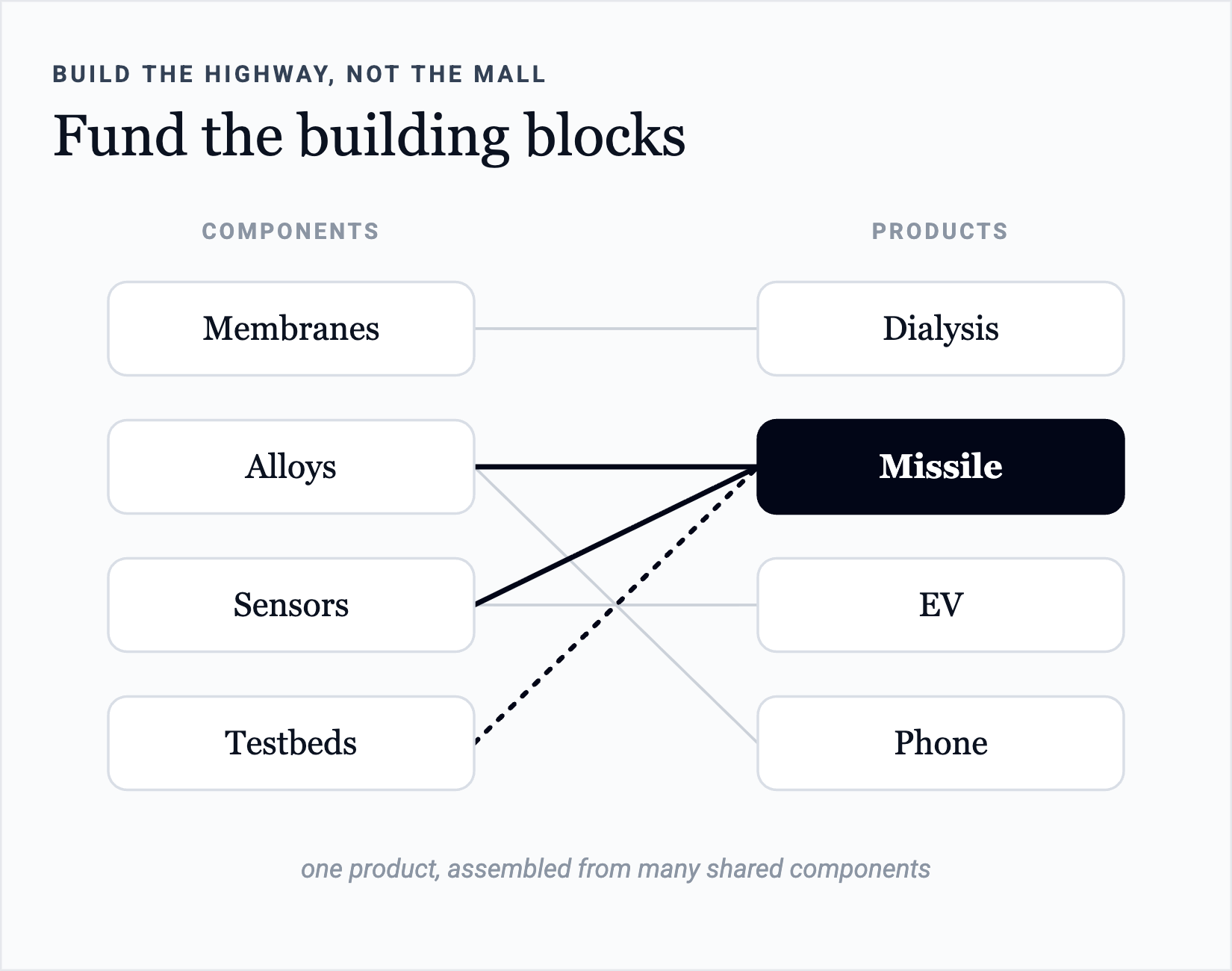
It is the relay race again, turned into a blueprint. Build the shared layers — the membranes, the alloys, the sensors, the testbeds — and let entrepreneurs assemble the products on top.
“The entrepreneur is going to make the product. The system has to be enabling the entrepreneur to make the product. We’re making a highway. We’re not the only shop in the mall.”
Ask him what the next decade of Spectrum looks like and he won’t give you a tidy five-year vision; he never really has, and he says they were more organic about it than structured.
Energy and materials, he’ll tell you, are the two big things, because they’re the same thing — and food, because of the land. Beyond that: build the capability, stay early, and be ready to catch the opportunities you can’t yet see.
What he wants, in the end, is for the country to learn to build and connect its layers — to orchestrate — so that value can flow between strangers who’ve learned, at last, to trust each other. He’s decided to spend his life building the missing layers anyway, on the bet that someone has to go first.
“The first-of-a-kind is the most tricky. Who’s going to take that risk? In this case, we are making the move.”
Safe Harbor Statement: This article is for informational purposes only and does not constitute investment, financial, or legal advice, nor a recommendation to buy or sell any security. It contains forward-looking statements and personal opinions that involve risks and uncertainties; actual outcomes may differ materially. Figures described as directional or order-of-magnitude are the subject’s own estimates and have not been independently audited. Readers should conduct their own due diligence.
This story is based on extensive interviews with Mirik Gogri of Spectrum Impact. This is NOT a paid article.
