


Rajesh Gupta corrected us before we had properly begun, asking whether we even knew the definition of ‘industry’.
He then proceeded to answer it himself:
“Industry is where you put your capital in dust and then try and recover it (in-dust-try).”
It was meant as a joke, and it landed as one. But it is also the most honest summary of Rajesh Gupta’s career that anyone could offer, including the long line of analysts who now track his company.
For most of those thirty-five years, the dust did not give the money back. The plants were built into shortages that turned into gluts. The banks stopped returning his calls. At social parties, he says, people did not want to be seen talking to him.
And then the dust began to pay.
Today, at sixty-one, Rajesh Gupta is the Managing Director of Lloyds Metals & Energy, and the inconvenient truth he keeps repeating — to us, to his own people, to the market — is that almost none of it went to plan.
There was no grand vision: only a family in steel, a mine he was forced to accept, a quarter-century of survival, and a temperament built for exactly that. This is the story of how the dust paid him back.
The company, in numbers
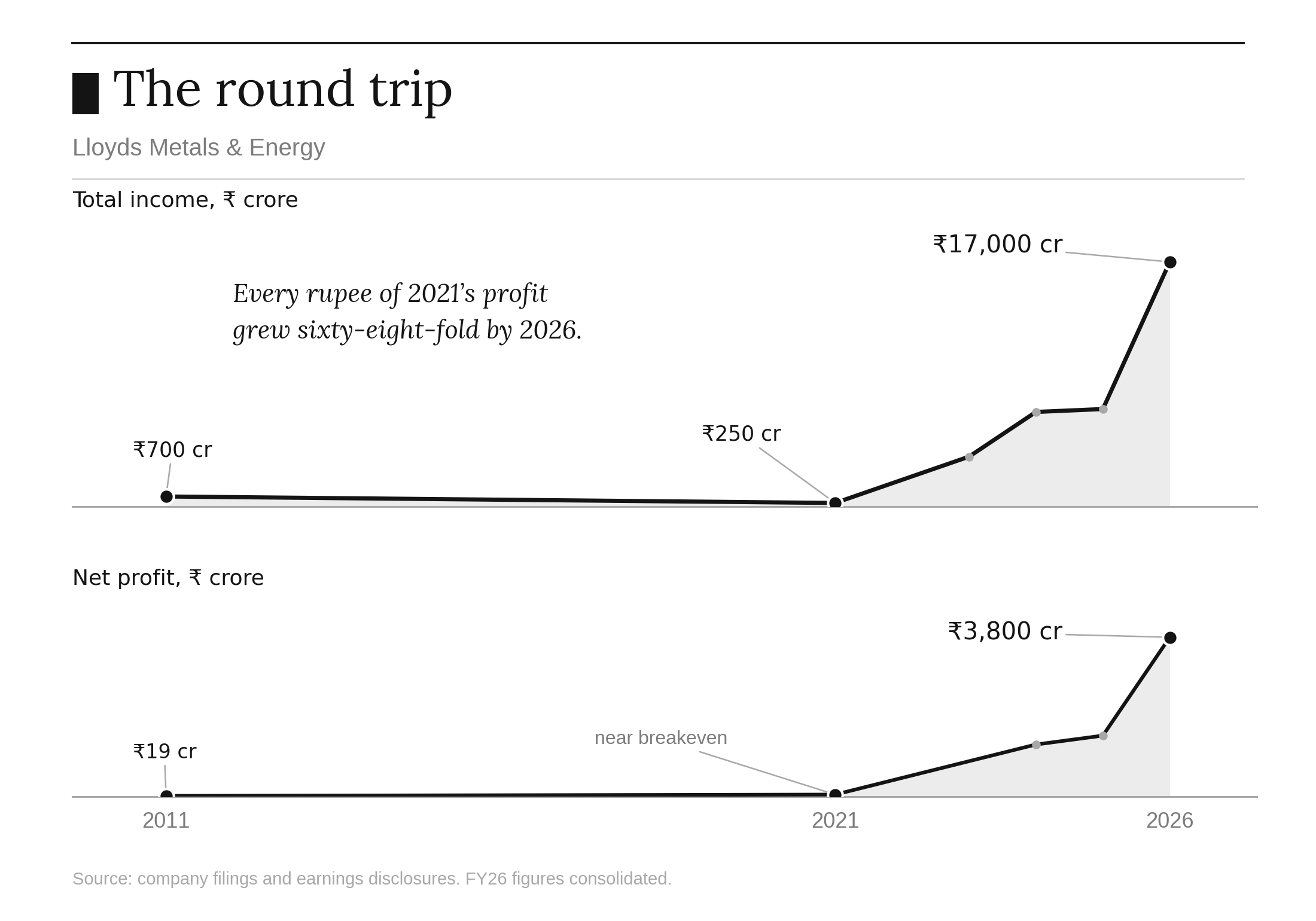
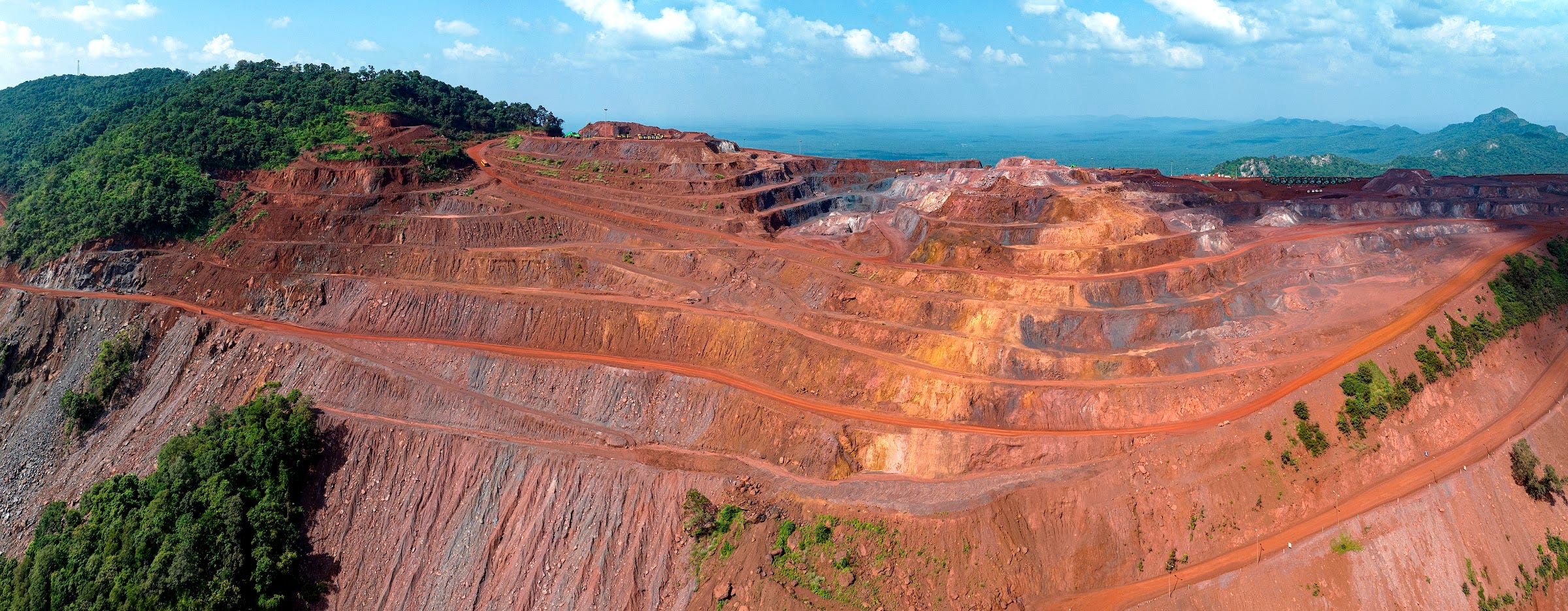
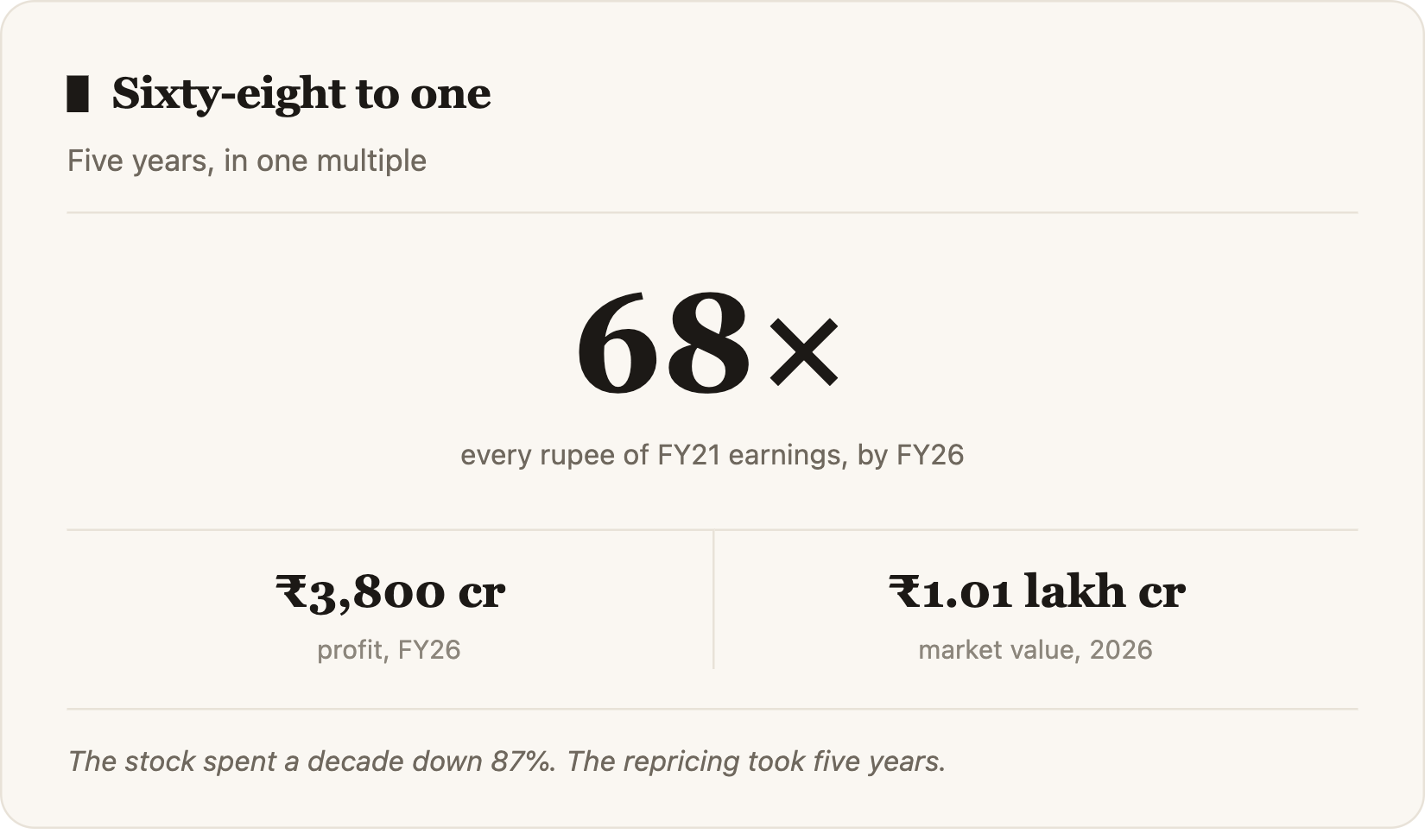
Lloyds Metals & Energy Limited (NSE: LLOYDSME). Market capitalisation around 1,01,160 crore rupees, having crossed 1 lakh crore in 2026 — for Lloyds Metals & Energy alone, one company within the wider Lloyds group. FY26 (consolidated): total income 17,306 crore, up 155% year-on-year; net profit 3,829 crore, up 163%. Surjagarh, Gadchiroli — the single largest iron ore mine in India, with environmental clearance for 55 MTPA and dispatch ramping toward 26 MTPA. Second pellet plant (4 MTPA) commissioned in 2026.
Over the last five years, Lloyds Metals’ revenue has compounded at 105% a year CAGR, and profit after tax at 140% CAGR.
When the market cap crossed a lakh of crores, Rajesh did not celebrate the number. He distrusted it, and waved it away:
“Yesterday we turned one lakh crore. But the day before yesterday was no different from a month before. I was always worth one lakh crore — the market has only now recognised it.”
It is a revealing thing to say. A man who spent twenty-six years being told by every bank and institution in the country that he was worth nothing does not learn to take the market’s verdict at face value, in either direction.
The round trip underneath those figures is the real story. A decade of decline into FY21 — the stock down some 87% from its 2011 high — and then, in five years, every rupee of FY21 earnings became sixty-eight. He explains the trough without drama:
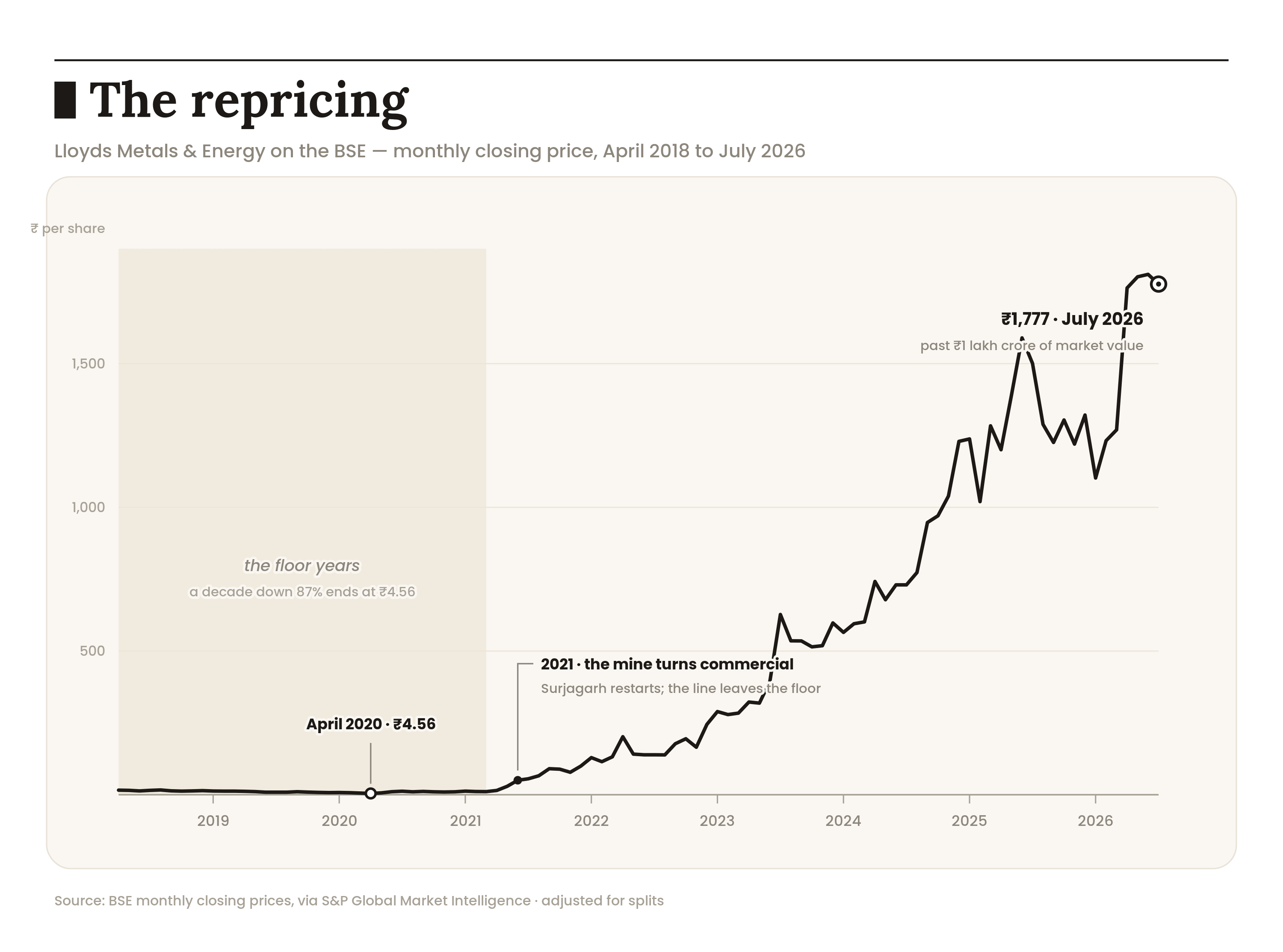
“In 2011 we were part of the Lloyd Steel supply chain, and that company went away — we exited it. As a standalone sponge-iron maker, on one end we had no steel plant, and on the other no iron ore mine. One we were still waiting for; the other had just gone from my hands. We went through very tough times. Our job then was simply to survive — and I think we did that.”
The recovery, when it finally came, still seems to catch him off guard:
“It is overwhelming, in a way. But we always knew the mine was there. A lot of hard work went in during that period — and here we are.”
A small bag of coins
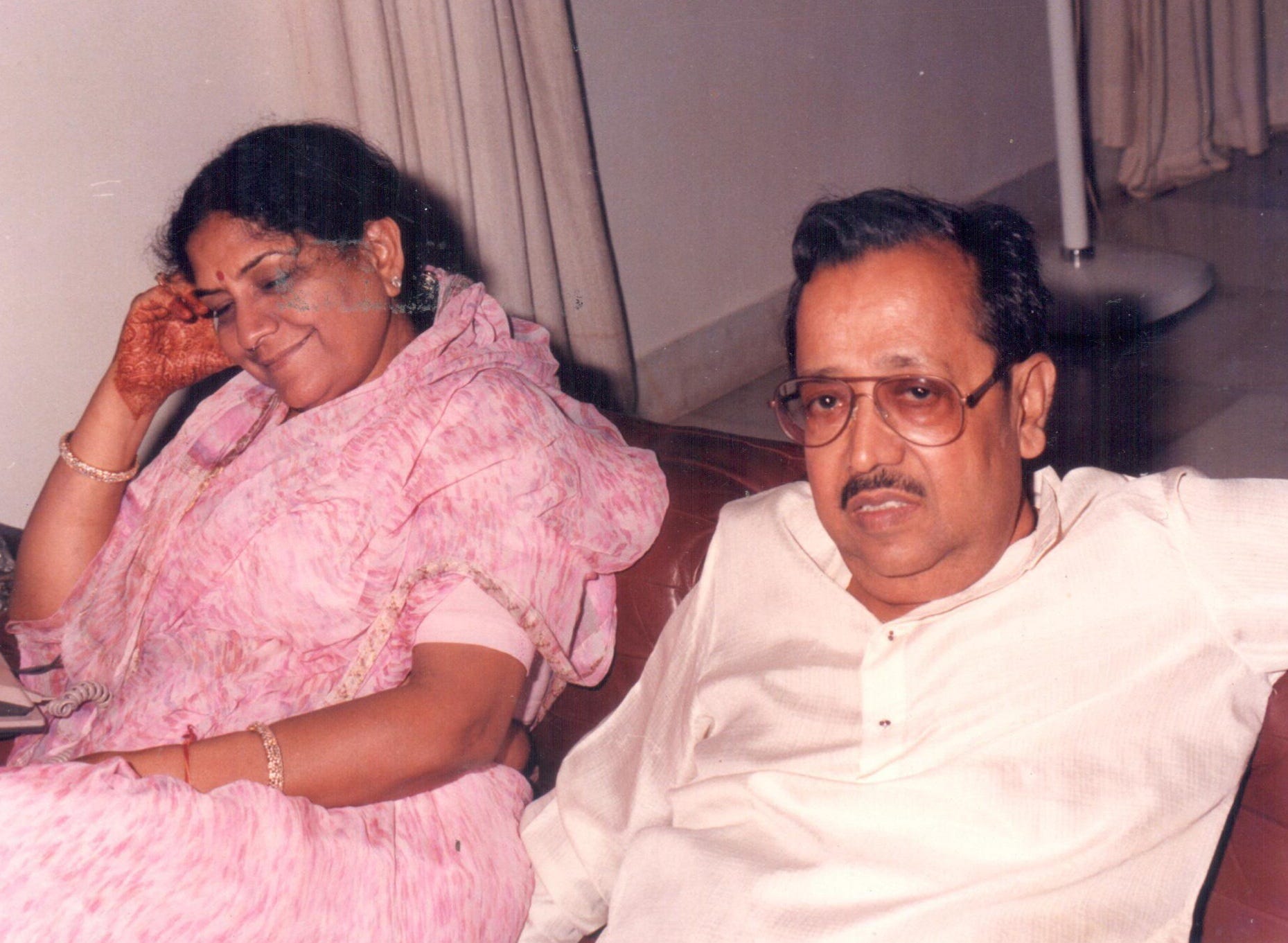
The Guptas were a steel family before they were a steel company. Rajesh’s father traded steel in Bombay through the 1960s — buying and selling, much of it for others, in an economy where the quota that came with goods was worth more than the goods themselves. He was, even then, an unusually ambitious man, the first steel trader to take an office in the financial district:
“We were the first to open an office in Nariman Point. People said, Gupta is crazy — why does he even need an office there?”
Yet ambition, in that India, still meant something modest.
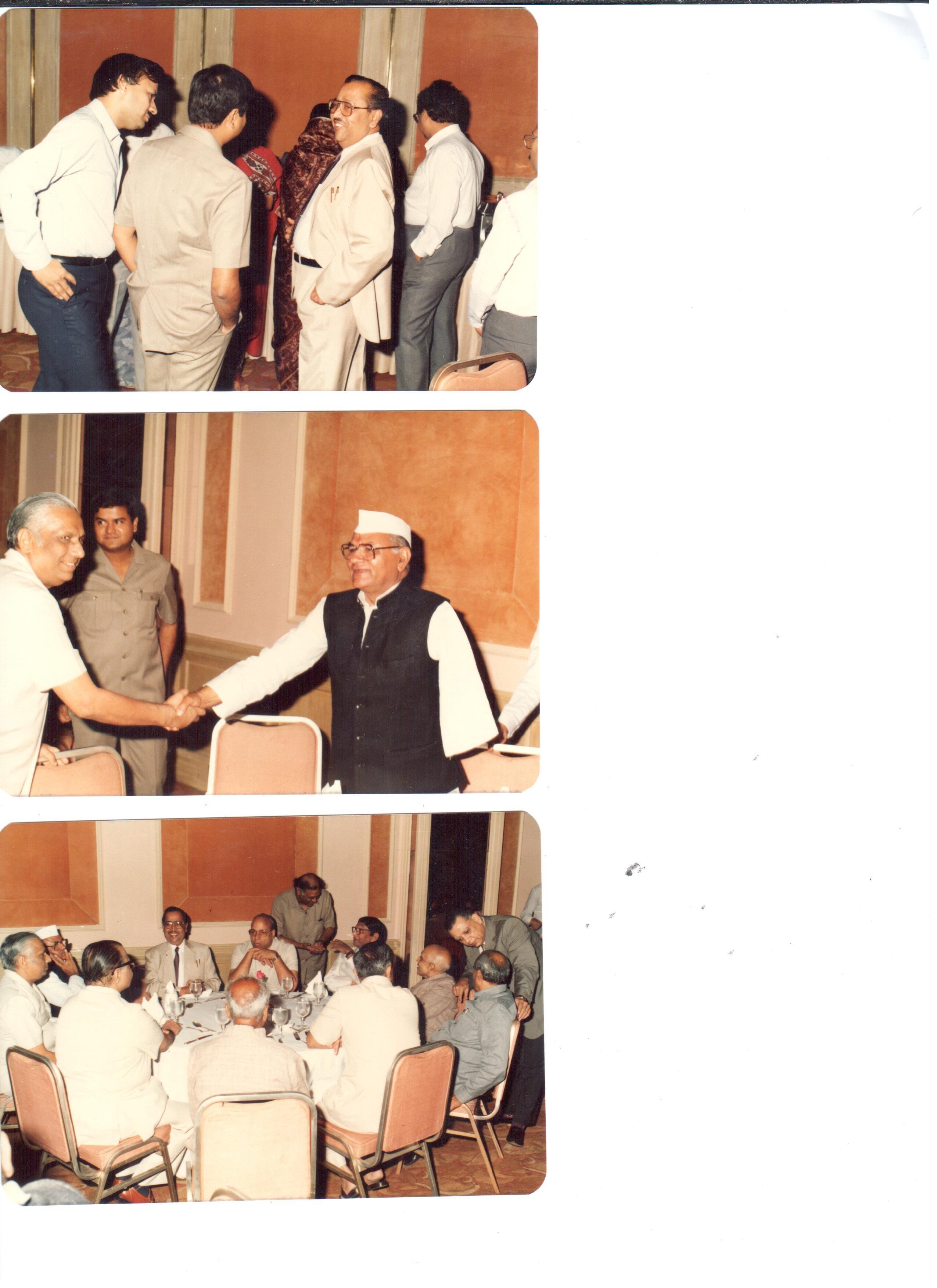
He tells a story, as he remembers it, about an early World Bank loan to India in the 1980s, when the family sat down and did the arithmetic, rupee by rupee, on a figure of perhaps a hundred million dollars. His father’s verdict was modest by design:
“My father said we would get one percent of it, and we would be happy.”
And the era itself capped the imagination:
“There was no ambition, because India was in a different place. The duties were 100-120%. They called it the Hindu rate of growth — four or five percent. We were happy to grow at that. Why would you want to grow any faster?”
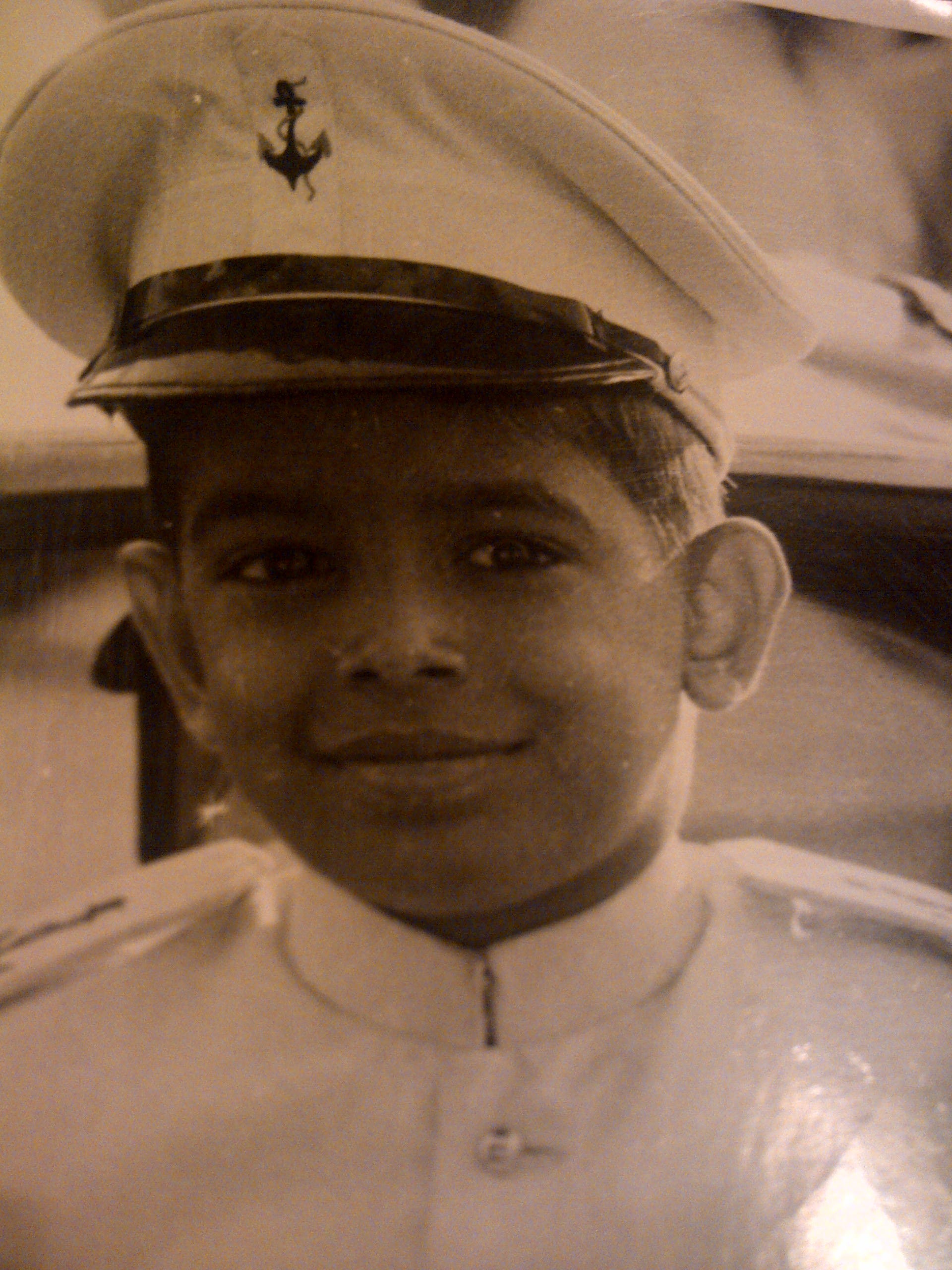
His own entry into the business was less a decision than a surrender.
He had wanted to study science — IIT, perhaps MIT. He was good at it, and stubborn about it.
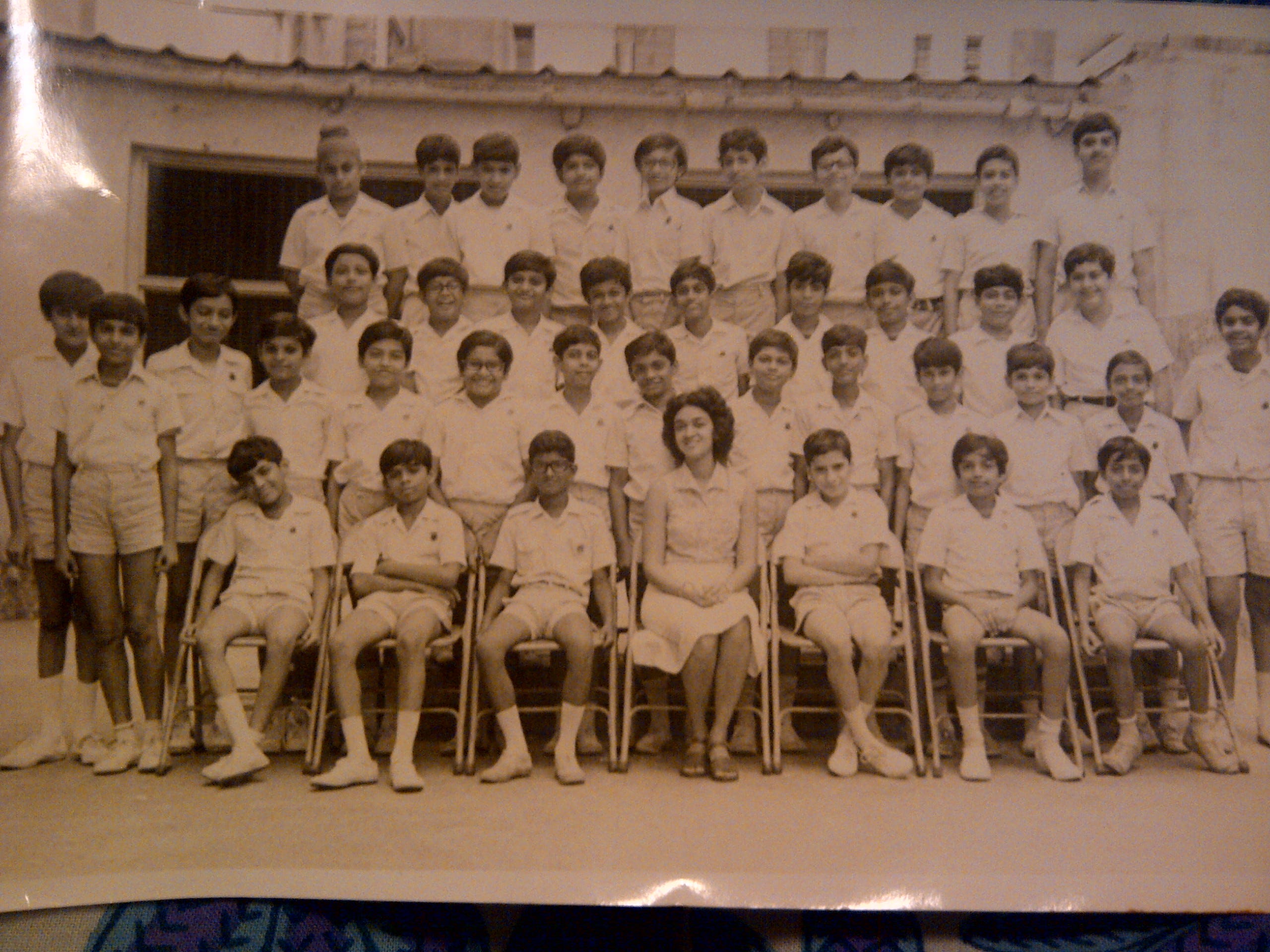
His father was unimpressed: in the Marwari circles of the time, a boy who studied was a boy being spoilt, and the assumption was that he would end up in trading regardless.
His father could not change his mind. A neighbour did — a relative in the building, an All-India gold medallist in surgery with three years of hospital internships behind him, who had walked away from all of it to run the family’s fabric-dyeing business.
Rajesh watched a man with the most glittering credentials imaginable choose the family trade anyway, and something shifted:
“I could not admit defeat. But I saw that man, and I changed my thinking.”
A few days out of the tenth standard he turned up at his father’s office unannounced.
The early jobs were not glamorous. He was, by his own description, an accountant’s accountant — formalising cash vouchers, then entering them in the books, working a large mechanical calculating machine in the years before electronic calculators existed.
Later there was the stainless-steel patta business, where he carried a small bag to collect the day’s takings from the utensil makers near Alankar Cinema.
They sold raw material by the kilo; the utensil makers sold finished goods by the piece; and every evening the cash came back in two- and five-rupee notes.
He dates his own start in the business earlier than any payroll:
“I entered the business when I was maybe ten — dialling phones for my father all day, because in those days you could never get through on a long-distance call. It has been in the blood.”
His father had a way of teaching patience that did not involve the word. One day in the monsoon, with the rain already coming down, he was simply told that a shipment was arriving and that he should go to the port and get it unloaded. When he asked what exactly he was supposed to do, the answer was almost nothing at all:
“You go. Sure, it is raining. But you are not made of mud — you won’t melt.”
He learned the rest the way everyone did then — slowly, and by getting things wrong.
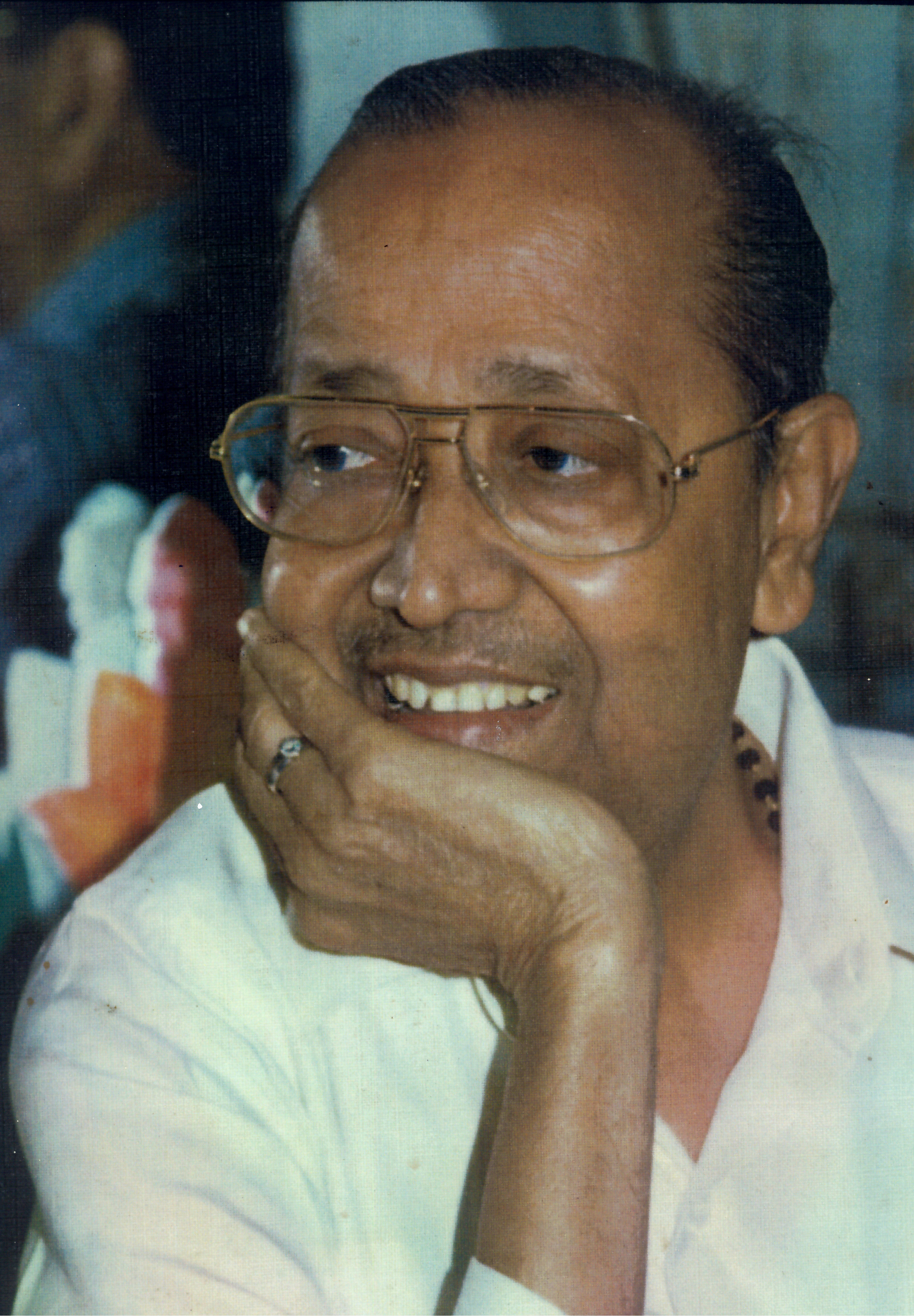
The lesson he says he values most from those years was about ego, not steel. Given his first rake to clear on his own — fifteen hundred tonnes, six days to unload — he kept every piece of paperwork to himself rather than hand any of it to a colleague, because handing it over meant sharing the credit.
For six days nothing moved; the collection clerks did not even know how to take the money. He draws the moral plainly:
“That was my first real lesson — to delegate, to work as a team. If you keep all the paper with yourself, the rake just sits there.”
And the only plan, through all of it, was his father’s refrain:
“Just keep going. Something or other will grow.”
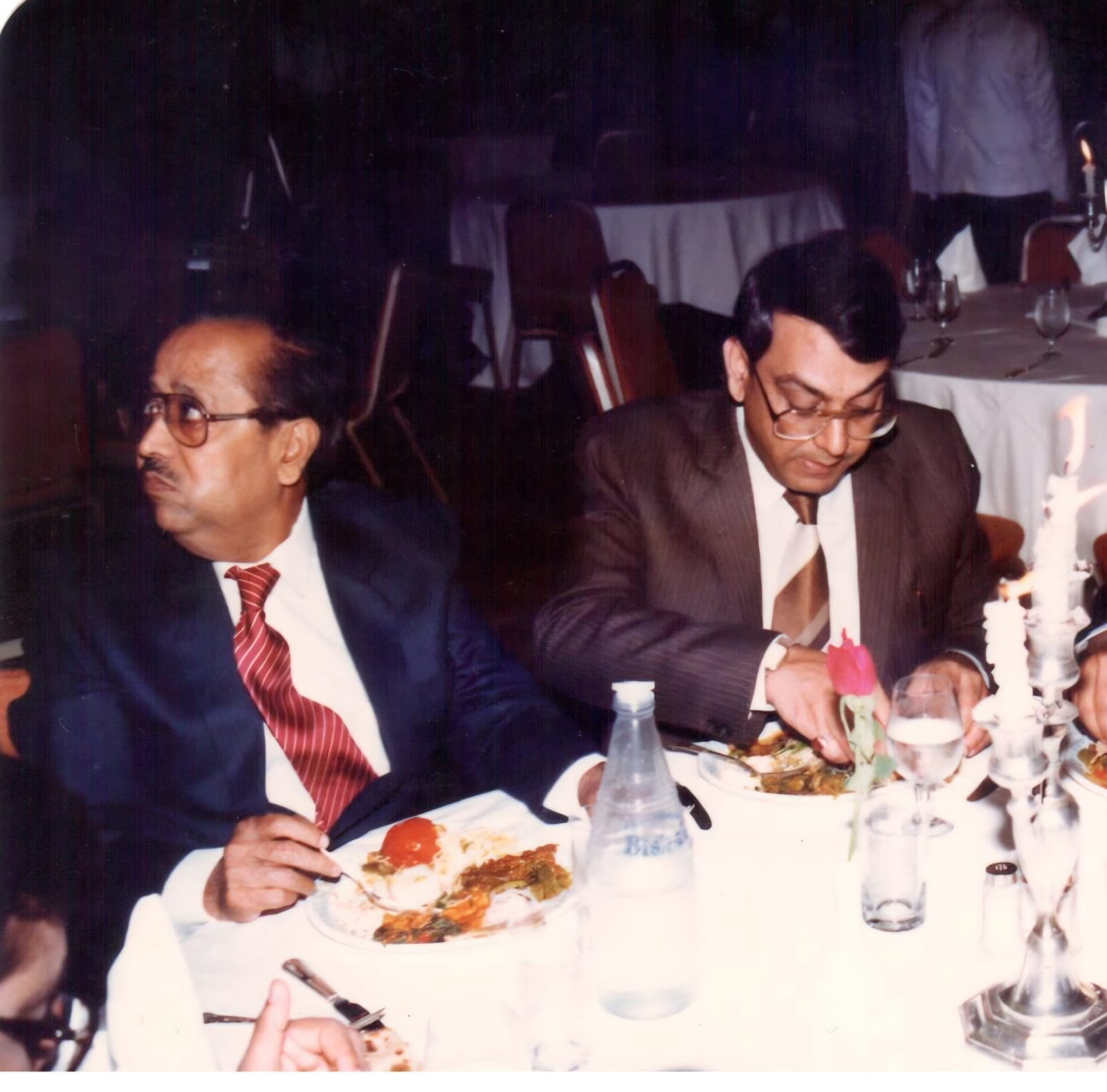
Asking what a flange is
Around the age of nineteen or twenty, with his elder brother (and boss!) — six years older, and by his own account the more naturally ambitious of the two, Rajesh was sent to run the family’s engineering factory in Andheri, next to the airport.
He was not an engineer, and he has never pretended otherwise:
“I asked my engineers what a flange meant, and they all laughed at me. Of course they laughed — I was a nineteen-year-old boy, and engineers don’t have the polish to hold it in.”
What he took from the humiliation became one of the organising principles of his working life:
“That is when I learned that the right way is to keep asking more and more questions. It is fine if people laugh. Curiosity helps. You just have to have the heart to sit through it and let them laugh.”
It is not a throwaway line.
Two hours into our own conversation, he reminded us that he had opened it by asking us ten questions about our composites — the resins, the fibres, the moulds — with the unembarrassed directness of a man who decided forty years ago that looking ignorant was cheaper than staying ignorant.
The factory also taught him the customer’s side of the business, and again the lesson arrived through a mistake.
Sent to a consultant’s office on one of his first client visits — to explain why a job was late, not to win an order — he made the rookie error of blaming the client for the delay. The consultant, a family acquaintance, took him aside:
“He told me — you may be right, but you cannot keep saying it. The customer is always right. So we learned to blame him a little more politely.”
The factory made pressure vessels and heat exchangers for the likes of IPCL and Engineers India — fabrication first, then, within three or four years, the mechanical and structural design, and eventually the chemical design, the heat and mass transfer, too. It was good-margin work, always.
The problem, he says, was never the margin; it was the turnover. The engineering business was steady and profitable but small, and for decades it would become the thing that kept everything else alive.
Forty years on, his nephew Krishna Gupta runs that same business, and in a recent review meeting offered the very excuse Rajesh once offered — that the drawing had not come on time:
“The same cycle has continued after forty years. I told him: this is part of the business. You have to factor it into your projections.”
That fabrication arm is also, improbably, where the group got its name. The family had three businesses then, and the engineering one grew into the public face:
“We had three parts then — a stainless-steel operation, which we wound up in ‘84; the engineering business, which is still running; and trading. We started the fabrication in a bigger way as Lloyd Steel, and that became the face of the company. So the name became Lloyd Steel, and then we became the Lloyd group.”
Which is how a Gupta enterprise came to be called Lloyds. He has long since made his peace with it:
“I did think about it once. But I thought of changing my name to Lloyd — not the other way around.”
And the engineering company that started it all in 1974 still runs, which is why he calls the whole group, without a trace of irony:
“We are a fifty-year-old startup.”
No limitations
The steel ambitions, when they came, were not modest.
The family had been one of the few large steel traders to cross over into manufacturing, and through the late 1980s and into the 1990s they pressed the advantage hard.
They put up galvanising lines in Nanded. In Wardha they commissioned what Rajesh says was India’s first hot-rolling mill in the private sector after SAIL — six or seven months before Tata Steel’s, he notes with some pride, and two years before Jindal’s. By the mid-1990s the group had completed four or five public issues, and at the peak:
“Until ‘98 we had no limitations. We had done four public issues, and we were told we were bigger than Jindals in those days.”
The ambition fed on itself.
“The ambitions were very big — bigger than they should have been. We went so fast that when the downturn hit, we were running at 120kmph. And when a wall comes up at that speed, you crash very badly.”
Running at 120kmph when the wall hit
The wall was the steel cycle, and it is worth understanding why he speaks of its inevitability with a fatalist’s calm:
“You put up a plant when there is a shortage. Everybody gets the same idea at the same time. By the time the capacity arrives, the cycle has turned — both demand and supply.”
When they entered, steel consumption was rising and duties sat at seventy or eighty percent.
Then liberalisation pulled duties down to twenty-five percent, imports arrived, competition arrived, and an international slowdown arrived, all roughly at once. Four new plants came up within two years of theirs.
The crash, when it came, was total. They could not service the banks, and they became defaulters. He says it without flinching:
“We went bankrupt. We didn’t pay the banks. We were defaulters.”
We asked what that was like to live through, and he answered with the social detail rather than the financial one, which tells you where the wound actually was:
“Nobody liked us. You go to a social party, and people don’t want to talk to you.”
And yet there was a peculiar steadiness underneath, a refusal to feel guilty that the family seems to have shared.
“I was wearing an HMT watch. I was not taking money home. We were never guilty about it.”
The losses, he is careful to add, were not only the market’s fault. There had been a diversification into real estate at exactly the wrong moment. When we asked whether it had been a strategic error, he refused to let himself off lightly:
“It was a mix of strategic errors — timing, over-ambition, bad execution, everything. It was not only the market that was to blame.”
The personal cost ran underneath the financial one. His father, once tireless, stopped working in the last eight months of his life — he felt that everything had turned against him. He died in 1999, near the bottom of the cycle. What did the two brothers tell themselves through those years?
“Don’t think. Don’t give up. Just keep going. Keep turning up. Keep turning up.”
Two banwas
Buried inside the wreckage of the steel business was an asset nobody wanted — least of all the Guptas.
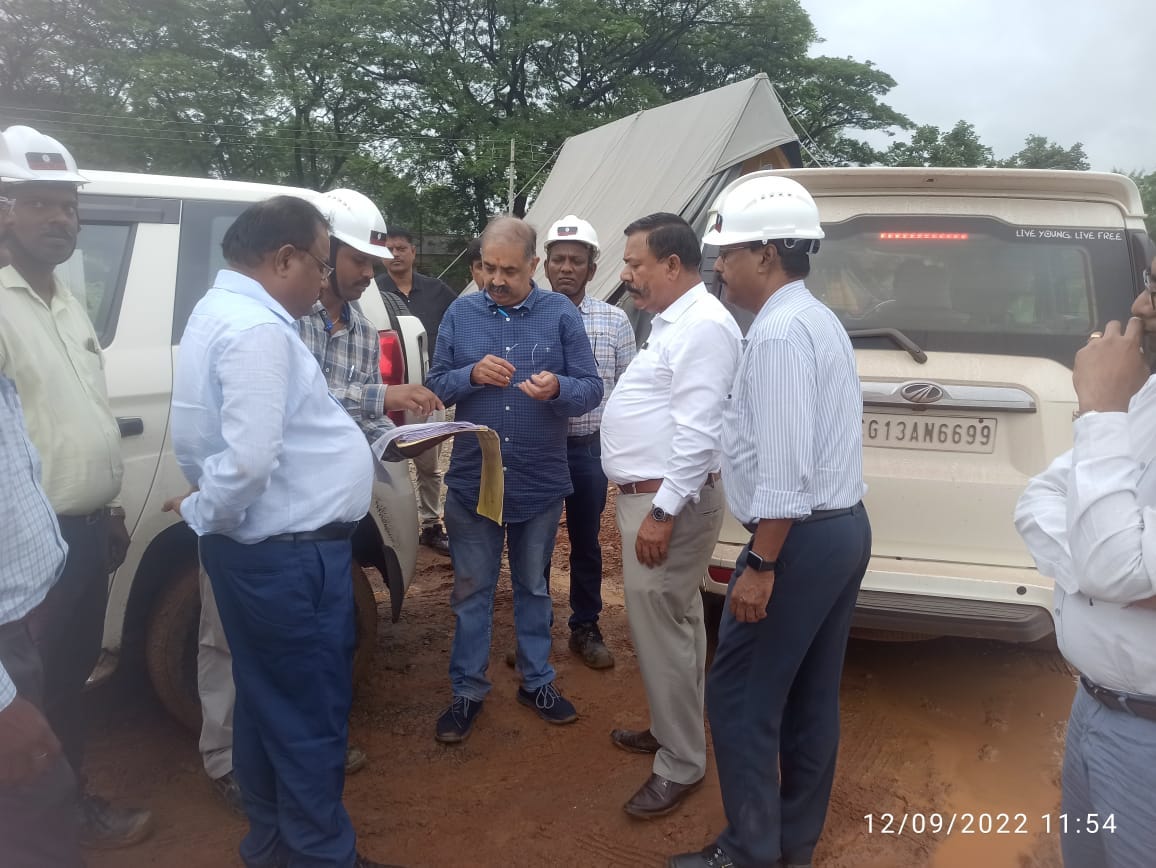
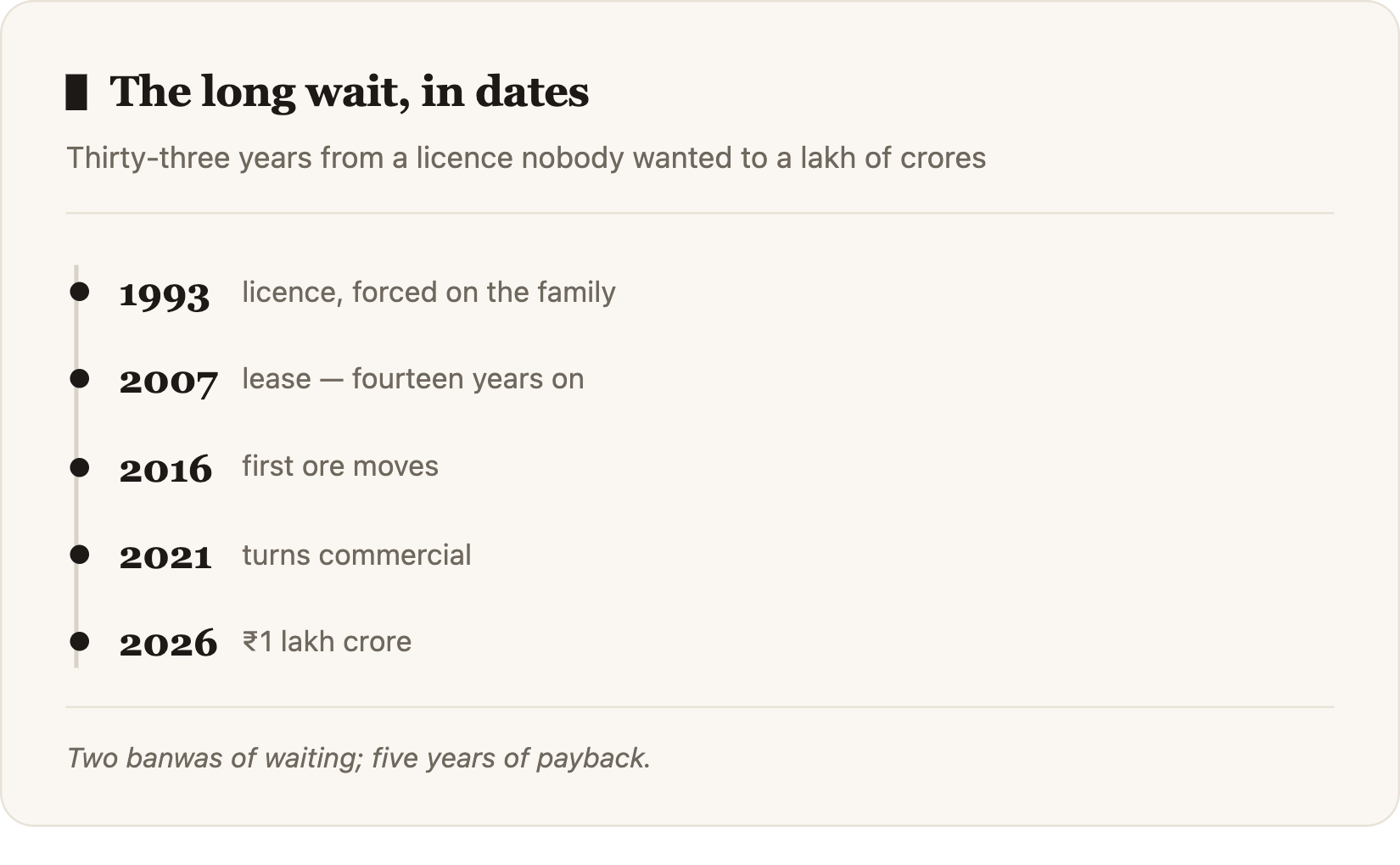
In 1993, a minister effectively forced a mining licence on them — not a lease, a licence: the right to eventually mine iron ore at Surjagarh, in the forests of Gadchiroli, in a part of Maharashtra long considered impossible to operate in:
“It was not wanted by us. The minister forced us to take it. We were not interested, and we did not have the money to invest in it anyway.”
What followed is, in his telling, a story measured in fourteen-year units — two long waits, two banwas:
“In ‘93 we got the licence. It became a lease after fourteen years, in 2007. And then, from 2007 to 2021, it turned commercial after another fourteen years. Two banwas.”
For most of that time the mine was a liability, not an asset.
The steel plant at Wardha — the sponge-iron operation’s one real customer — was gone, leaving the group stranded with one part of a broken value chain. And even after mining began around 2016–17, the operation lost money for four or five years before it turned commercial.
Even the word “impossible” undersells the place. Gadchiroli was insurgency country, and the cost of being there was not only financial:
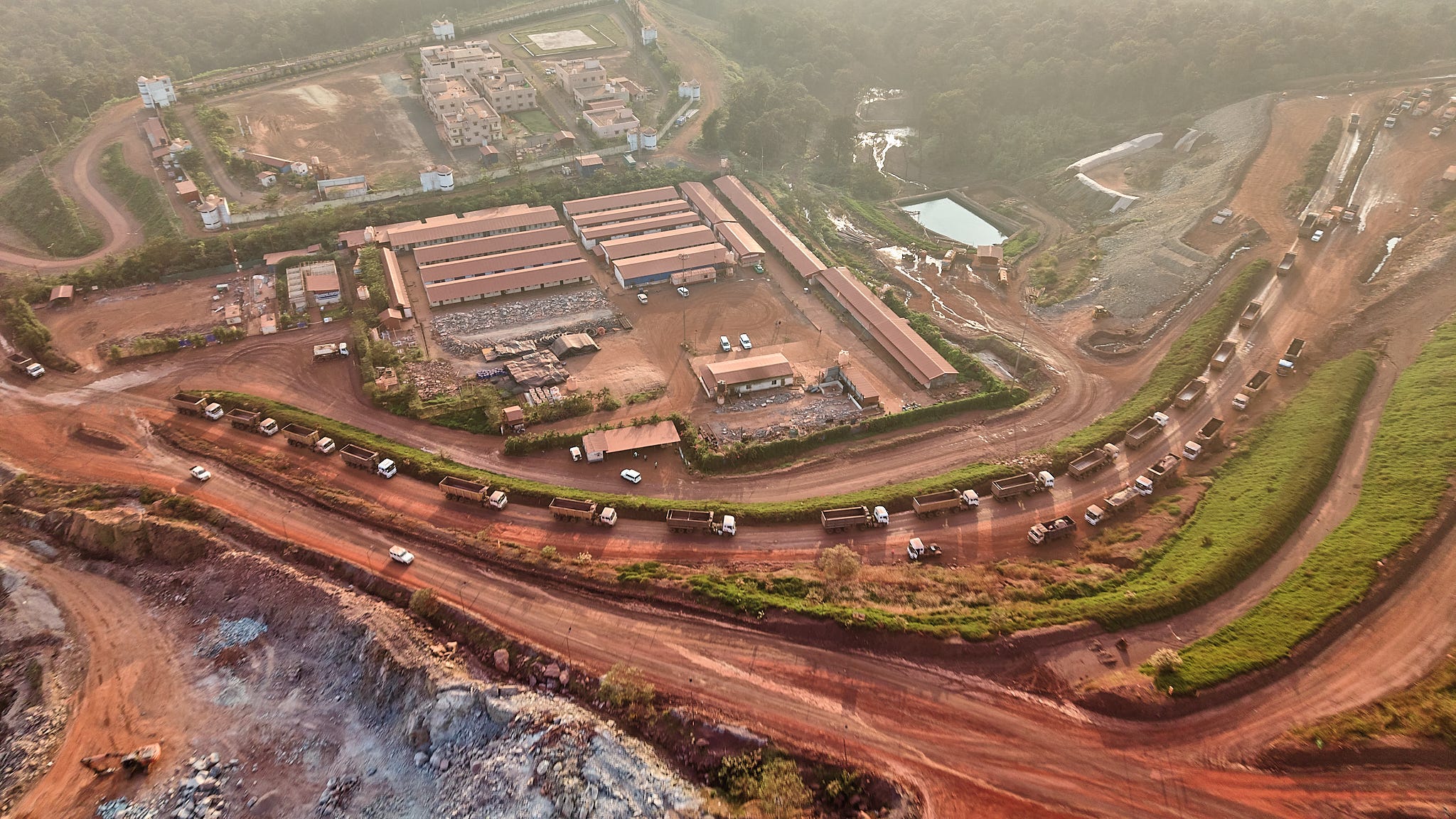
“There was a lot of resistance — not from the government; they were welcoming, they wanted us there. It was the safety. There have been deaths. Not in my own family, but every executive is family. Seventy trucks were burnt in 2017. The murders had happened in 2013. So when we finally started mining, we were very cautious in the beginning.”
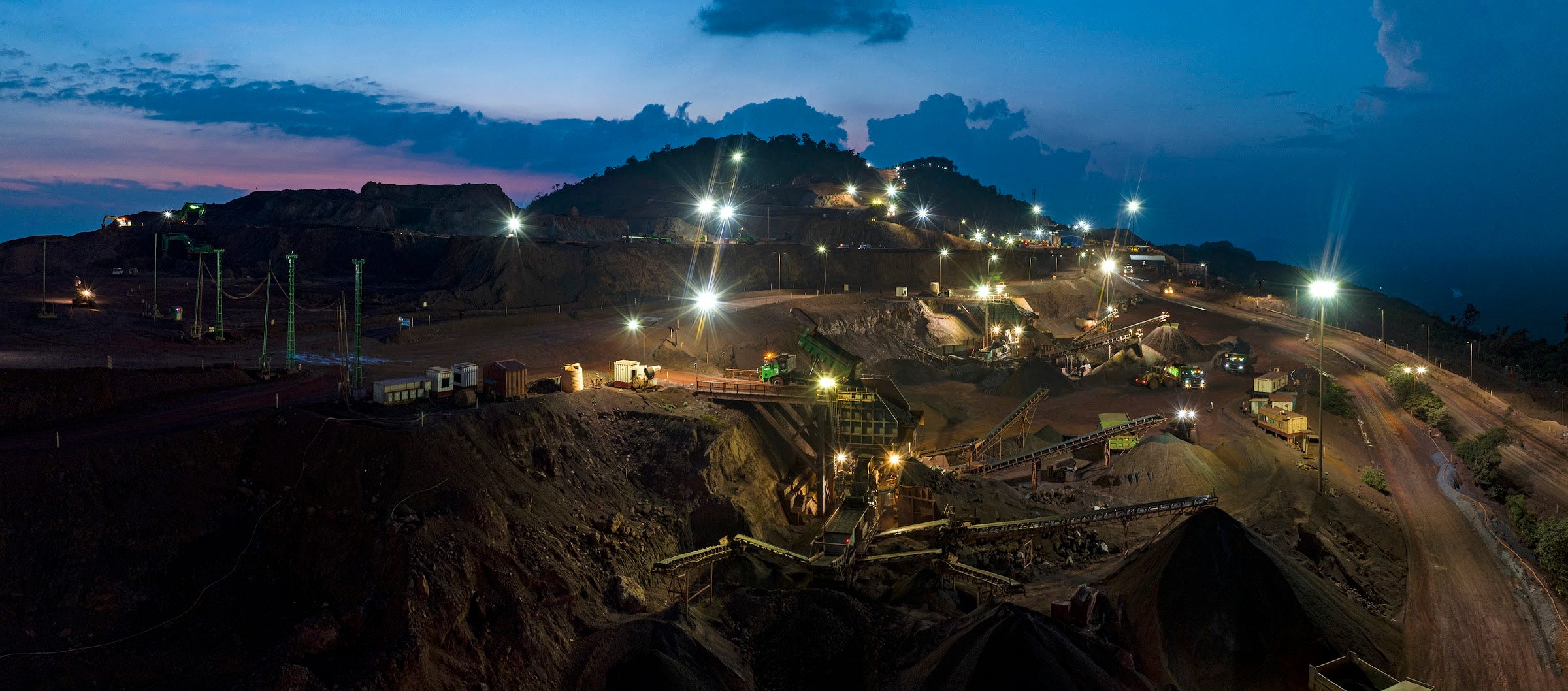
Caution gave way to scale faster than anyone expected:
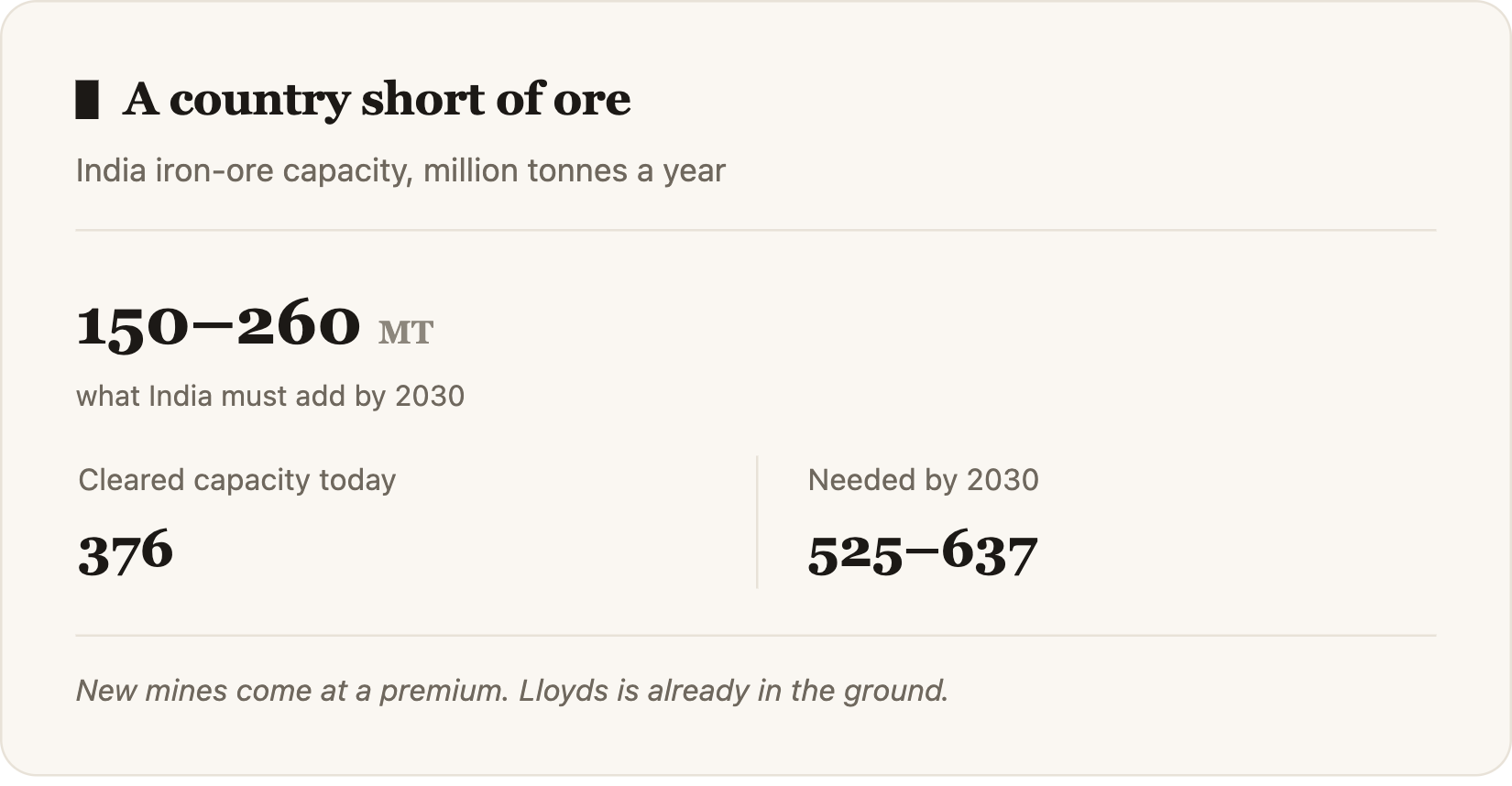
“We started with three million tonnes in the first year. Within two years we had ramped to ten. This year it is twenty-six — it is the largest iron mine in India.”
If you want to understand why he is so unsentimental about the mine that made the group’s fortune, it helps to know that for nearly three decades it mostly cost him and his partners money.
But the mine also encodes the one strategic conviction he holds without irony — that in steel you must own your way back up the chain.
The family had pushed downstream from hot-rolled into cold-rolled, and upstream into sponge iron, always trying to reach the iron ore itself:
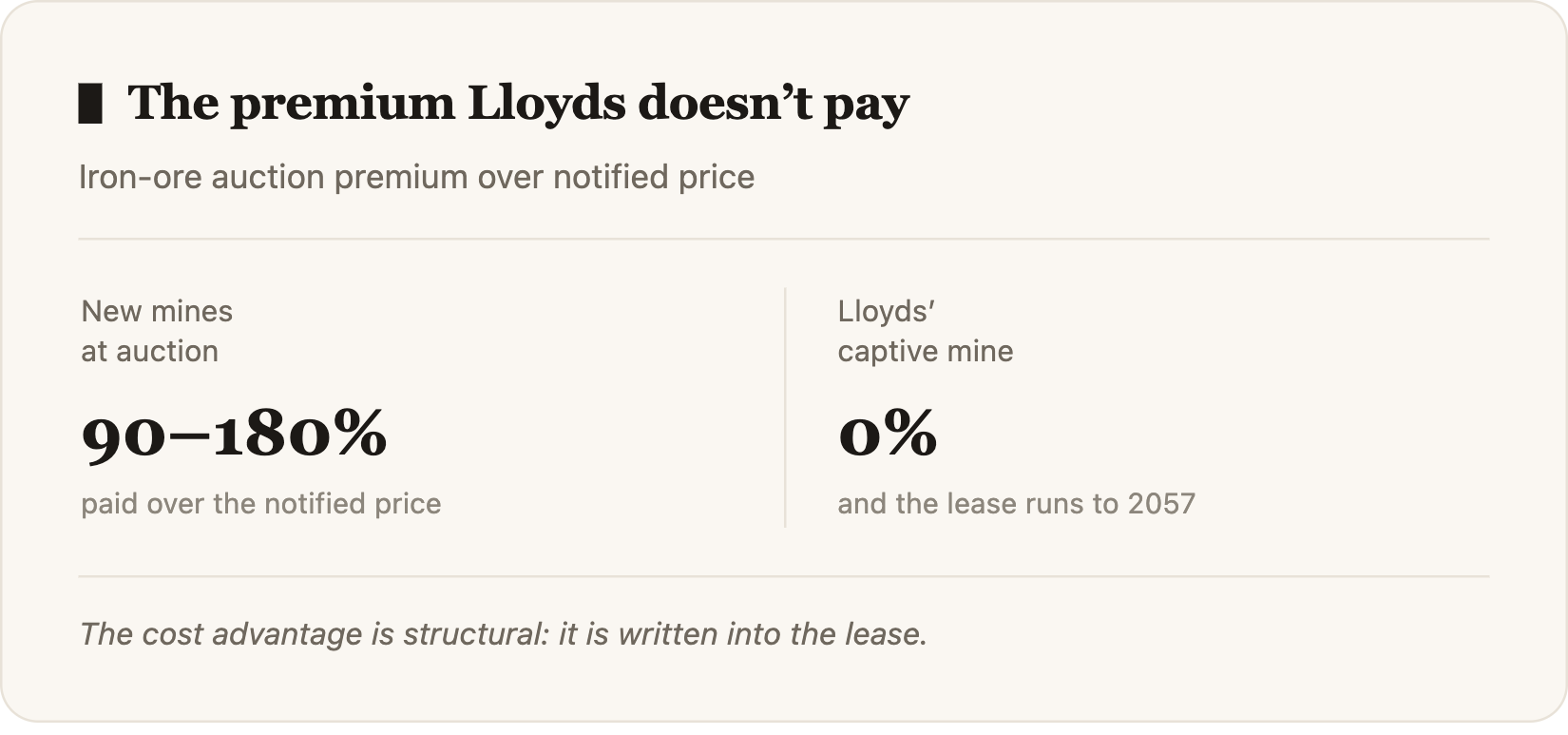
“If you are always begging for raw material, or begging to sell large chunks of your steel, you have already lost. That is the first principle of steel. With the mine, the big volumes are taken care of, and then you have many small customers to sell to. Otherwise your pricing can never be competitive.”
Twenty-six years without a loan
Here is the number in this story that should be hard to believe, and is true:
“From 1998 to 2024 — twenty-six years — we did not go to institutions for loans.”
From 2002 to 2008 in particular, no bank and no institution in India would lend the group a rupee, on account of being defaulters before.
So they did the counter-intuitive thing: they began repaying old loans in the hope that someone, eventually, would lend again. The cycle turned up for a while — between roughly 2002 and 2008 they repaid a great deal and even expanded — and then it turned down again, and the same starvation resumed.
How do you survive twenty-six years without debt, and how do you expand? The honest answer is that for much of it they did not expand, and he refuses to dress up the period in euphemism:
“We were not growing during that time. People call it a twenty-five-year consolidation. It was not consolidation. It was suffering.”
Two things kept the lights on.
The first was the steady, good-margin engineering business, the unglamorous fabrication shop in Andheri that had been compounding since his twenties, throwing off cash when nothing else would.
The second was land. The very real-estate holdings that had helped sink the group in the crash now became its lifeline:
“The real estate that was a bad word for us earlier became our saviour. We kept selling old land. Some money kept flowing in; some assets were sold; sometimes we even made a little on them. They were very difficult times.”
There is a buried piece of Bombay industrial history in this period that he offers almost as an aside, and that we cannot resist passing on.
He has a more general theory about where money is actually made in India, sharpened by all those years of watching cash flow from only one or two places.
The reliable sources, he has concluded, are land — real estate that suddenly appreciates, or a mine — and very little else.
“In India, the real capital flows from land or a mine or farming. It is the origin behind all wealth in India today. It will change in the future but this is how it was until today.”
It is not a romantic theory.
But it explains why a steelmaker spent a quarter of a century being kept alive by selling plots of land, and why, when a mine finally turned, he knew exactly what he was holding.
A double-engine company
For the better part of three decades Lloyds had owned the two ends of the steel chain and almost nothing in between — a mine it could not yet work at the bottom, a steel ambition it could not yet feed at the top. What it lacked was the muscle to join them.
“People said we were a one-mine show — a risk. So we are de-risking the company in two or three ways: a different geography, a different product, and additional mines.”
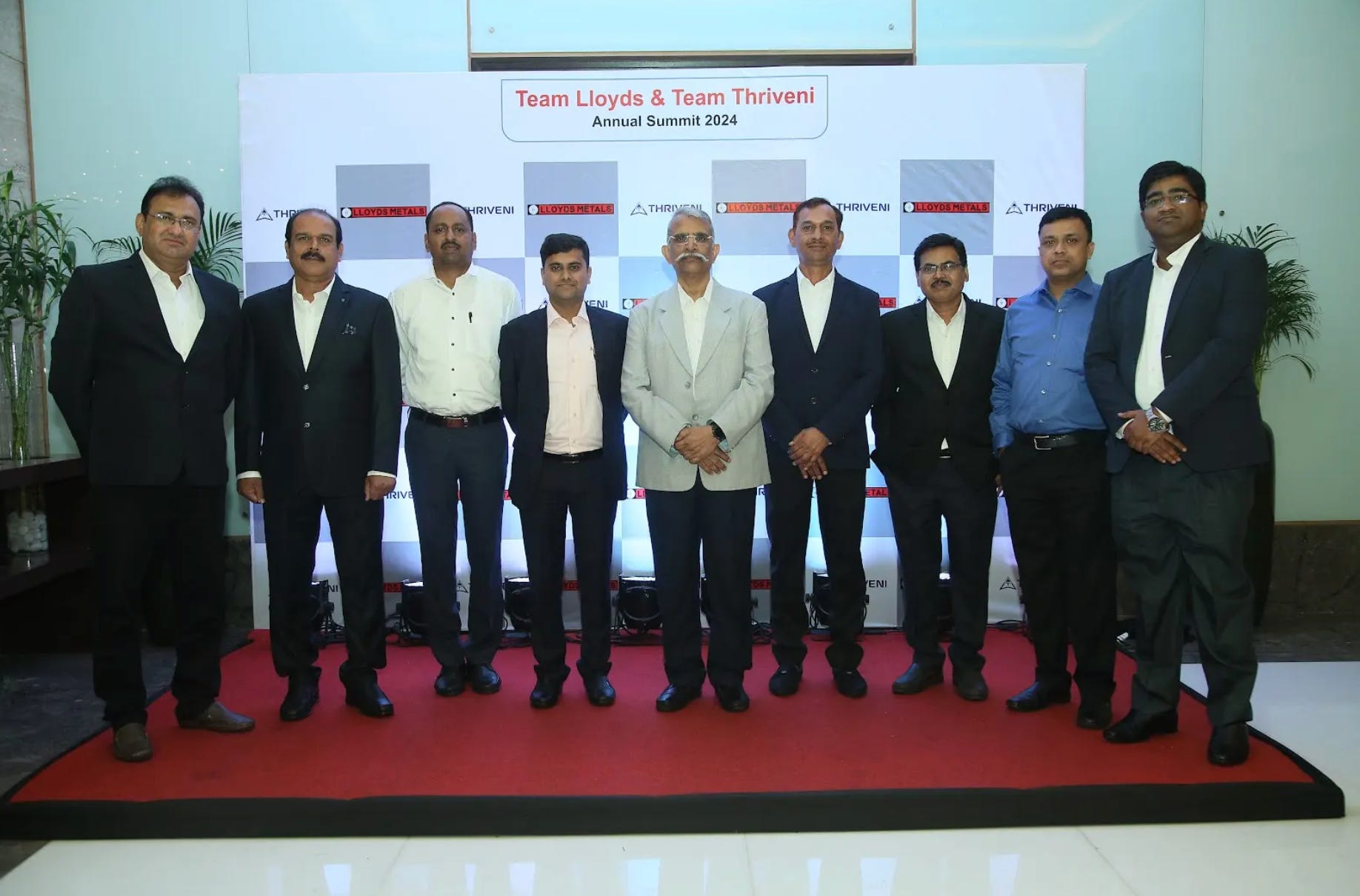
That arrived in 2021, when B. Prabhakaran and his family — of Thriveni Earthmovers, one of India’s largest mine developers and operators — took a co-promoter stake with equal control.
Lloyds became, in Rajesh’s phrase, a double-engine company.
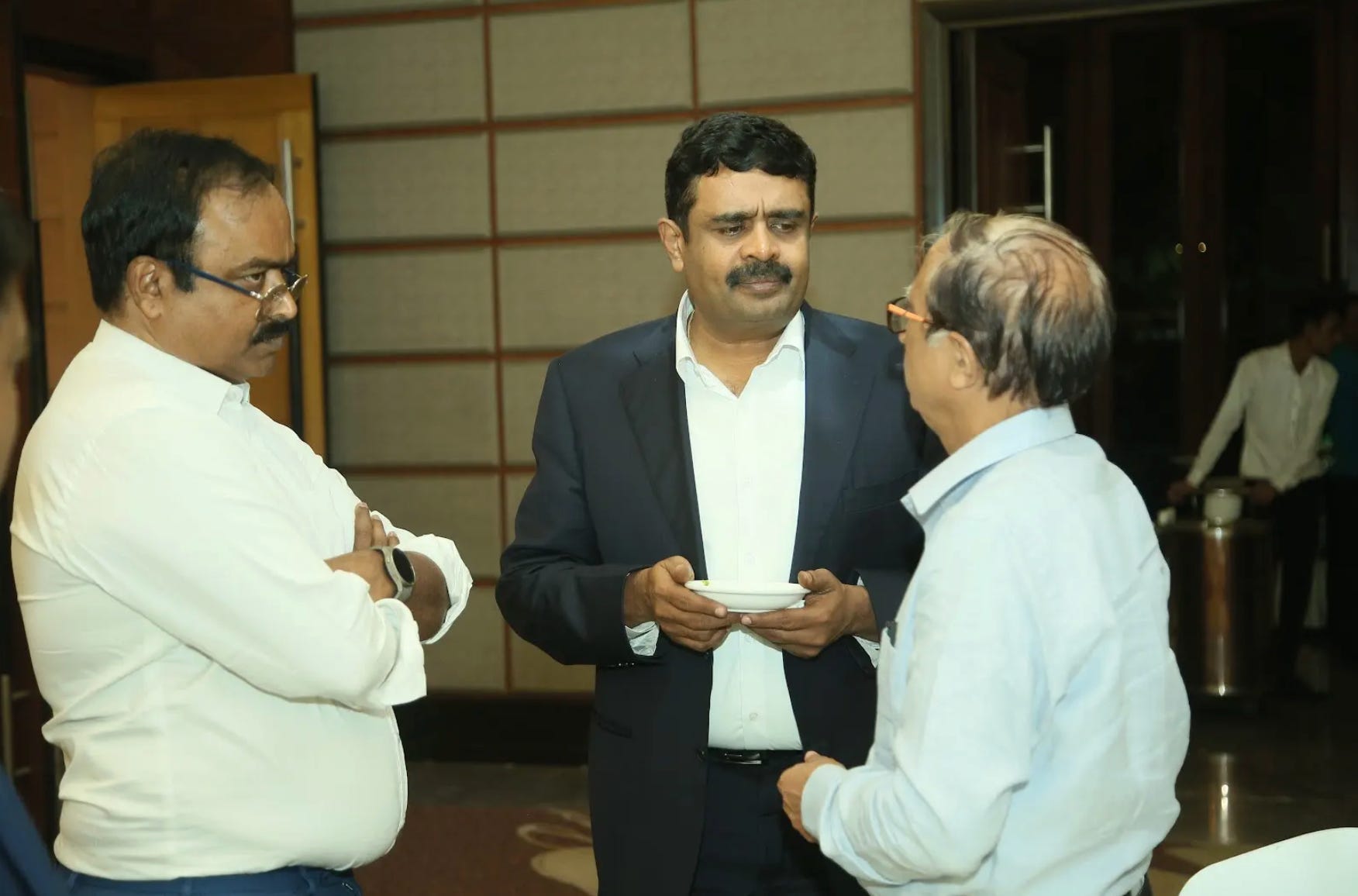
“Thriveni came in in 2021 and took a substantial chunk. Over time we restructured it so it is an 80% subsidiary — we are two MDs, a double-engine company.”
The first engine is Lloyds Metals itself: the mine-to-metal chain taking shape across Gadchiroli and Chandrapur. The second is Thriveni, since restructured into an 80% subsidiary and run by two managing directors — the operating arm that brought the equipment, the crews and the process knowledge, and rebuilt Surjagarh from an underused lease into an integrated mine.
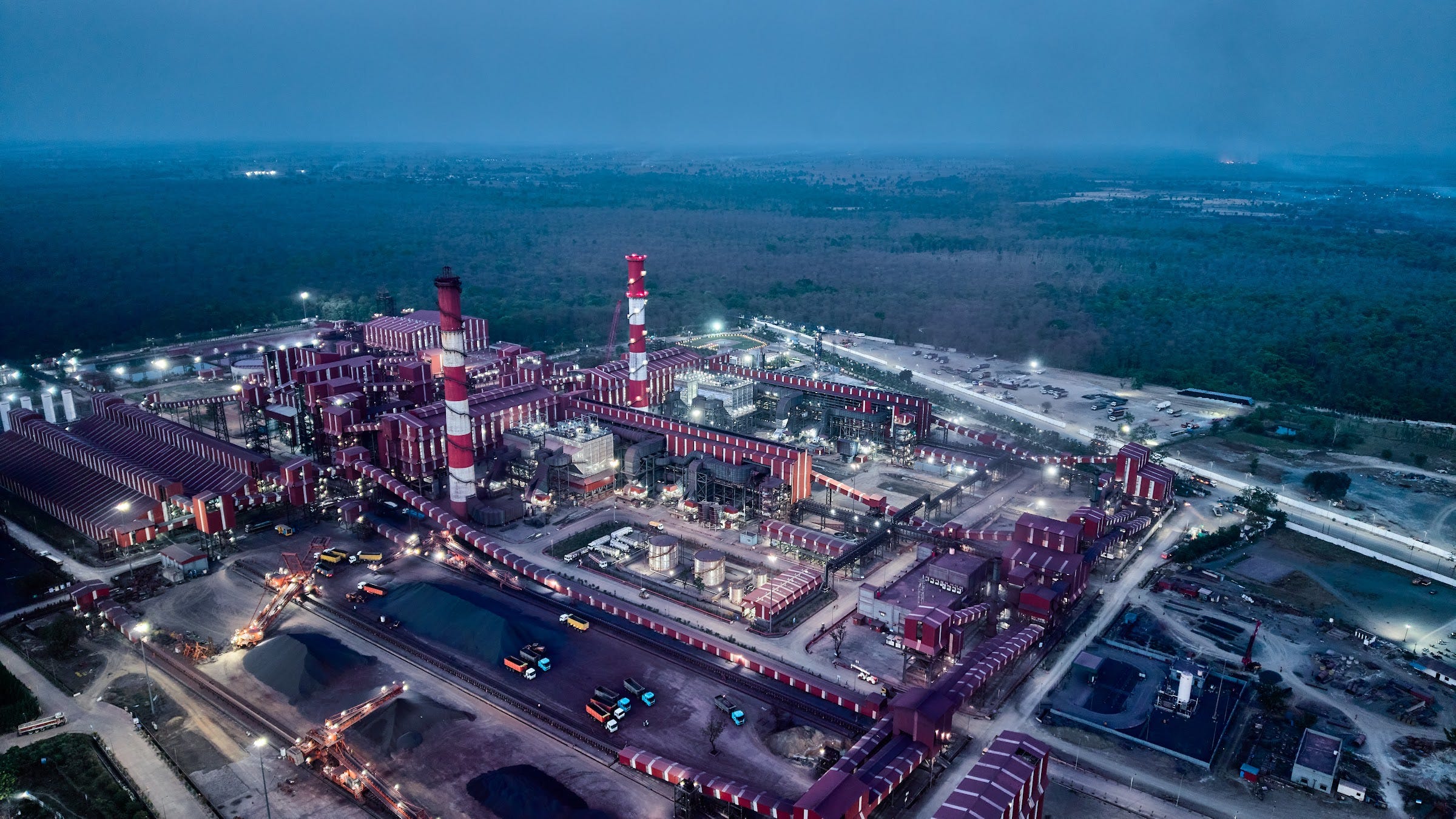
Together they set out to own every rung of the ladder Rajesh had spent a career trying to climb.
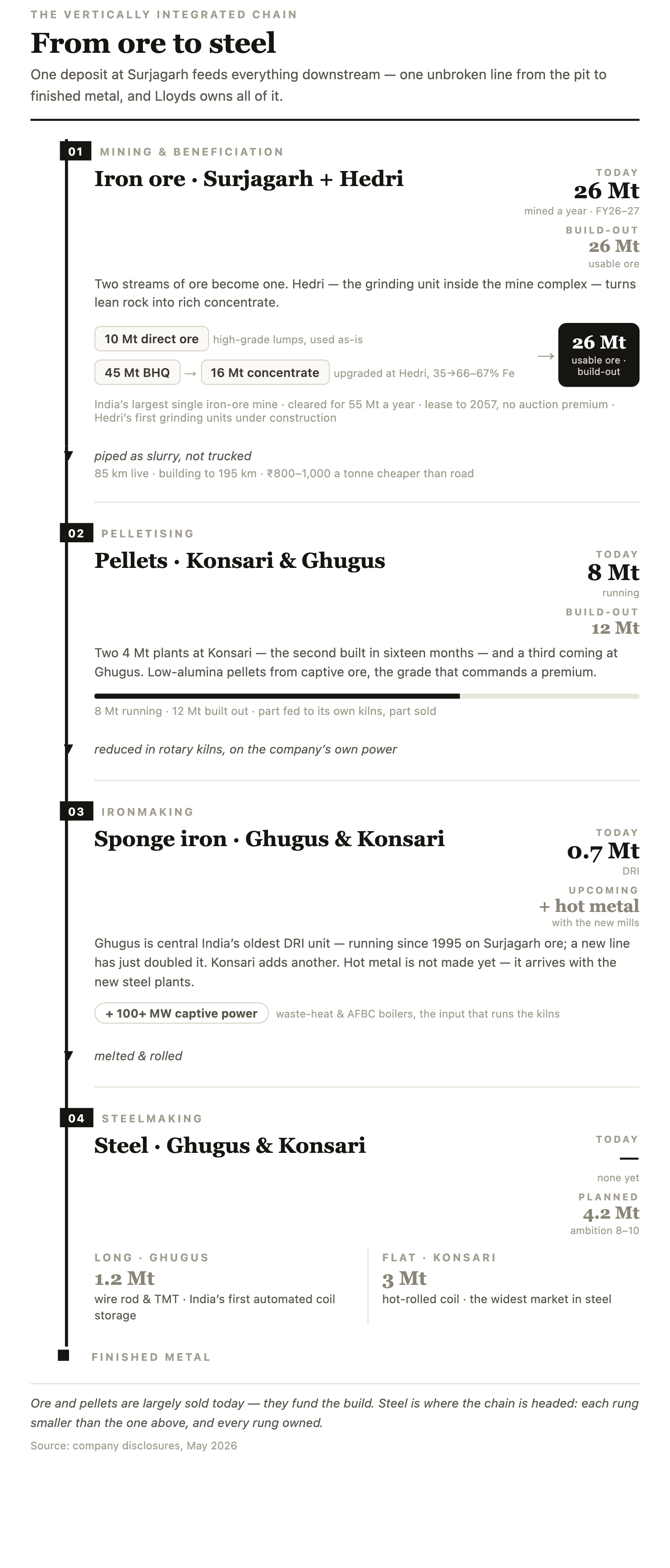
Note - BHQ stands for Banded Hematite Quartzite
The chain begins at the mine.
Surjagarh yields two kinds of ore: a limited body of high-grade direct-shipping ore, and a far larger seam of low-grade BHQ — the banded rock most miners leave alone.
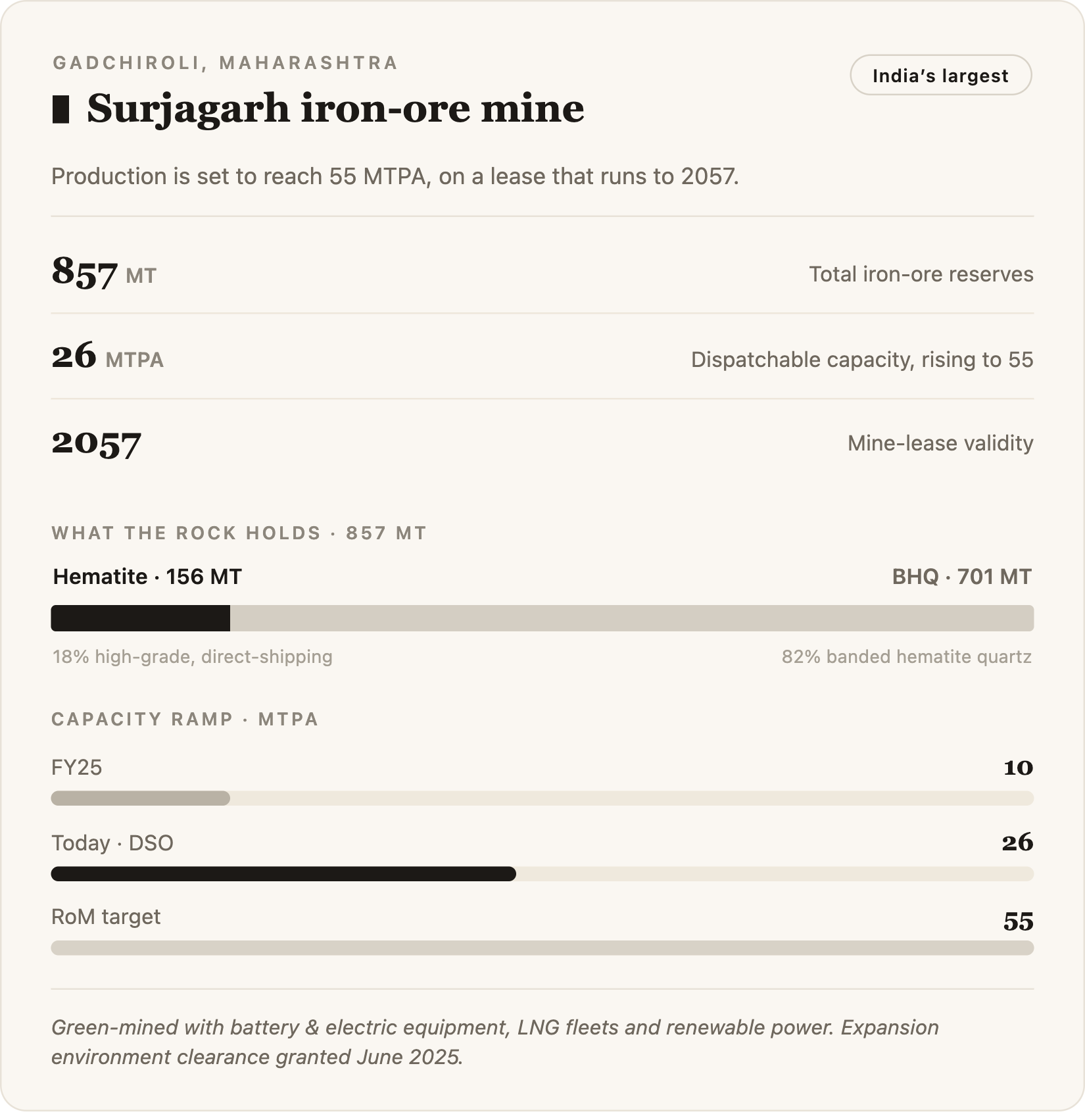
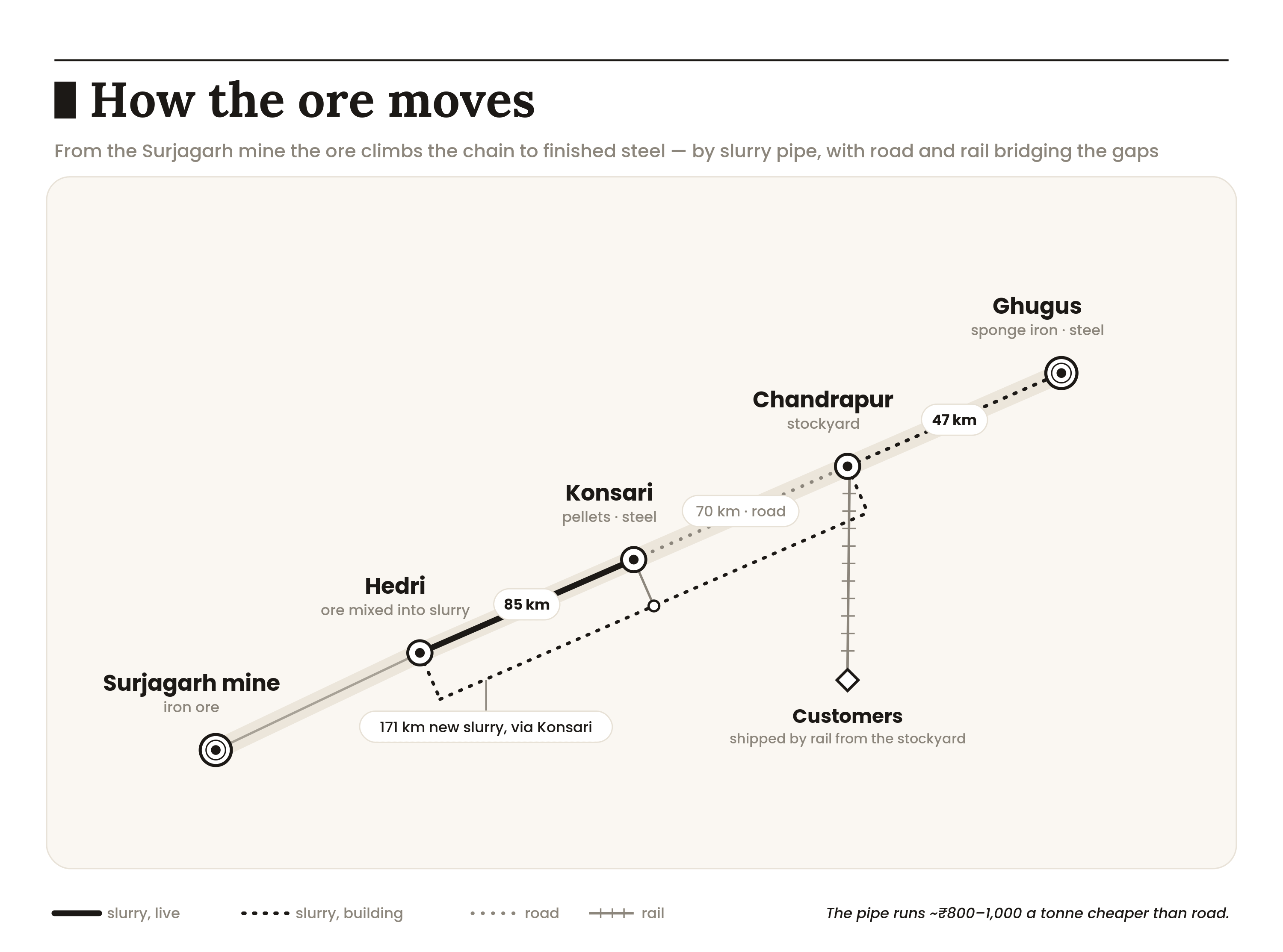
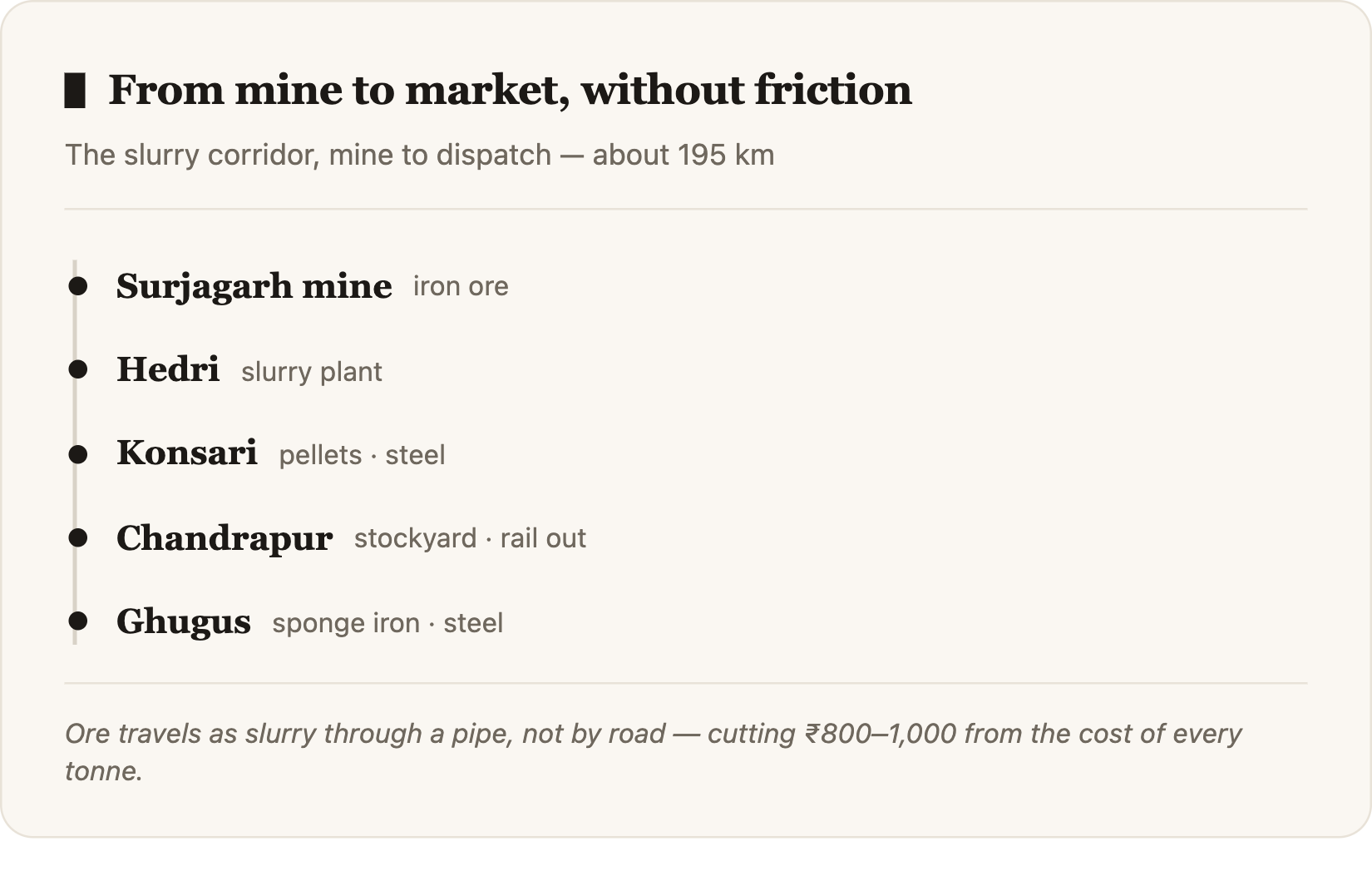
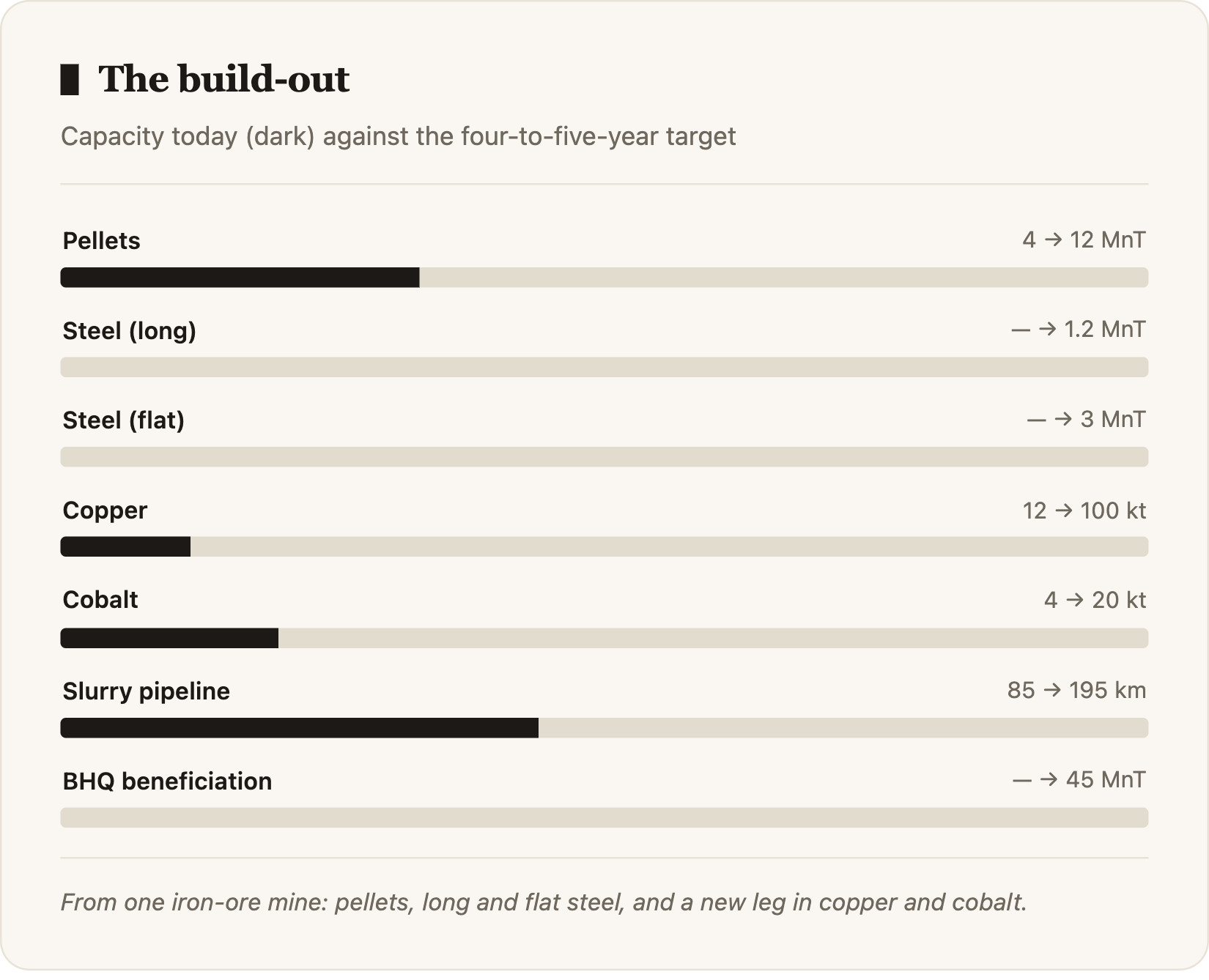
Rather than truck it out, Lloyds grinds the ore near the pit at Hedri and pumps it as slurry: an eighty-five-kilometre pipeline to Konsari today, a hundred-and-ninety-five-kilometre network to Chandrapur and Ghugus under construction, each line saving eight hundred to a thousand rupees a tonne against the road.
Inside the 10 MTPA grinding circuit at Hedri. Video: Mukesh Verma, mineral-processing engineer at Lloyds — via LinkedIn.
It is in Hedri that the BHQ is beneficiated — lifted from around thirty-five percent iron to sixty-six or sixty-seven — turning the ore into clean concentrate.
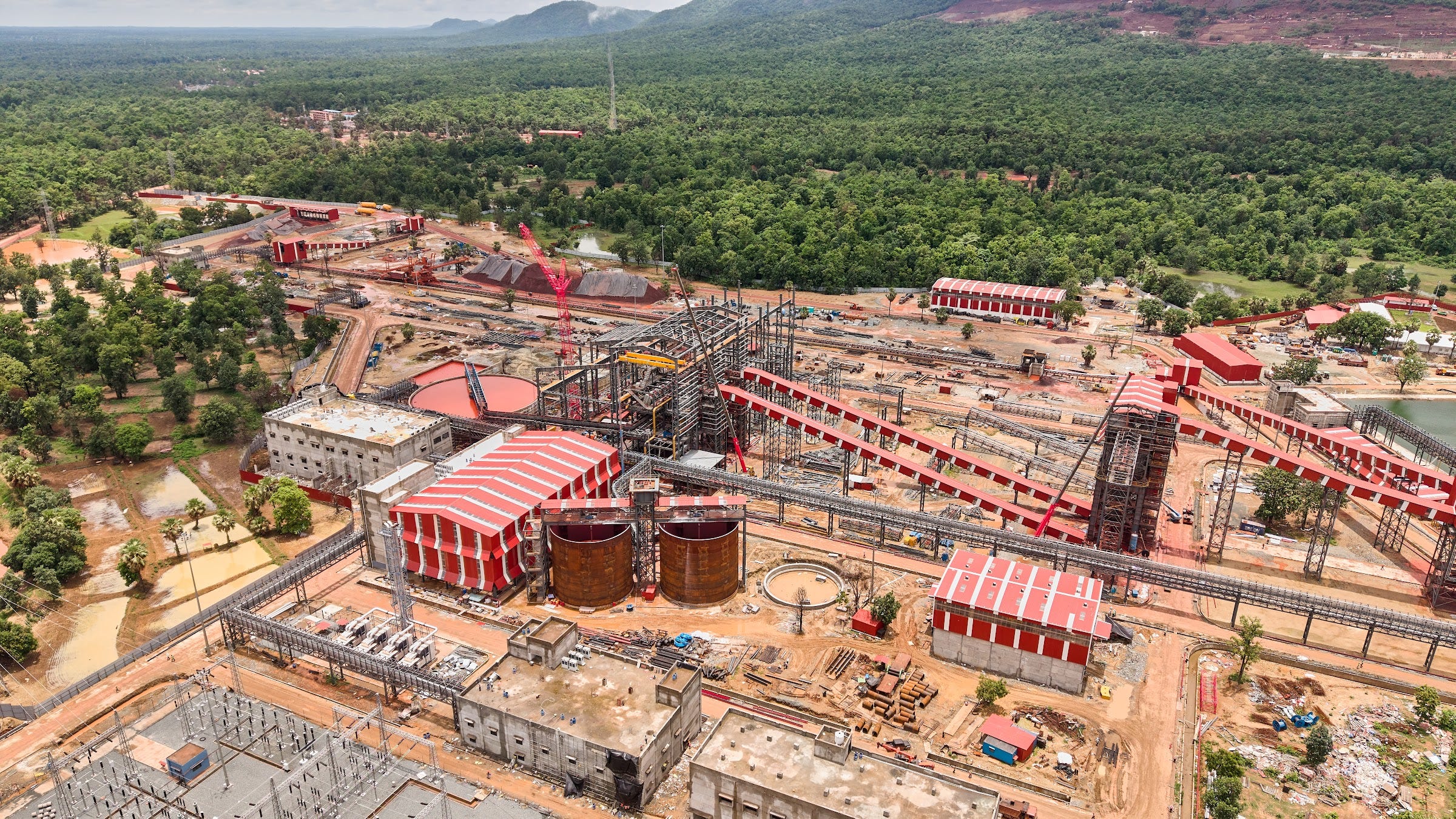
That concentrate climbs the chain step by step. It is fired into pellets — twelve million tonnes of captive capacity rising across Konsari and Ghugus.
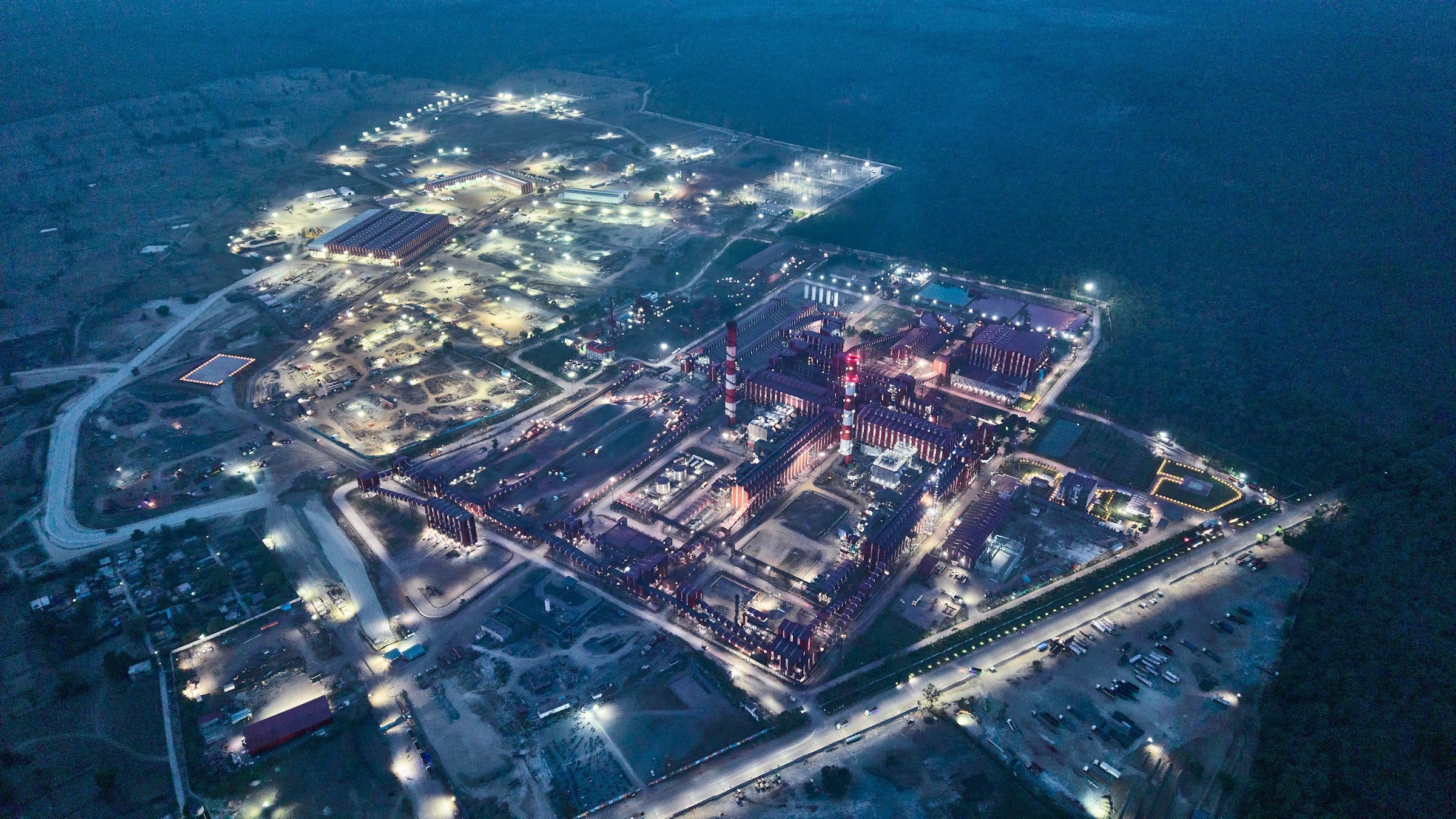
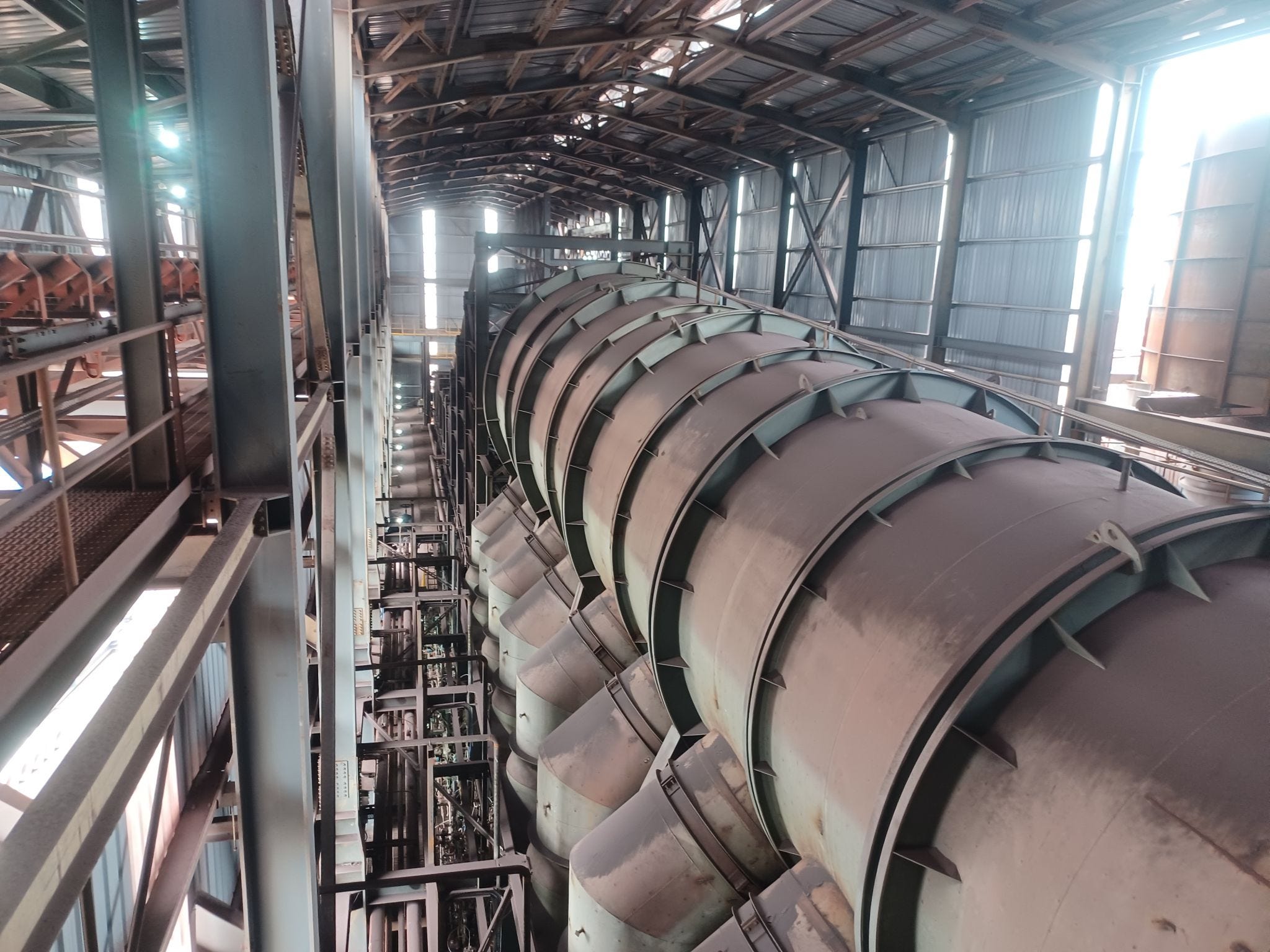
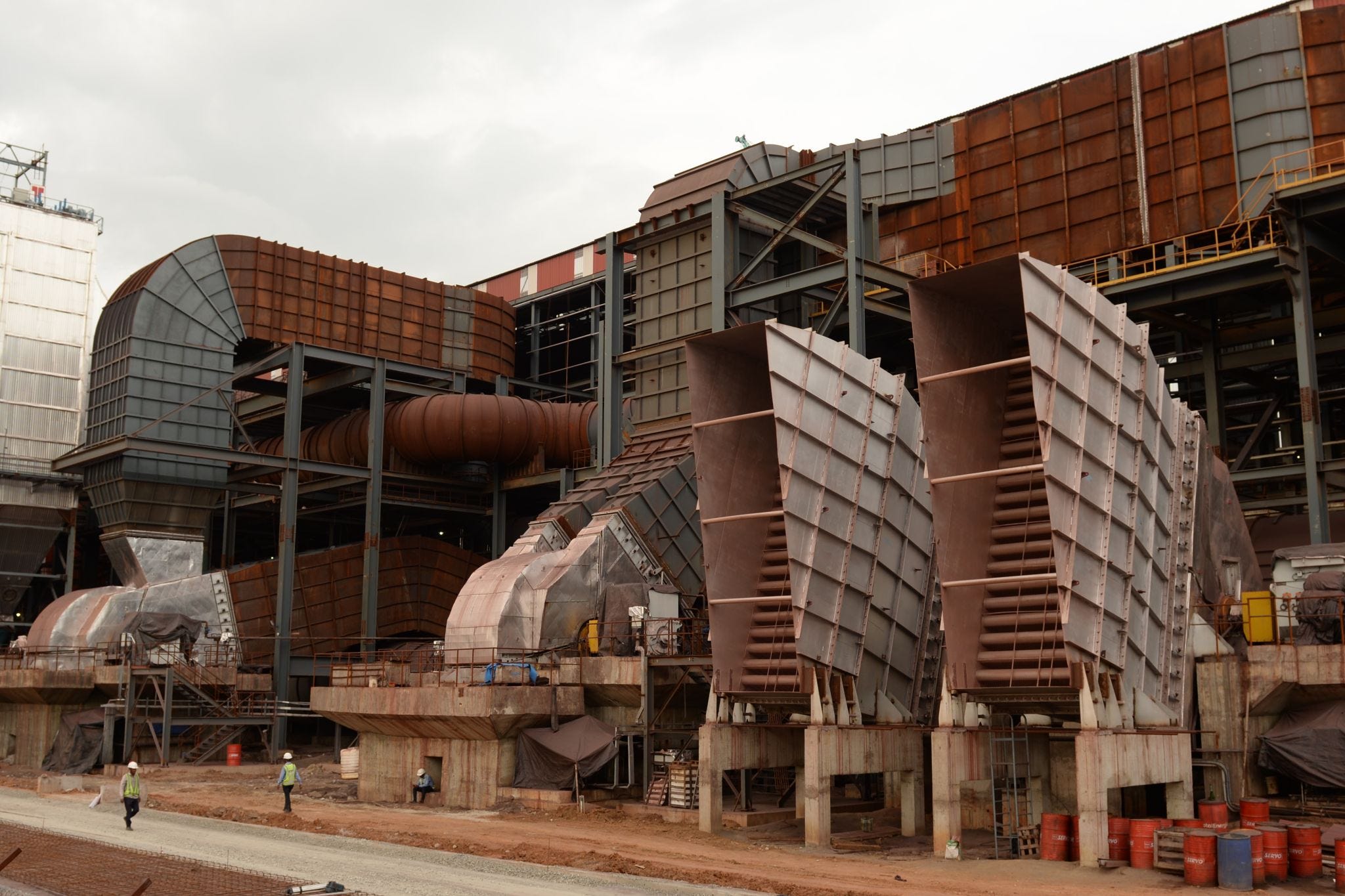
Pellets feed sponge iron, made at Ghugus — one of the oldest DRI plants in Maharashtra — and at Konsari, both run on captive power.
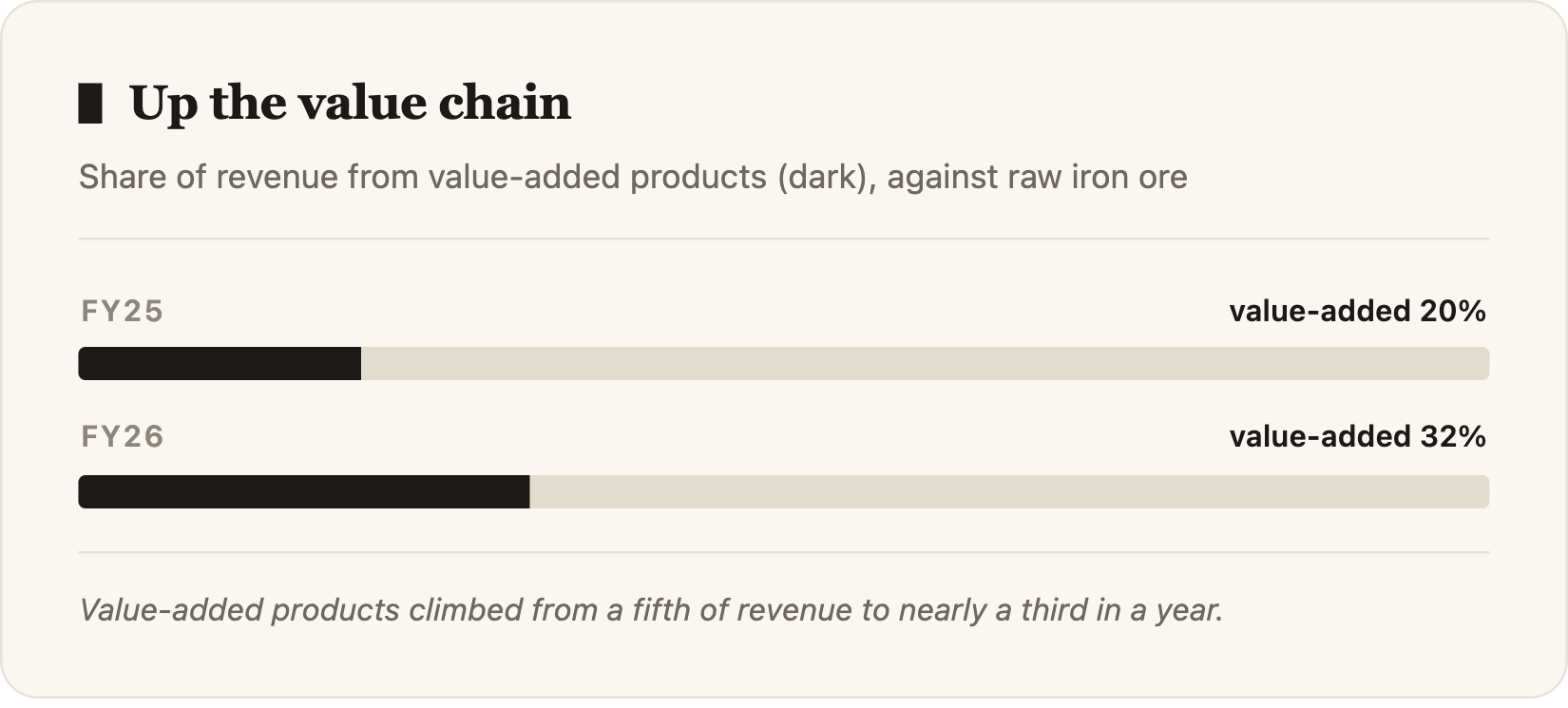
And sponge iron feeds steel, the rung Rajesh always wanted: long products, wire rod and reinforcement bar, at Ghugus; flat products, hot-rolled coil, at Konsari — about 4.2 million tonnes planned, on the way to the eight to ten he describes for later.
Each rung earns more than the one beneath it, and none of it leans on an outside supplier.
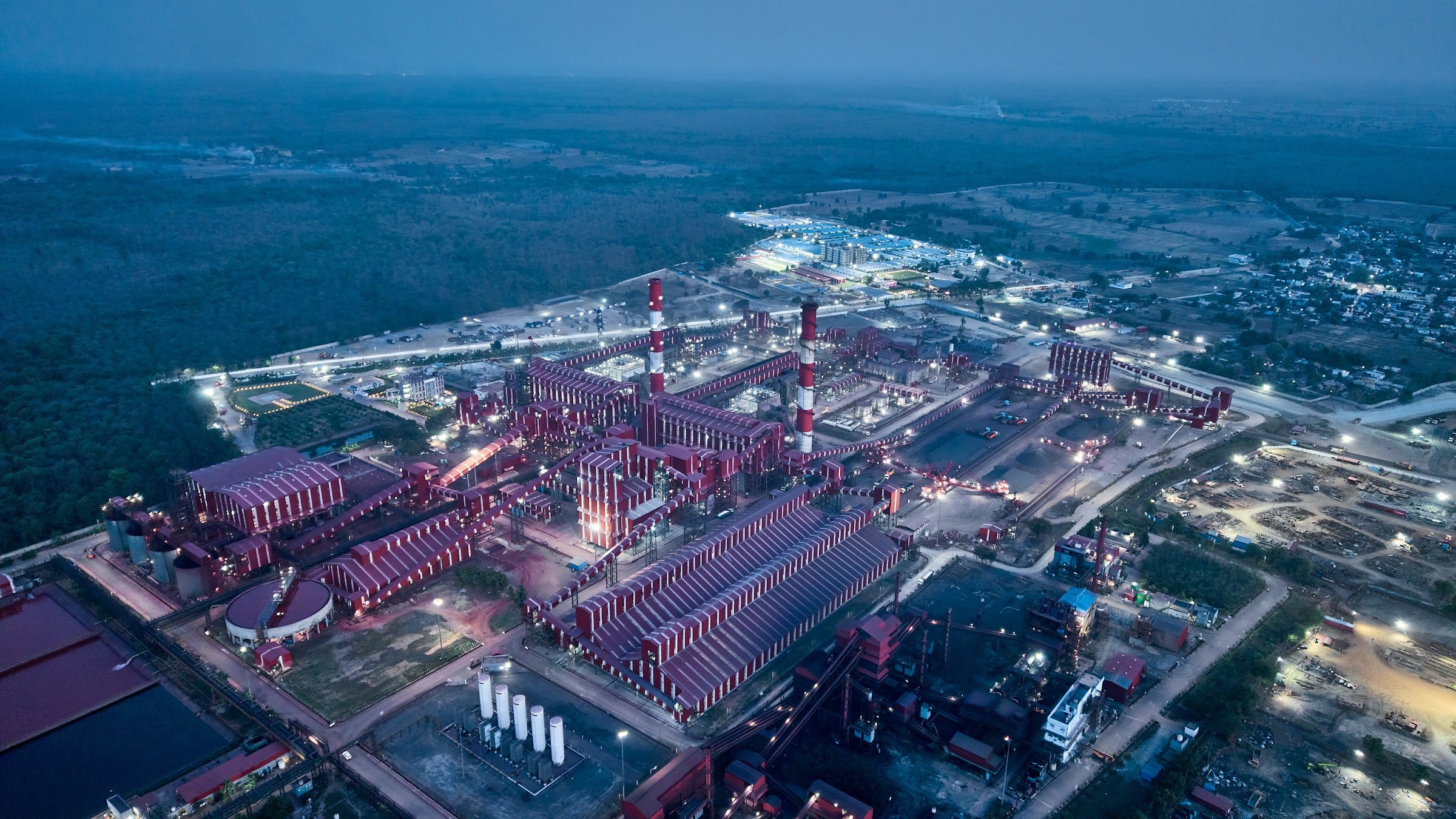
“Chandrapur was the original project — the one that did Rs 200 to 400 crore in the early days, at about 250,000 tonnes. Today it is 750,000 tonnes, and we are building a 1.2-million-tonne plant.”
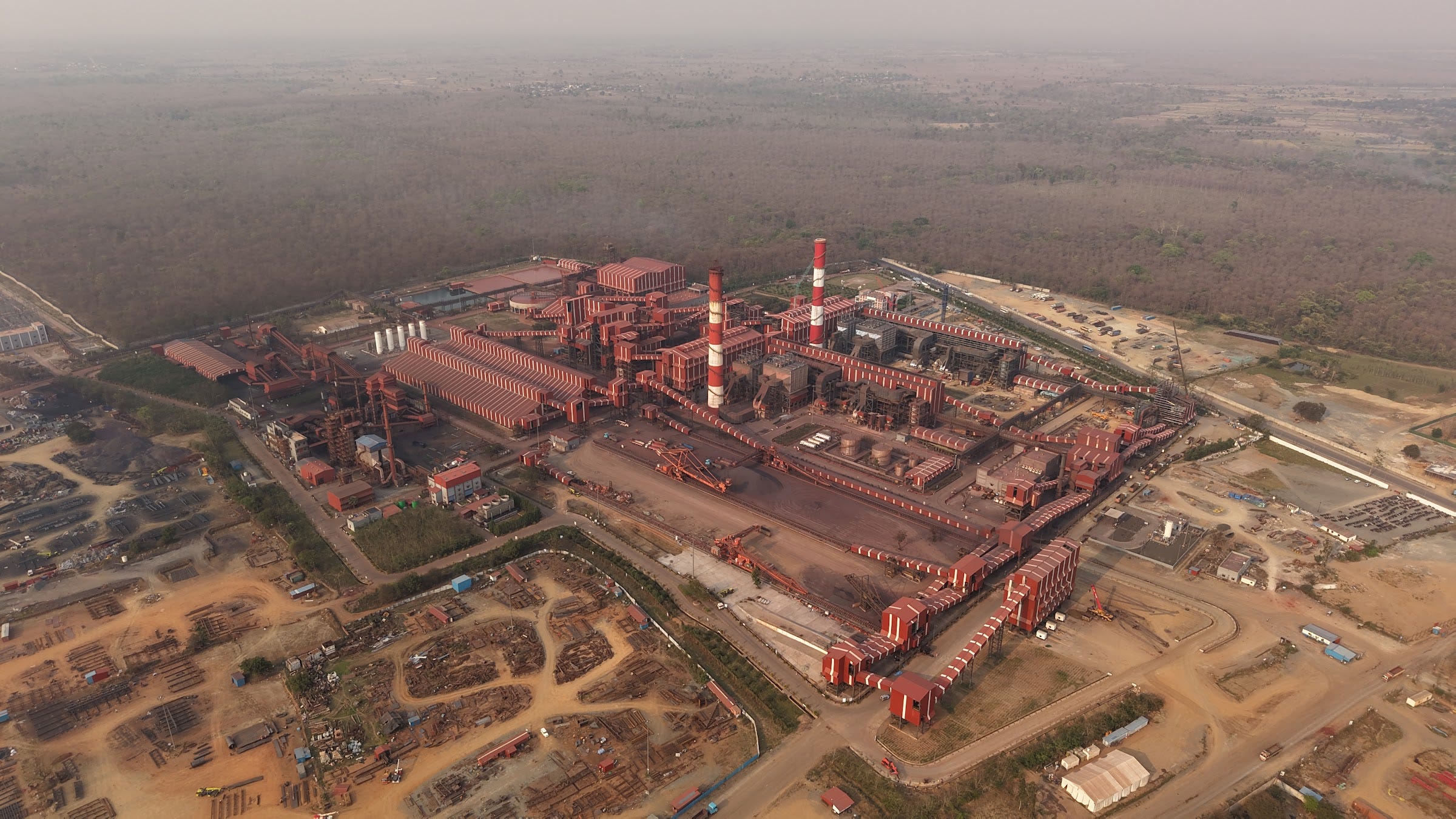
The two manufacturing hubs end up mirroring each other. Ghugus, in Chandrapur, is the old heart of the company — sponge iron and power since the 1990s — now adding the long-steel line.
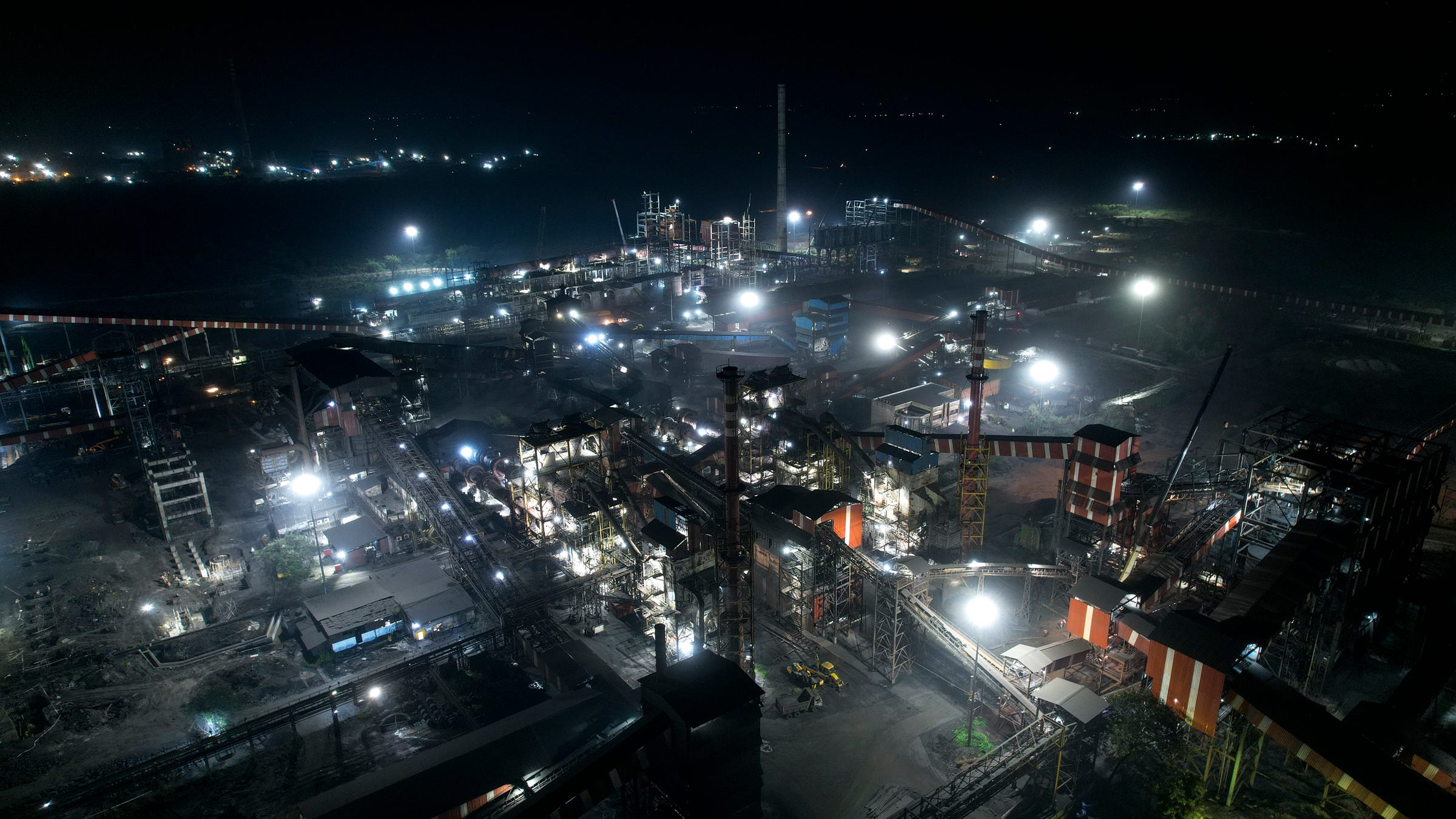
Konsari, in Gadchiroli, is the new one — pellets, sponge iron and the flat-steel mill — and until recently was barely more than a name on the pipeline. Both drink from the same mine; captive power, scaling past a hundred megawatts and increasingly solar and wind, runs the energy-hungry middle.The second engine reaches well beyond Vidarbha. Thriveni brings the book Prabhakaran built — iron ore in Odisha, the country’s largest NTPC coal mine in Jharkhand, baryte, overseas coal, a gold contract — a diversified mining business bolted onto Lloyds’ own.
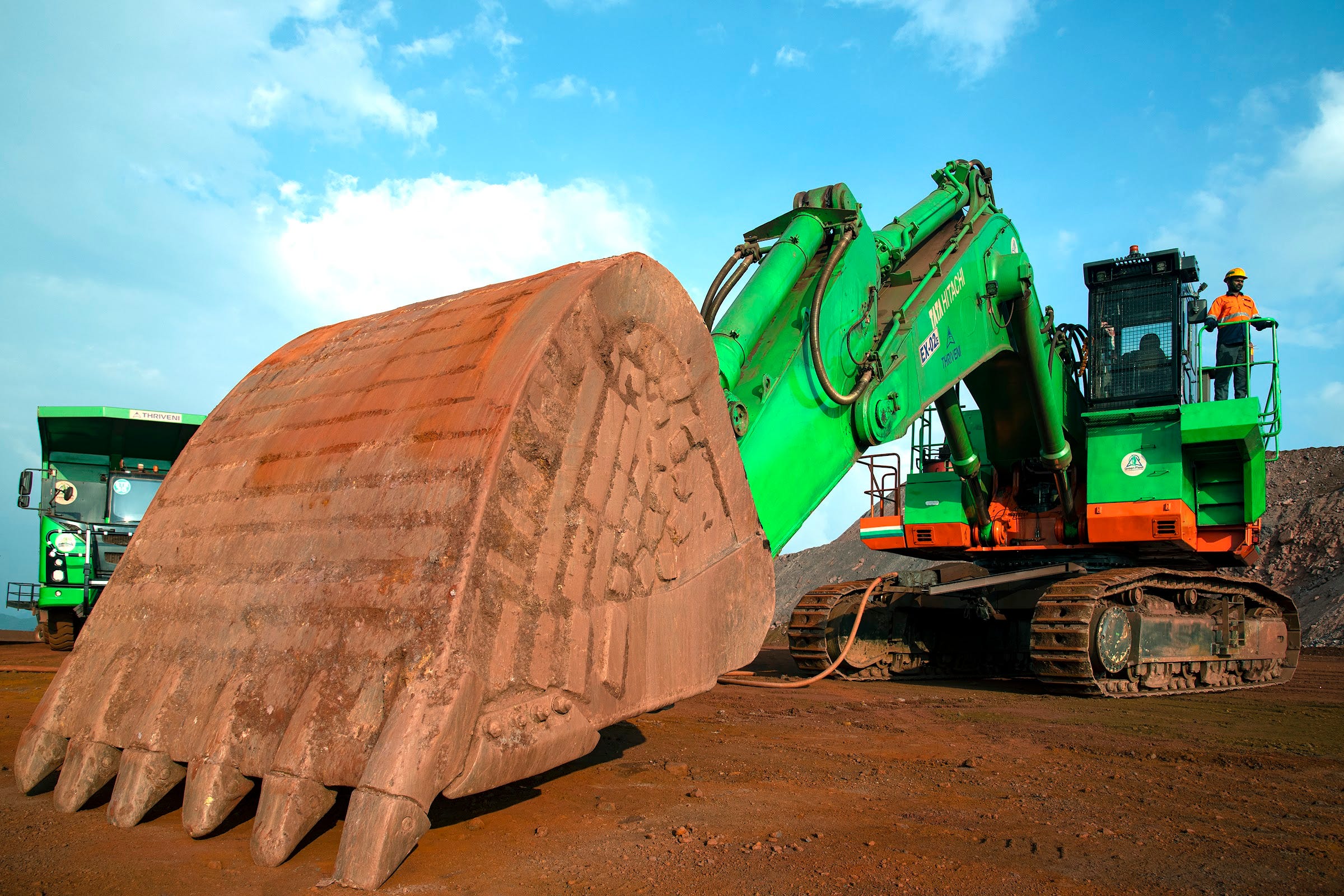
“Apart from the Gadchiroli mine, Thriveni also has MDO operations in Odisha — Prabhakaran’s original business — the largest NTPC coal mine in Jharkhand, operations in Indonesia, a bauxite mine in Andhra, and a gold mine.”
Then a third leg, the newest and the boldest — out of iron entirely, into the metals the next economy is built on.
“We are on the internet now, on AI. You cannot run any of it without copper, or iron, or steel. We are in the most important materials there are. And any mine takes ten to twelve years to come up, iron or copper — I was a prime example of that.”
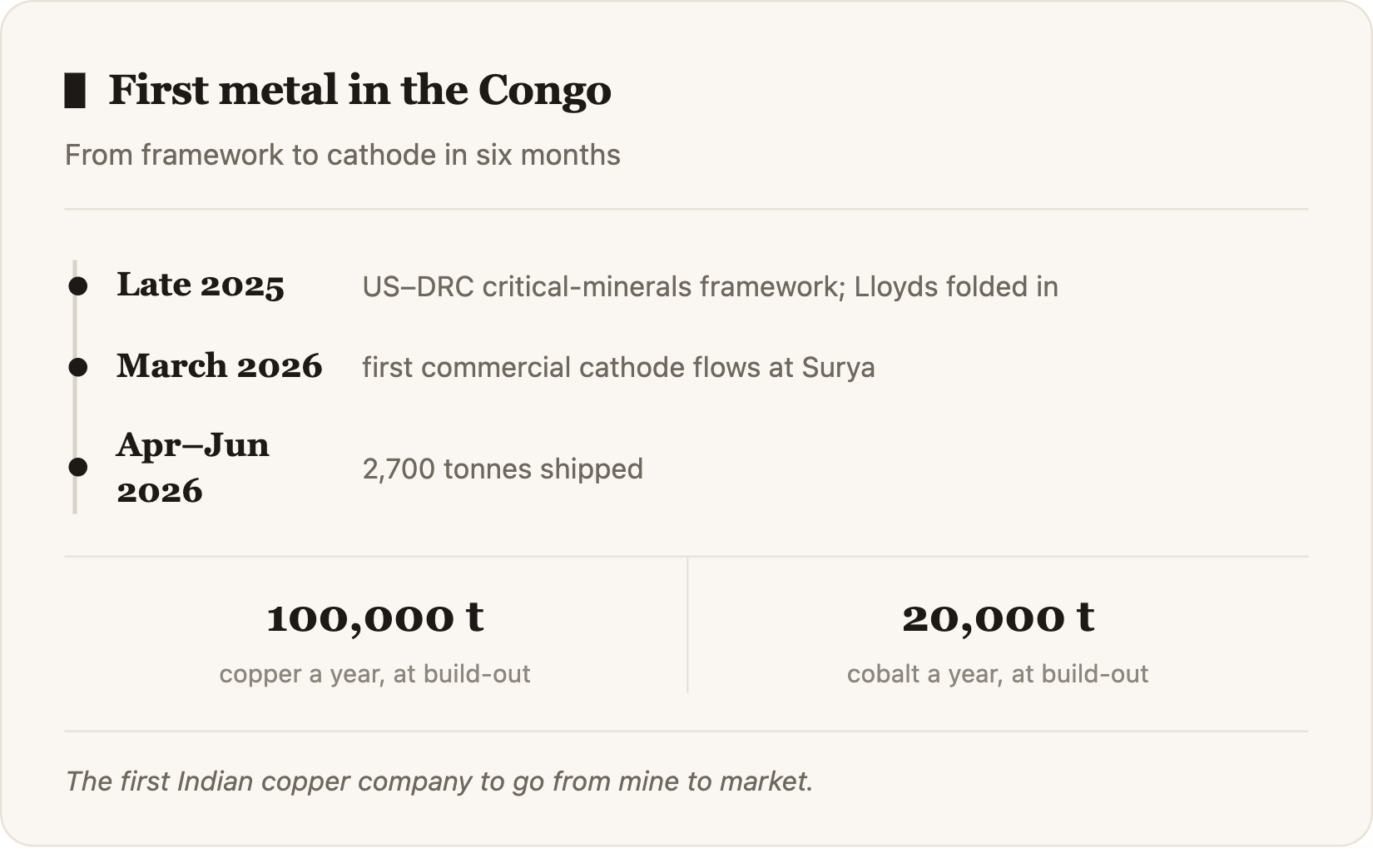
In the Democratic Republic of Congo it is already coming out of the ground:
“One is Surya Mines — around a hundred square kilometres, reserves in the fifty-to-sixty-million-tonne range — where we already produce cathode. We are the first Indian company to go end to end, from ore to finished copper, through the electrolytic route, not smelting. The second, larger one we are doing with a US company, Virtus; copper there starts in about eighteen months. We already have three thousand people on the ground in Congo.”
By early 2026 the plan had become metal: commercial cathode began flowing from Surya that March. The larger venture is Chemaf — a copper-and-cobalt platform in the same Katanga belt, in which Lloyds took 49 percent — widening the bet into cobalt, toward roughly 100,000 tonnes of copper and 20,000 tonnes of cobalt a year, backed by Trafigura, Orion and Virtus and folded into the US–DRC critical-minerals framework signed late in 2025. In the April–June quarter of 2026, Surya shipped 2,700 tonnes of cathode — making Lloyds the first Indian copper company to go from mine to market.
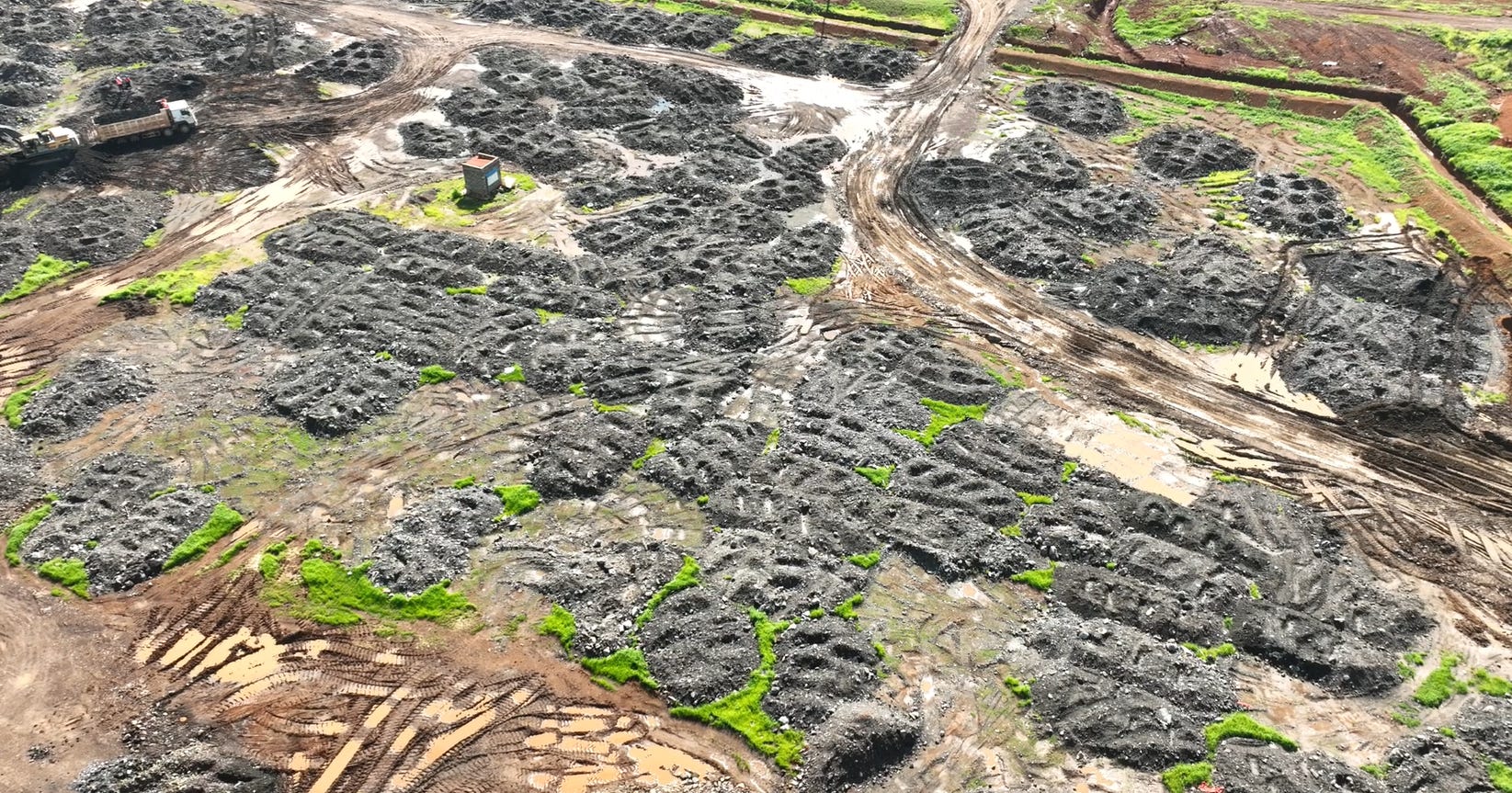
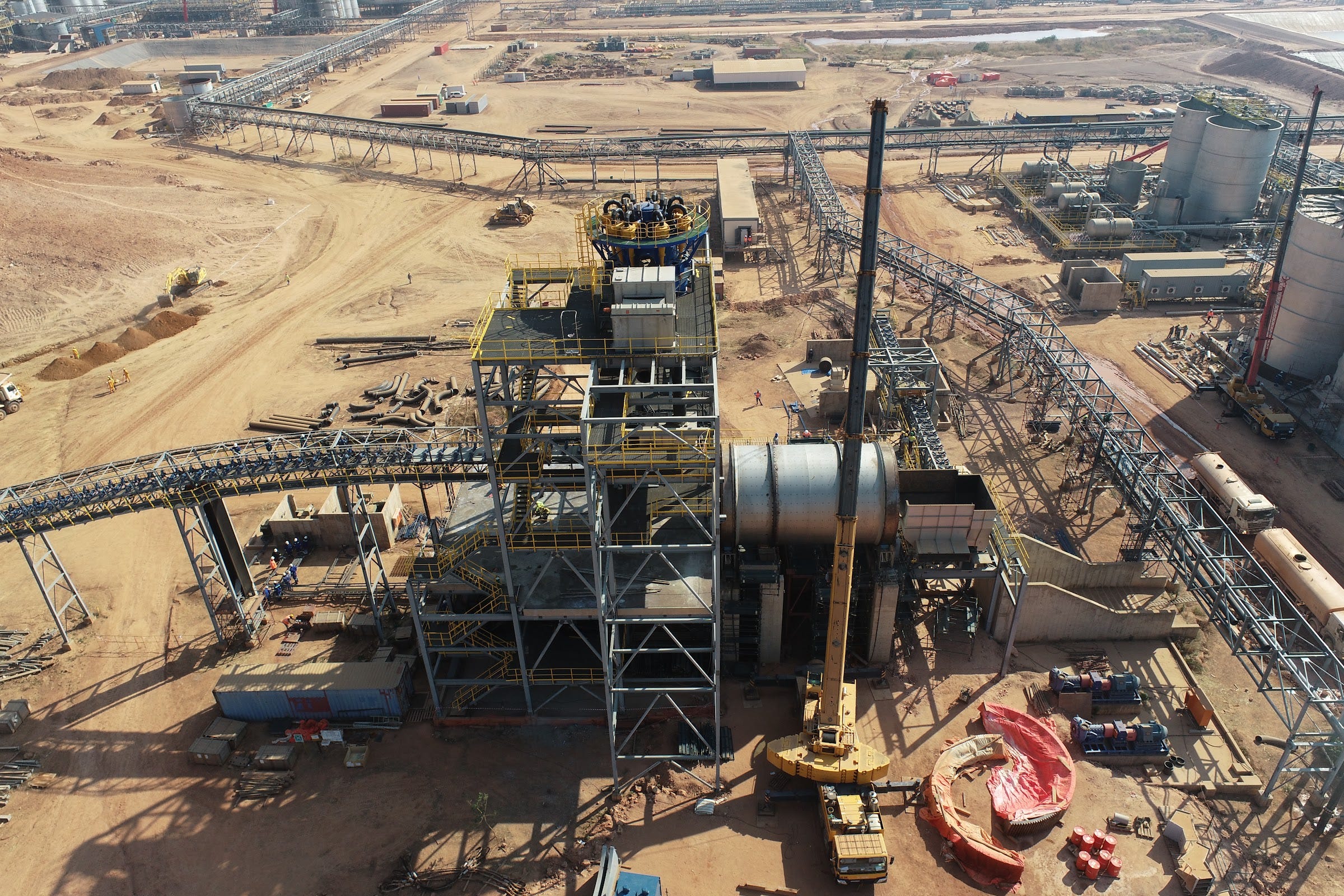
None of it, he insists, was improvised. It was a plan laid down when the mine was first allotted, simply completed a generation late.
“Go back to 1994, when the mine was allotted. We had the steel plant, and we went backward — to sponge iron, and then to the ore. It was a thought-out process. We are just completing it, maybe twenty-five years later.”
An economy where there was none
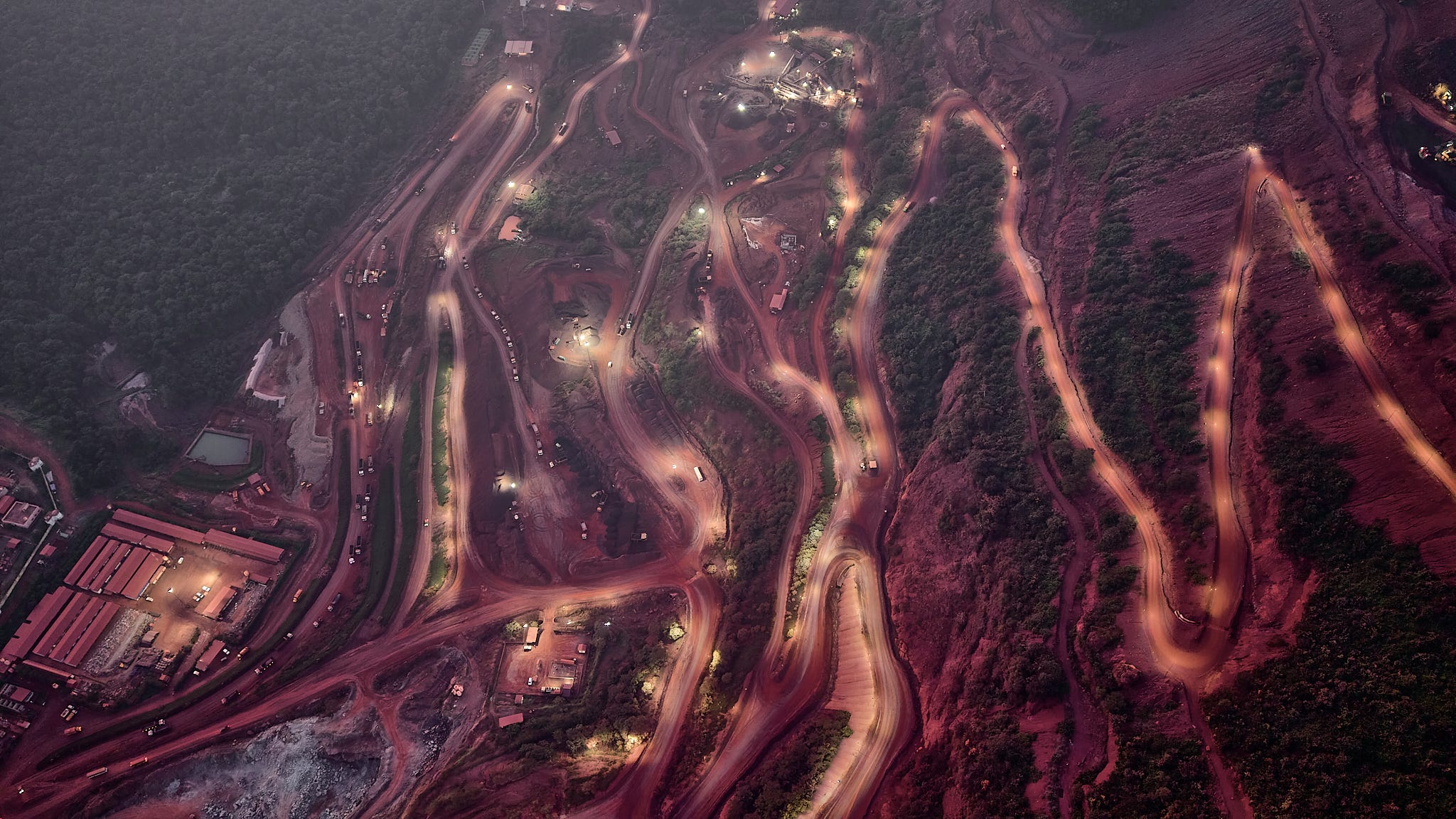
The murders of 2013, the seventy trucks burnt in 2017, the caution of the early mining years — hold those facts against the mine as it stands today: twenty-six million tonnes a year moving out of the same forests, worked by people from the same villages. Something changed in between, and it was not the geology.
For decades the district had been held hostage — one of the poorest places in Maharashtra, seventy percent forest, no industry, no roads worth the name, and an insurgency that enforced the standstill with the gun.
Companies surveyed and left. The ore sat in the hill; the district sat still.
Rajesh’s reading of that deadlock, by his own account, was always economic rather than tactical:
“We understood one thing very early. The district did not need more force — it needed work. A young man there had nothing: no job, no school for his children, no hospital. Whoever gives him those things, he will build with them.”
So they went in with a payroll instead of a security plan. With Prabhakaran running the mining operation, the workforce was drawn from the villages around the hill.
Training centres turned farmhands into operators, drivers and technicians. Schools and hospitals went up in places that had done without both; roads followed the trucks.
More than twenty thousand crore rupees flowed into a district that had never seen investment on that scale, and upward of six thousand local people found steady work — the first industrial wages the district had seen at any scale.
“The people of those villages are our people now. We train them, they run the machines, they run the trucks. Their children are in school because the mine is there. That is the real production of Surjagarh.”
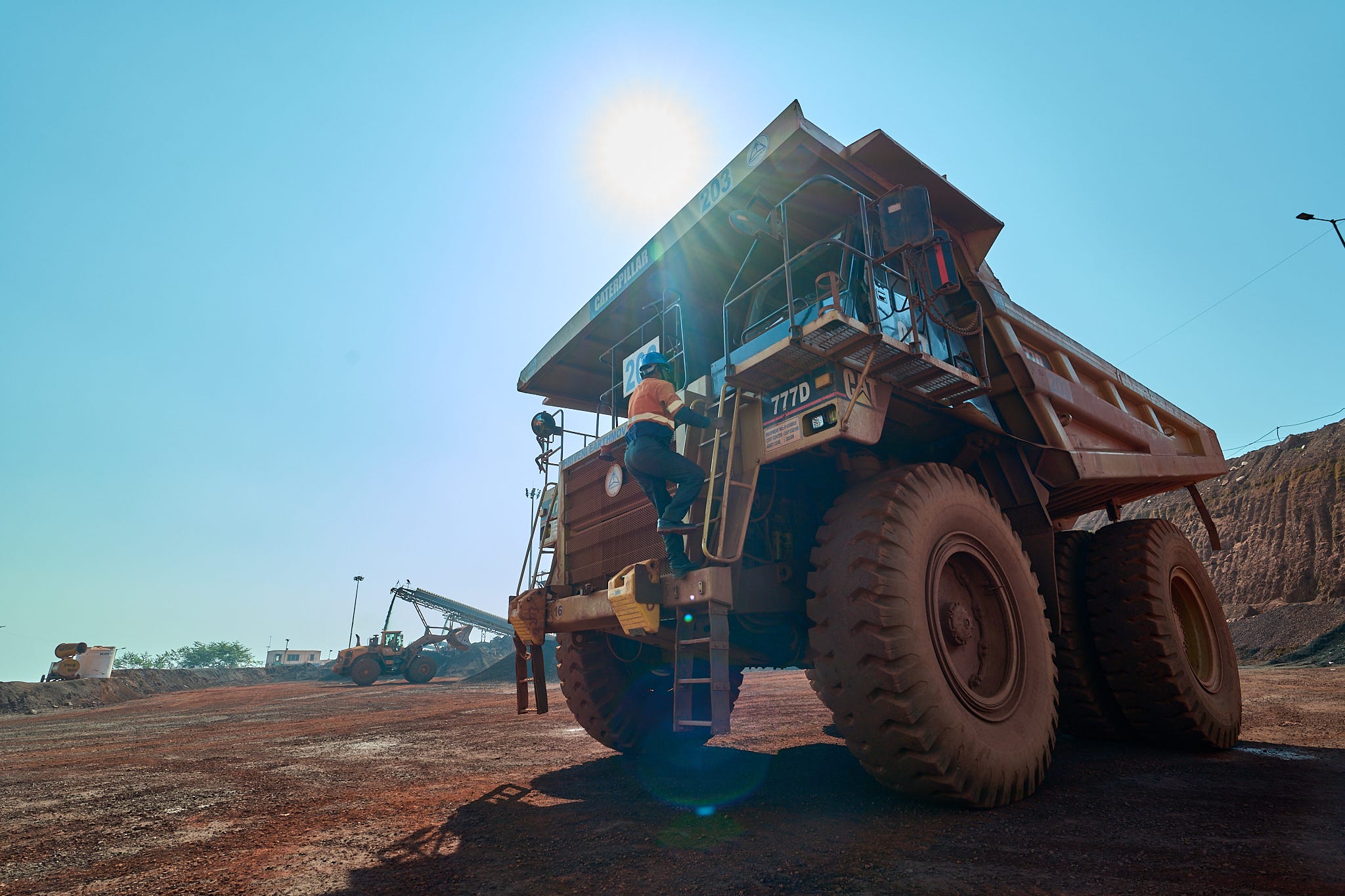
Then came the part nobody had planned for. Men began walking out of the forest to surrender — in groups. Lloyds trained them and put them on the payroll like anyone else; by 2025, more than sixty former insurgents were working for the company.
“We never asked anybody what they were before. They took the training like everyone else, and today they earn like everyone else. I am more proud of that than of the tonnes.”
The hill they all work beside remains what it has always been to the people around it — sacred ground, home of the god Thakurdeo, climbed by thousands of Adivasis every year. The mine works beside all of it.
And that, in the end, is the answer to the riddle of the two banwas: the licence took twenty-eight years to turn commercial because a licence cannot mine where an economy does not exist. Lloyds’ real feat in Gadchiroli was the economy it built. The ore followed.
The owner has no options
If you ask Rajesh how he picks people, you get a characteristically unfussy framework — attitude, aptitude, and knowledge, in roughly that order:
“It is mostly attitude. Then aptitude. Knowledge is the third thing.”
He has watched people who were, by the polite standard of the time, not good enough turn themselves into excellent operators on the strength of attitude alone, and watched the most capable people leave the moment the company wobbled.
That last observation is the seed of his strongest conviction about people, and it comes from a story he has clearly been carrying since his twenties.
The qualified engineers at the engineering company, all of them from good firms, used to needle the family for not being professionals, until a young accountant on the staff shut the argument down:
“What is wrong if the owner is a professional? Just because his name is Gupta does not make him unprofessional. A professional is anyone who works for the company wholeheartedly.”
And then came the line that reframed his entire thinking about who actually carries a company:
“The only difference between you, the professional, and the owner is that the owner has no options. He cannot leave and go elsewhere. He has to survive. A professional has the option to leave when things go bad. The owner stays, because she/he has nowhere else to go.”
The logic of that line runs straight into how Lloyds is run today. Across the group’s companies, the staff are given equity:
“Now, across all our companies, we give our people equity via our ESOP pool. Every white-collar employee gets a stake that builds up over five years. But not just that — every blue-collar employee also gets stock options.”
The point, in his telling, is alignment — to give employees a version of the owner’s predicament, a reason to stop searching for the next job and start treating this one as the thing they have to make work:
“Once people stop searching for jobs, they start working.”
The shift shows up in the numbers: attrition across the group has fallen from about 24 percent to roughly 13 percent in four years.
There is a hard-won tenderness in how he talks about this. For most of his career, he could not protect his people from the thing that frightened him most:
“Until five years ago, I was always worried about my payroll. Every entrepreneur has the same problem. You keep worrying about the payroll until you finally have enough surplus.”
He no longer worries about it:
“We look after our people more than we should — more than they expected us to.”
For a man who spent twenty-six years a hair’s breadth from not making it, that may be the metric that matters most.
Green only if it makes sense
It would be easy to file Rajesh as a survivor with good instincts and no theory.
That would be a mistake. On the material science of his business — and on the fashionable economics of green steel — he has the most heretical thinking in the conversation, and it is the part of the interview where, for a man who claims no scientific training, he is most obviously in his element.
His objection to most of what passes for green industry is thermodynamic:
“To be green, the world has to reduce, reuse, recycle. But nobody reduces. Energy cannot be created or destroyed. If you will not cut consumption, you only change the source — instead of petrol you burn ethanol, and the land goes to corn and there is a famine somewhere. Now it is solar. But what will you do with that land after twenty years?”
He had watched the enthusiasm up close. On an early trip to the United States he was given the standard lecture about reducing emissions, and answered it by walking his hosts out to the parking lot:
“I said, come outside and look at all these big cars. Where is the greenness here? Why don’t you all travel in one car? The whole lot is full of the biggest cars there are.”
His point was not that climate does not matter. It was that consumption, not labelling, is the variable nobody wants to touch — and he makes it about himself as readily as anyone:
“Today everyone has an air-conditioner. Ask your peon — he has one; your accountant has two. Twenty-five years ago he had none, and nobody thinks about the power. When we were growing up we were not even allowed to run the AC. The first time I slept in one was after I got married. In the car, the driver was not allowed to switch it on — if he did and we found out, he was fined. It was about saving fuel, saving money.”
The nomenclature itself he dismantles with relish:
“Low-carbon steel literally means steel with low carbon content in it. What people mean is low-carbon-emitting steel — and those are two completely different things.”
And steel, by its chemistry, is one of the great carbon emitters of any industry, because reducing iron ore means combining iron oxide with carbon and producing carbon dioxide:
“There is no way out of it.”
The only real lever is the cleanliness of the iron you begin with, and that is exactly where Lloyds works:
“We take the ore and beneficiate it from around 35% up to 66-67%. We will be making the cleanest iron ore in India, and we pipe it from the mine straight to both steel plants. We save the transport cost and the emissions of moving it. The steel we will make carries far lesser carbon than anyone else’s in India — and we did it not only to be green, but because it is the more viable thing to do.”
That last clause is the key to the man. He is building one of the lower-carbon steel operations in the country and refuses the halo, because he did not build it for one. The fleet of electric and LNG trucks he is assembling to move material around the region is the same story:
“Again, not out of the goodness of my heart only. Not to make it green only, but because it is more viable.”
“Steel — or any product — can only be green if it makes sense. If it is viable. That is my whole principle.”
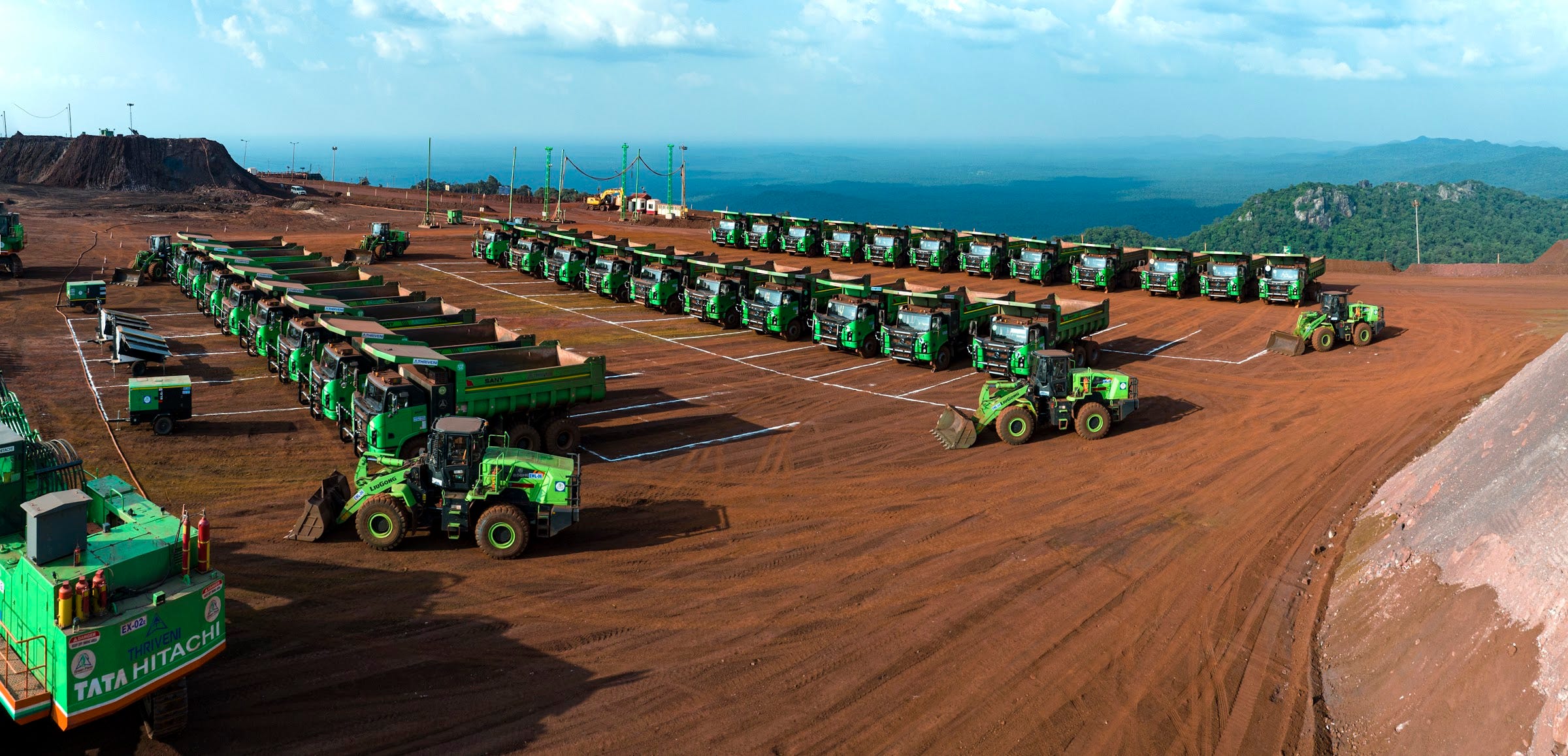
The same calculus runs the power side — more than 100 MW of solar and wind feeding the operation, built because the economics work, not for the label.
And underneath it sits a grievance — the grievance of an operator doing the real thing while the accounting rewards the gesture.
Carbon arithmetic sorts a steelmaker’s emissions into three buckets: what the plant burns itself, the power it buys, and everything that moves around it — the ore hauled in, the steel hauled out.
That third bucket, scope three, is where steel’s diesel-soaked logistics live, and it is precisely the bucket Lloyds emptied by building a pipeline instead of running trucks. It is also the bucket the rulebooks ignore.
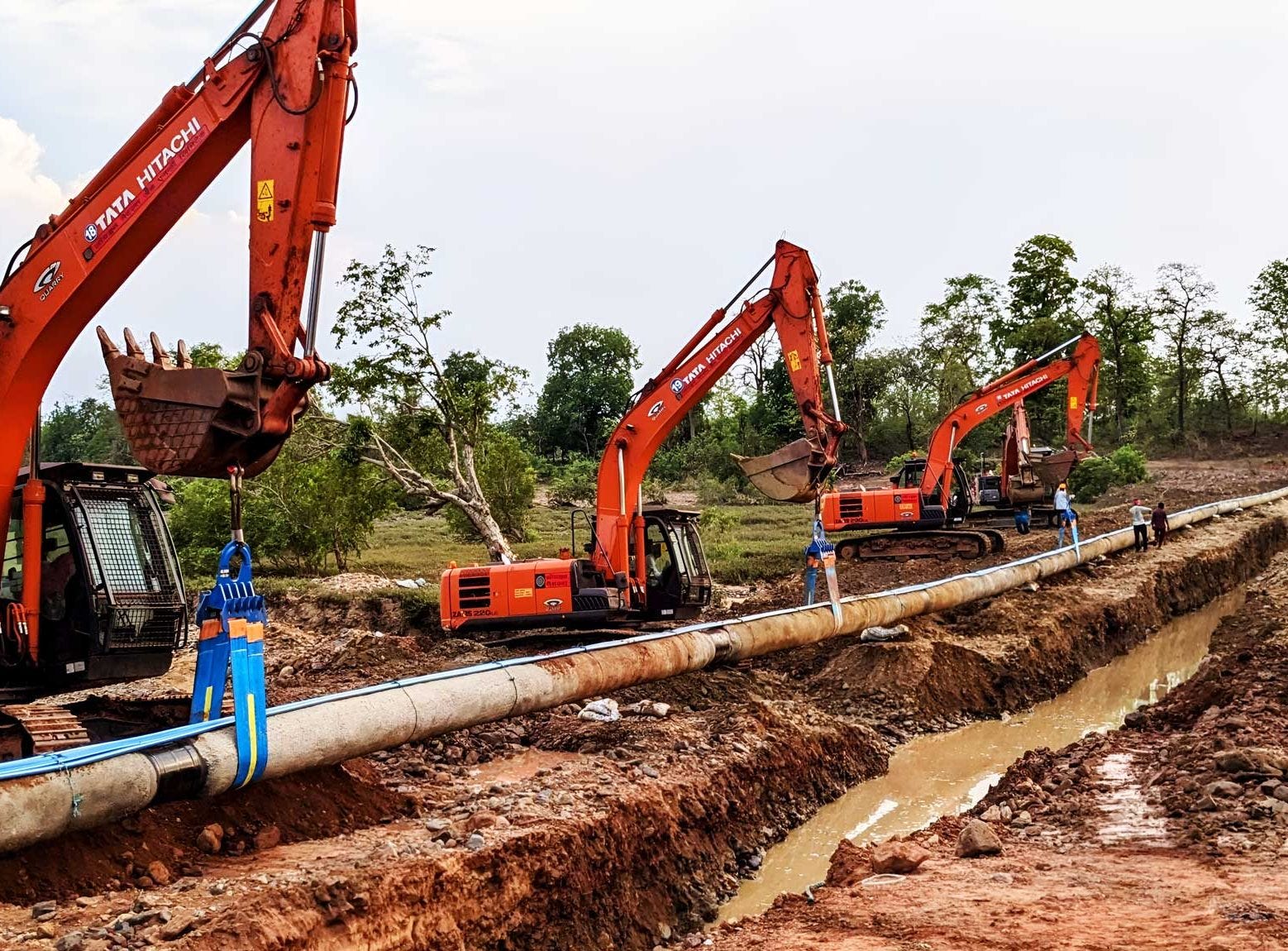
Europe’s carbon border tax and India’s carbon credit market both measure what happens inside the factory fence; on their ledgers, ore that arrives by pipeline and ore that arrives in trucks look exactly the same.
“If there is green steel in India, it will be ours — we transport through our own pipeline, with the least emissions. But that is not counted as green steel anywhere in the world’s calculations. The regulators do not require scope three. CBAM, CCTS — none of them account for the biggest scope-three emissions — the logistics upstream and downstream.”
Nobody does the R&D
If green steel shows how Rajesh thinks, research and development shows what he believes India is missing — and, by the end, what he believes he personally still owes. His diagnosis of his own industry:
“There has been no real invention in steel for thirty-five years.”
The continuous caster, the last meaningful step, was an improvement rather than an invention; after the blast furnace, the genuinely new iron-making processes have nearly all failed at industrial scale, because they cost too much to run — the laboratory was never the problem.
He extends the same scepticism, gently, to Planet’s own composites work and to specialty steels — most of it, he argues, is stepwise improvement, not invention.
He has lived the distinction himself: in the downturn of the late 1990s he drew up a list of things steel ought to replace, starting with the truck body, then still built of wood.
“I was not inventing anything — only trying to push it. The truck body was made of wood, and wood is heavier than steel. Getting people to adopt is far more difficult than the making.”
He is not putting the work down; he is insisting on the distinction, because invention is the rarer, dearer thing India barely attempts:
“There is almost no R&D in India. Companies don’t do it properly. For the project and operations people, research feels like a waste of time, money and energy — it is not their job. You have to set up a proper R&D outfit, and you have to have people who are genuinely passionate about it.”
He reaches, unprompted, for the canonical examples — the great corporate laboratories that seeded the modern world, Bell Labs and Xerox PARC — and marvels at how much value spilled out of a single campus, and how completely the companies that funded it eventually let it go. The lesson he draws is structural:
“The ones who have the trillion dollars are the ones who have to spent billions. The big players are the ones who spend to experiment.”
The one place he has put serious research money is the rock itself, and he explains why with a chemist’s relish:
“BHQ is banded hematite quartz — the iron sits between bands of quartz, and quartz is very, very hard. To crush it and liberate the iron takes a great deal of energy and technology. Nobody had done it in India until now.”
The size of the prize explains the trouble: against roughly 157 million tonnes of direct-shipping ore, Surjagarh holds some 706 million tonnes of BHQ — the difference between a mine measured in years and one measured in decades.
To even reach it, they drilled far deeper than the old surveys had:
“We went down two, three hundred metres — at the time, one of the deepest holes in Indian mining. As we went down, we kept getting hematite and BHQ. I give full credit to Mr. Prabhakaran; we looked at how Brazil and China liberate this ore.”
He is untroubled that the industry still doubts the bet:
“Even now, people don’t think we are doing the right thing. But it is what will make our operation sustainable — financially, in the green way, and land-wise.”
He is honest that he has not cracked it himself.
The company has stood up a beneficiation pilot plant — a 100-crore-rupee facility that earns no revenue but has already returned concentrate at yields above 38 percent, exactly the kind of patient, unglamorous research spend he is describing — but he does not claim to have built a research culture, and he knows the reason:
“A person like me can never be passionate about R&D. I can say, you do it, and I can fund you. The passion has to come from someone else; you have to be truly at it.”
And then he said the thing that, for a publication like this one, is impossible to read as anything but a small mission statement.
Asked whether he would carve out an R&D budget the way companies carve out a CSR budget, he did not posture:
“If I knew how to do it well, I would. Funding people like you is our small way of doing it. But we have to do more. Maybe that is my goal once I step back, in a couple of years.”
The real obstacle, he says, is attention:
“We all spend our time on the urgent and not the important. We are all guilty of it. We have to do the important — and this kind of thing is the important.”
No dream — just the next four years
We kept trying to get Rajesh to name a dream — a number, a destination — and he kept refusing, and the refusal is the most consistent thing about him.
The roadmap itself is concrete enough: over the next four to five years he describes a clear set of targets — eight to ten million tonnes of steel, of the order of a hundred to a hundred and fifty thousand tonnes of copper, some cobalt, some gold — with the mines, he says, already in place to feed it.
In a commodity, he argues, the demand question almost takes care of itself:
“If you can make it, and make it at a good cost, people will buy it. Wholesale always sells, as long as your costing is right.”
The retail products — the composite boxes and containers our own team is working on — he thinks are genuinely harder, because retail needs brand-building in a way wholesale does not.
He also thinks the whole sector is mispriced, and says so without heat:
“The materials business is valued at eight to ten times earnings. The new-economy businesses are valued at a hundred times. There is no logic to it.”
But ask him for the dream behind the roadmap, and you hit a wall, a deliberate one:
“A dream? None. I never had one, and I never will. Survive. Keep going. Slowly, slowly, slowly.”
When we pushed — surely the dream is the guiding force — he reached for his phone and showed us, almost shyly, the two lines he keeps as his own status. The first:
“Be confident. Be contributing.”
He explained it without embarrassment, which itself takes a kind of confidence. Sometimes he loses confidence, he admitted — understandable, for a man who has been through so much — but he still feels he is contributing, and it is a present-tense creed, not a future one.
He distrusts the grand dream on practical grounds:
“If I say I want a Taj Mahal but I don’t even have a hut, what is the use of such a dream?”
The useful dream, in his framework, is the one his people can actually execute against — get the pellet plant running in the next two months, and if it runs in three, that is dream enough.
The roadmap exists precisely so that nobody has to dream; when copper came along unexpectedly, the structure was already there to absorb it rather than be thrown by it. It is the discipline of a man who has stopped trying to predict anything:
“I have been through a life that is unpredictable. So how do you prepare for opportunity? You put money in the bank, and you wait. Be patient. The opportunities come; if they come, we look at them.”
There is a personal coda to it. The job he does today is unrecognisable from the one he did for thirty-five years — more corporate work, more licensing, more of the boardroom and less of the plant floor — and he does not miss the old version:
“If I no longer have to travel to Gadchiroli and Chandrapur, and instead travel to London and Singapore — that is the good part.”
He talks, repeatedly and half-seriously, about stepping back from his current role within a couple of years, before adding that his son Madhur, the executive director, would not thank him for saying so in print.
For all the refusal to dream, he insists the industrialist’s temperament is fundamentally hopeful:
“Every industrialist has to be the most optimistic businessman. Industry is about the future — you are automatically going long. A trader can go long or short; in industry, you do not think like that. And I have never thought about the end result.”
Be confident, be contributing
Late in the conversation, Rajesh gave us the lens through which he wants to be read, and it is the lens we have tried to hold up to him throughout.
We had asked him to name an entrepreneur he admired, and he chose Aditya Birla — for a reason we did not expect:
“He was a preserver. His grandfather created him. He did not create — he preserved. And he died so young. That is what I believe I am, because I think about those things more than about the creative part.”
It is an unusual thing for an industrialist to say — to place yourself among the keepers rather than the builders.
But it explains everything that comes before it.
“Choti choti baaton se poornata hoti hai, poornata choti baat nahi hai.”
The way he reads it, completeness comes from the small things, so you must take care never to forget them.
Ask him to name the one thing behind the survival, and he does not reach for strategy. He reaches for the family:
“Number one is being together. In those bad years, from 1999 to 2021, when people thought we did not know what we were doing, if we had not stayed together — my brother, my uncle — it would have been very easy to disperse. And then I don’t know what would have happened.”
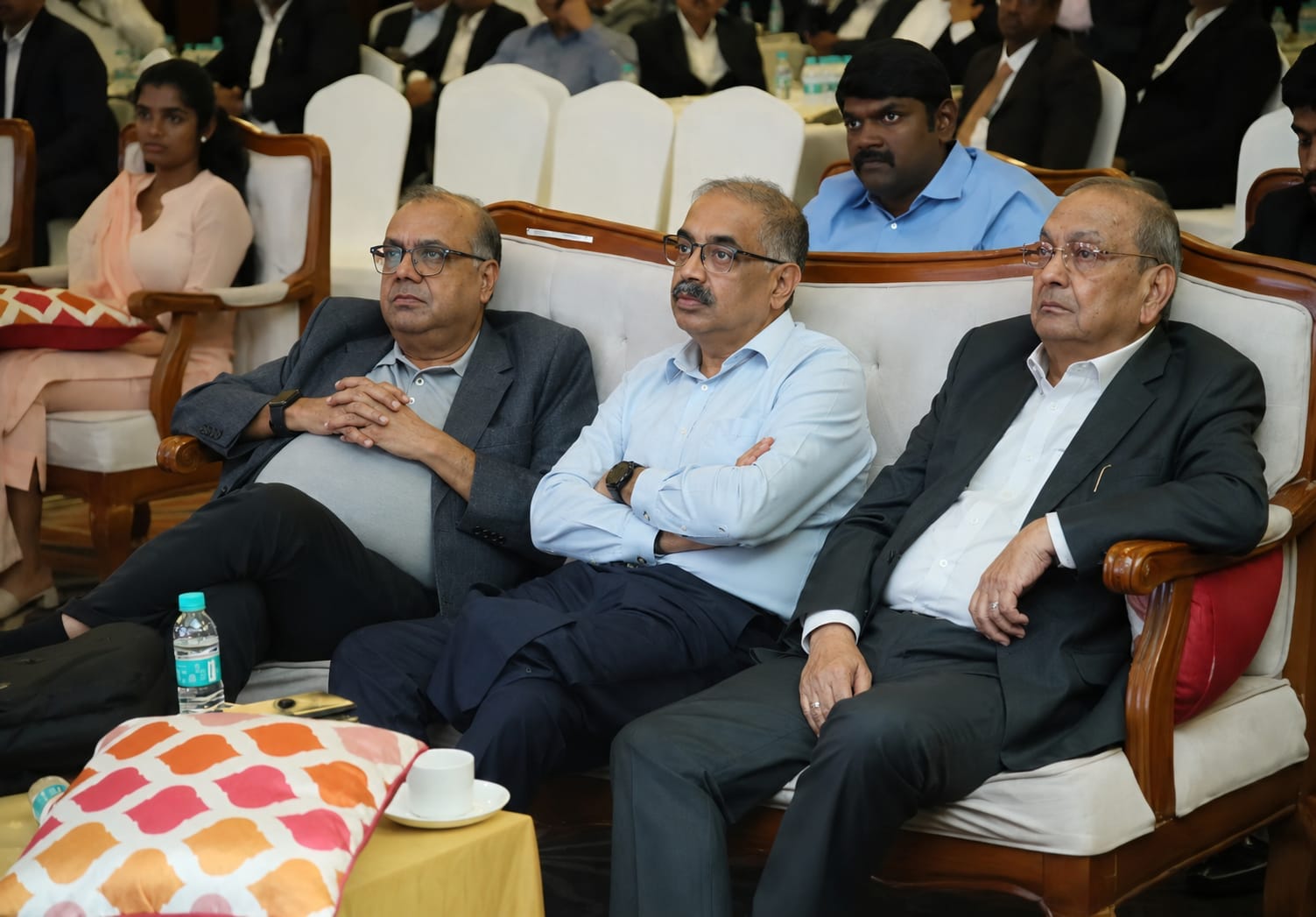
He wants the next generation to inherit the togetherness rather than a finished job — and says so as a kind of blessing:
“If the group is to be perpetual — like the Birlas, seven or eight generations — the job never gets done. You have to keep innovating. Be innovative, take a little risk, and be together. I hope the next generation never completes the job.”
His own role he describes with the same modesty as everything else:
“I handle the commercial side — the sales of iron and coal — and the compliances, the face of the company. Whatever nobody else wants to do, I do.”
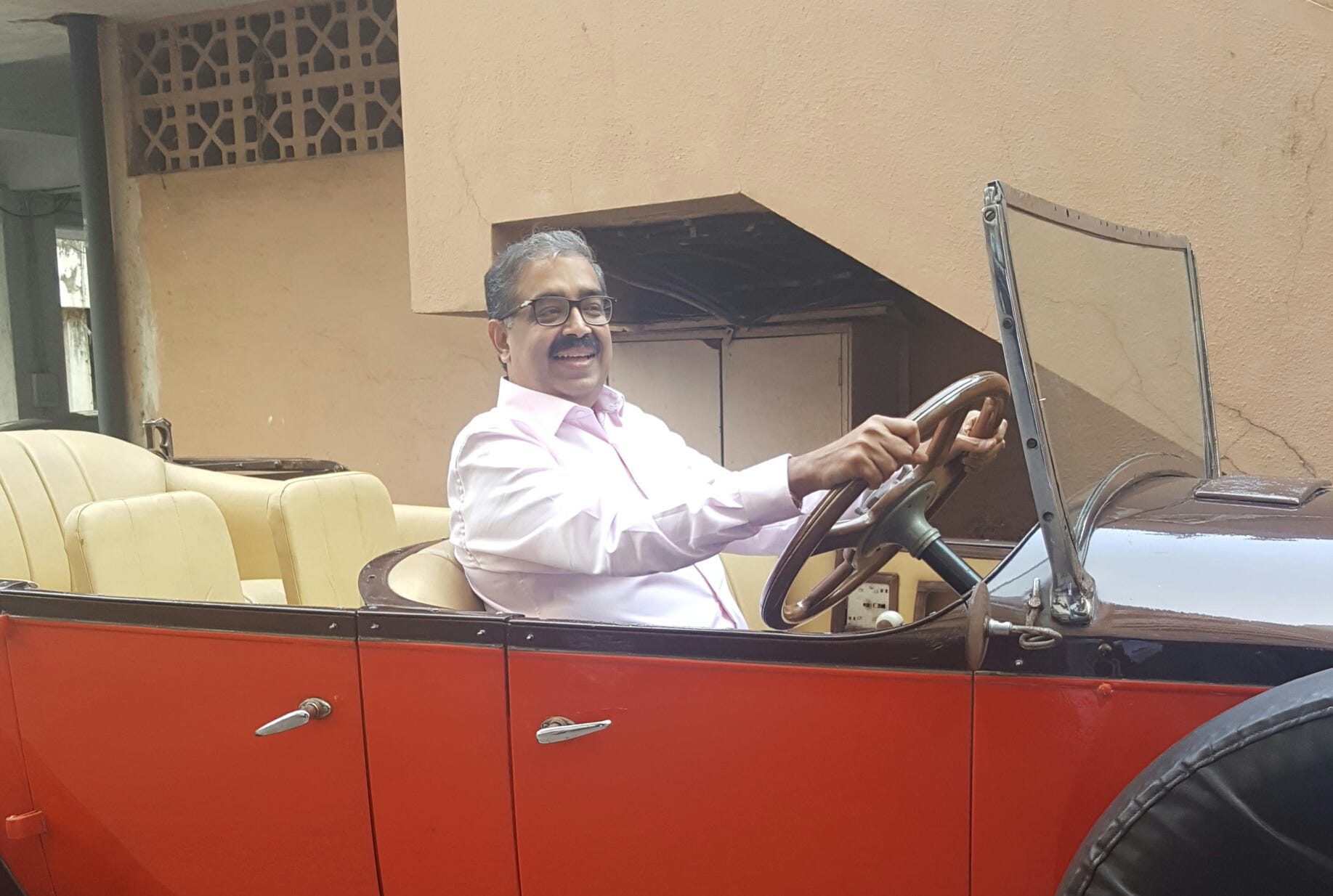
The dust, in the end, paid him back. He still talks as though it might ask for the money back tomorrow.
Safe Harbour. This article is for informational purposes only and should not be construed as investment advice or a recommendation to buy or sell any security. Financial figures are drawn from publicly available filings and the subject’s own statements and may not reflect the most current position. Forward-looking statements reflect the views and expectations of the individuals quoted and are subject to risks and uncertainties; actual outcomes may differ materially. Readers should conduct their own due diligence.
This story is based on an extensive in-person interview with Rajesh Gupta, Managing Director of Lloyds Metals & Energy. Company figures have been verified against public filings where available; figures cited in conversation are presented as stated by the interviewee. This is published by materials.club and is NOT a paid article.

