


Gadhadar Reddy lives a life neatly arranged around unfathomable ambition. There is a motto at the core of this:
“Whatever you want to do, you need to set a goal. You need to set the end goal and fixate upon it. And you need to set something audacious. Setting something small is too easy, and you’ll definitely get to it.”
It is this unflinching commitment to his goal of setting foot on Mars that led Gadhadar to the inception of NoPo Nanotechnologies- the only company to develop a scalable model for the production of carbon nanotubes by reviving a technology that was considered to have died with its inventor.
The book his father didn’t know he was reading
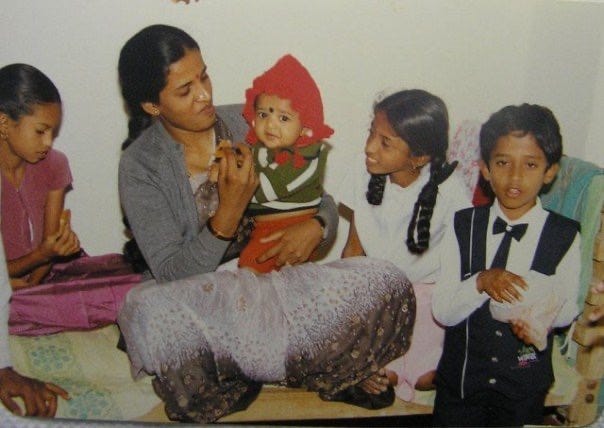
Gadhadar grew up in Bangalore. His native place is also Bangalore, which means that when school broke for summer, he went to Whitefield, to grandparents, to extended family, to the great-granduncle whose questions he couldn’t leave alone.
The family followed Ramakrishna Paramahamsa. Gadhadar was named after Ramakrishna’s childhood name. By his own account, the family had run through all the other names by the time he arrived.
What he had in abundance from childhood was an inability to put a book down. At his father’s law office one day, he found a copy of ‘Think and Grow Rich’ sitting on a desk. He picked it up without knowing what it was.
“I was just reading through that. And this book had a lot of anecdotes, and they were more exciting for me - These were all about people who made it great, or who made a huge difference to the world, and what was the thought process behind them.”

The stories in the book were not about wealth in any way he found interesting. They were about the structure of ambition. One that stuck was a small girl who wanted medicine for her mother, stood up in front of a large crowd, and got what she needed. The common thread, as he read it, was not talent. It was fixity of purpose.
This is where the lesson to set an audacious, distant goal and fix on it came from. He had been watching what happened to musicians and film stars who reached the top.
“After they become number one, what do they do? Most often they come into difficulty, because they don’t know what’s next. There must be something much bigger to keep pursuing, and that should be above everything. That will be more fun.”
Whatever he chose had to be genuinely out of reach, but not completely. And it had to last a lifetime.
He attended astronomy summer schools around this period, part of the advantage of growing up in Bangalore near institutions that ran them. Around eighth grade he did a hundred-hour summer course at JNCASR - the Jawaharlal Nehru Centre for Advanced Scientific Research - run by a professor named GST Babu.
“This was all super attractive. And things were falling in place but there’s still the goal - where do you set the end goal, and what do you pursue?”
He looked at the history of human achievement in space and found the one gap that remained: no human being had stood on Mars. He set that as the goal, and then worked backwards from it.
“From all the achievements that have happened in space, one that has stood by so far has been to get to Mars and getting a human there. So there is one gap here, and that’s a gap I want to fill. I want to set that personal goal for myself; to be the first human on Mars. And how do I make that happen?”
“ I set that as my life goal, and then started working backwards from there.”
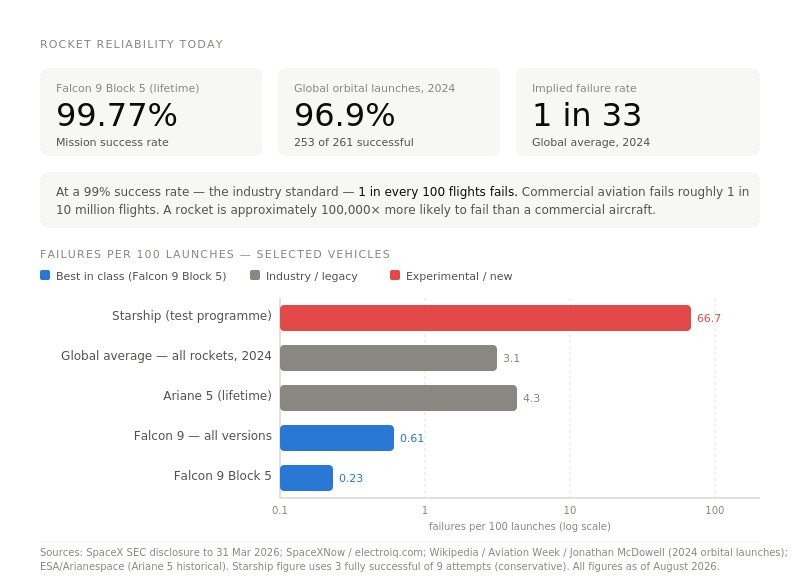
The working-backwards produced three things that had to happen. A rocket capable of reaching Mars. An economy that supported such rockets at scale. And a material strong enough and light enough to make rockets safe for regular human travel, because rockets in their current form operate with a reliability of around 99% to 99.5%.
“That means it’s okay to expect every 100th trip to fail, and that’s perfectly normal, which is ridiculous. Who’s going to go on a rocket if you know it’s going to blow up on the 100th trip? So it has to be extremely safe, and that is the only way you can have people going regularly.”
Every astronomy magazine of the era said the same thing: carbon nanotubes were the only known material light enough and strong enough to change those mathematics. A nanotube is roughly two lakh times thinner than a human hair. In its individual form, its tensile strength is estimated at around one hundred and twenty gigapascals.
“For a rocket that goes to Mars, there has to be an economy that actually has rockets. And for a rocket that’s actually safe enough to take people into space. Since rockets themselves are extremely dangerous you need a very strong material. What I understood from looking at the various magazines and interacting with people was that you need something much stronger and lighter. And every astronomy magazine screamed about carbon nanotubes.”
The three-phase plan followed from there, laid out in his head with the directness of someone who has always been comfortable with long timeframes: make the material at scale, use it to build safer rockets, use those rockets to get to Mars.
“It’s been like - I’ve been able to compartmentalize things. Even though there’s a longer term goal, the first step was the material itself. So the complete focus was on that. How do you make it? What is this material? Where is it made? How is it made? What are the challenges involved?”
Determinism and what’s in a name?
There is a question Gadhadar Reddy has been arguing about since he was ten years old, and he has not settled it yet.
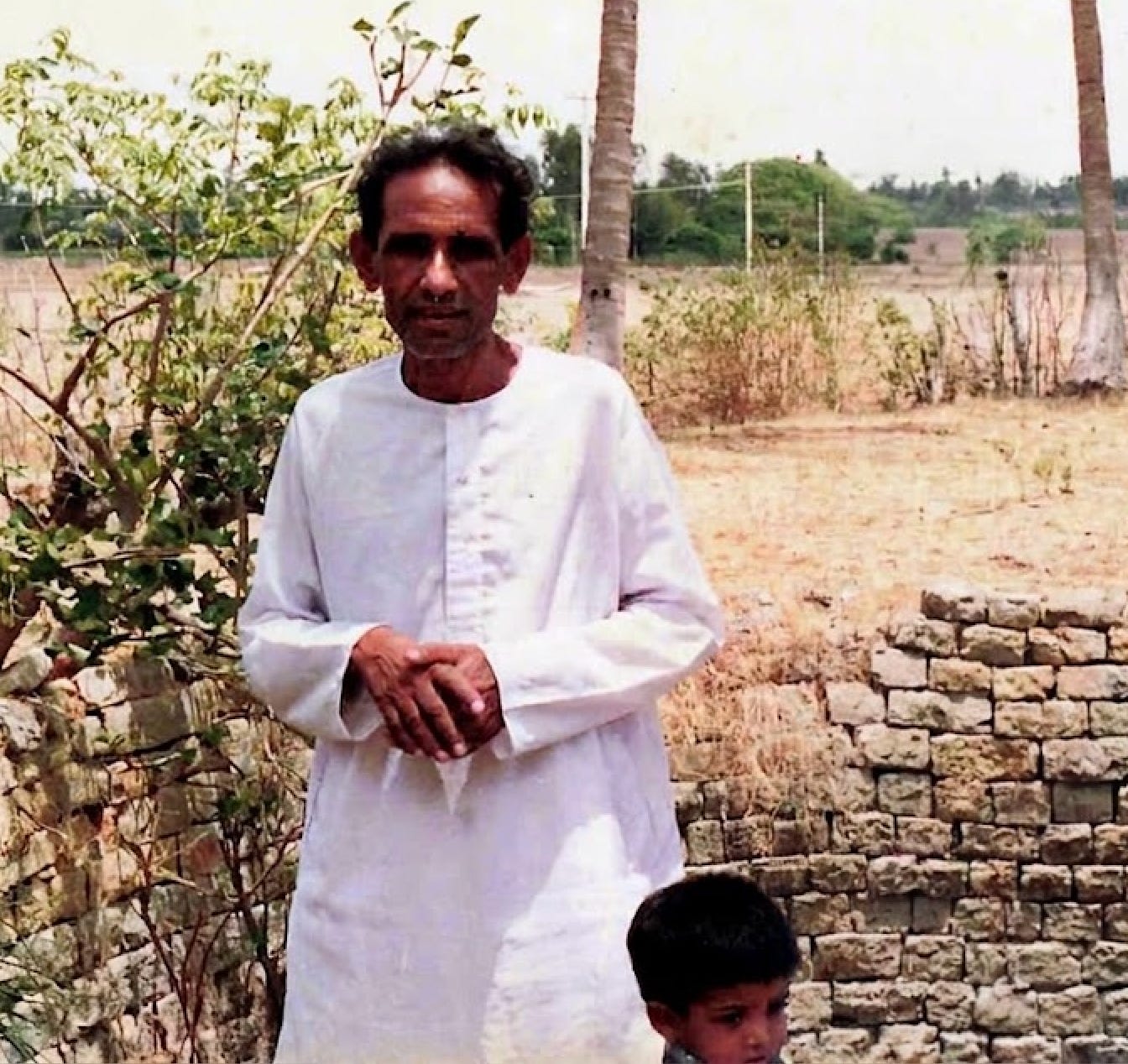
His great-granduncle would ask it during the long summer afternoons in Whitefield, when the family gathered and most of the children drifted to other rooms. The old man was well-read in both physics and philosophy, unusual for his generation and his village, and the question he kept returning to was deceptively simple.
Who are you?
Whatever answer a child gave, the old man would shake his head. Not your name. Not your face. Not your family. Something more.
“There’s something more. You’re just answering the name, the colour, the face. But that’s not the answer.”
Most of the other kids found this tedious and left. Gadhadar found it interesting enough to stay and argue back. The old man’s position was that nothing in the universe was random: that everything was Maya, illusion, already determined, already scripted. That the best a person could do was ride the current and stay tight.
Gadhadar as a ten-year-old found this unacceptable.
The old man reached for the story of Vivekananda and Ramakrishna — the moment of touch, the sudden collapse, what the tradition calls self-realisation. Gadhadar pushed back with static electricity.
“Grandpa, that is not making sense. Most likely what would have happened is Ramakrishna must have been meditating for a long time and built up static. And since Vivekananda touched him, he discharged all the static, and he collapsed from that.”
His great-granduncle told him he was being too logical. Gadhadar told him that was the only way any of it made sense. They argued. The old man cited scripture. Gadhadar cited physics. Neither gave ground.
Years later, Gadhadar read Vivekananda’s autobiography looking for evidence of the fainting story. He did not find it. He tells this with the quiet satisfaction of the confidence that comes from checking sources.
What he took from those afternoons was a method. The question of whether life is determined became the engine that organised everything that followed. He decided the only honest way to answer it was to set a goal so far out of reach that reaching it would constitute proof. If you could will something that improbable into existence, the determinist case collapsed.
The only university that would do
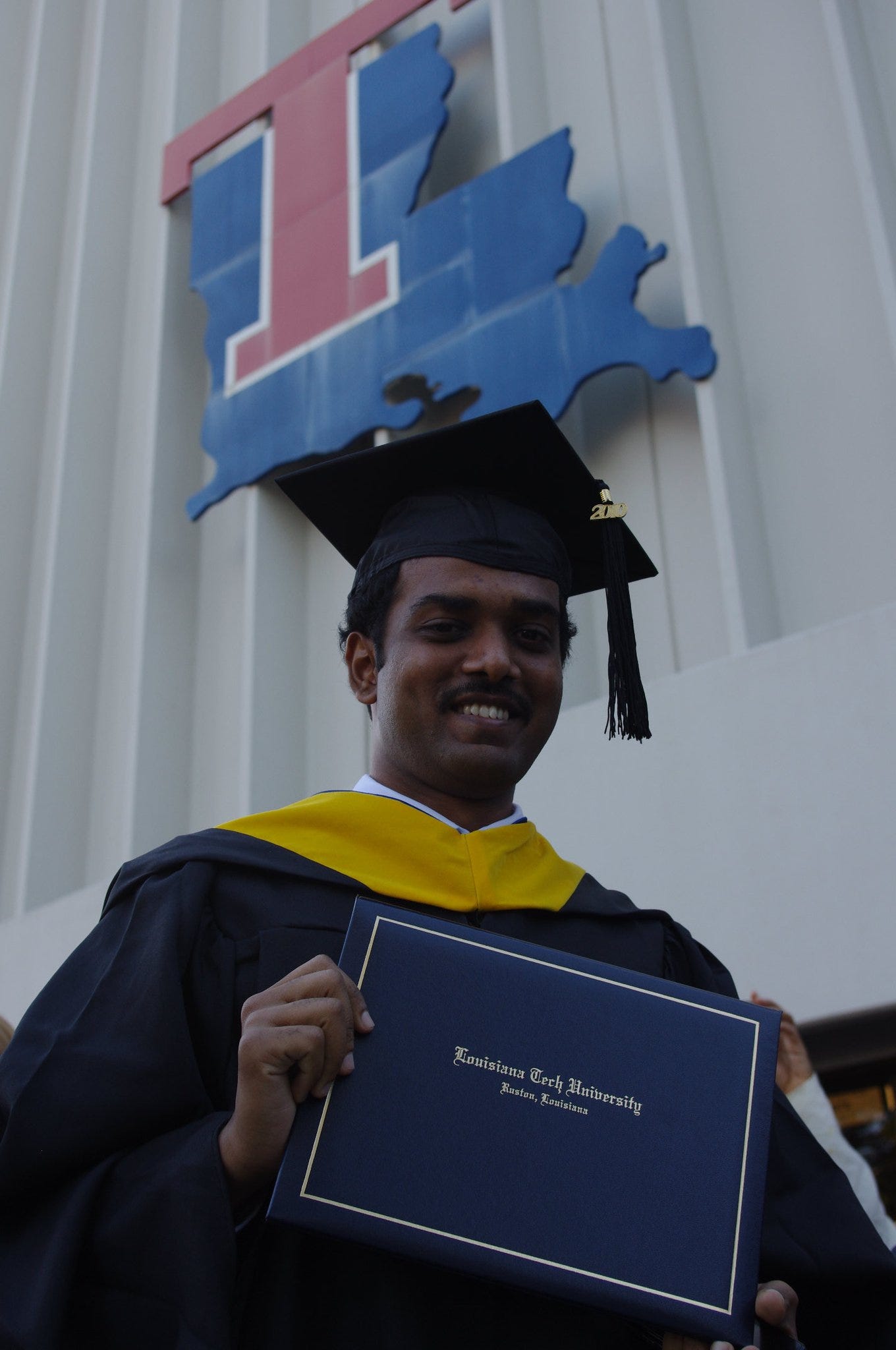
He took a bachelor’s degree in electronics - the closest available approximation to nanotechnology in India at the time. Then he crossed the world.
“I went on to do a master’s in the U.S. in Louisiana, because I wanted a degree that said masters in nanotech, and that was the only university. And then I took up all the independent studies to study nanotubes, and was attending conferences to see the state of art of nanotubes, to see what’s going on.”
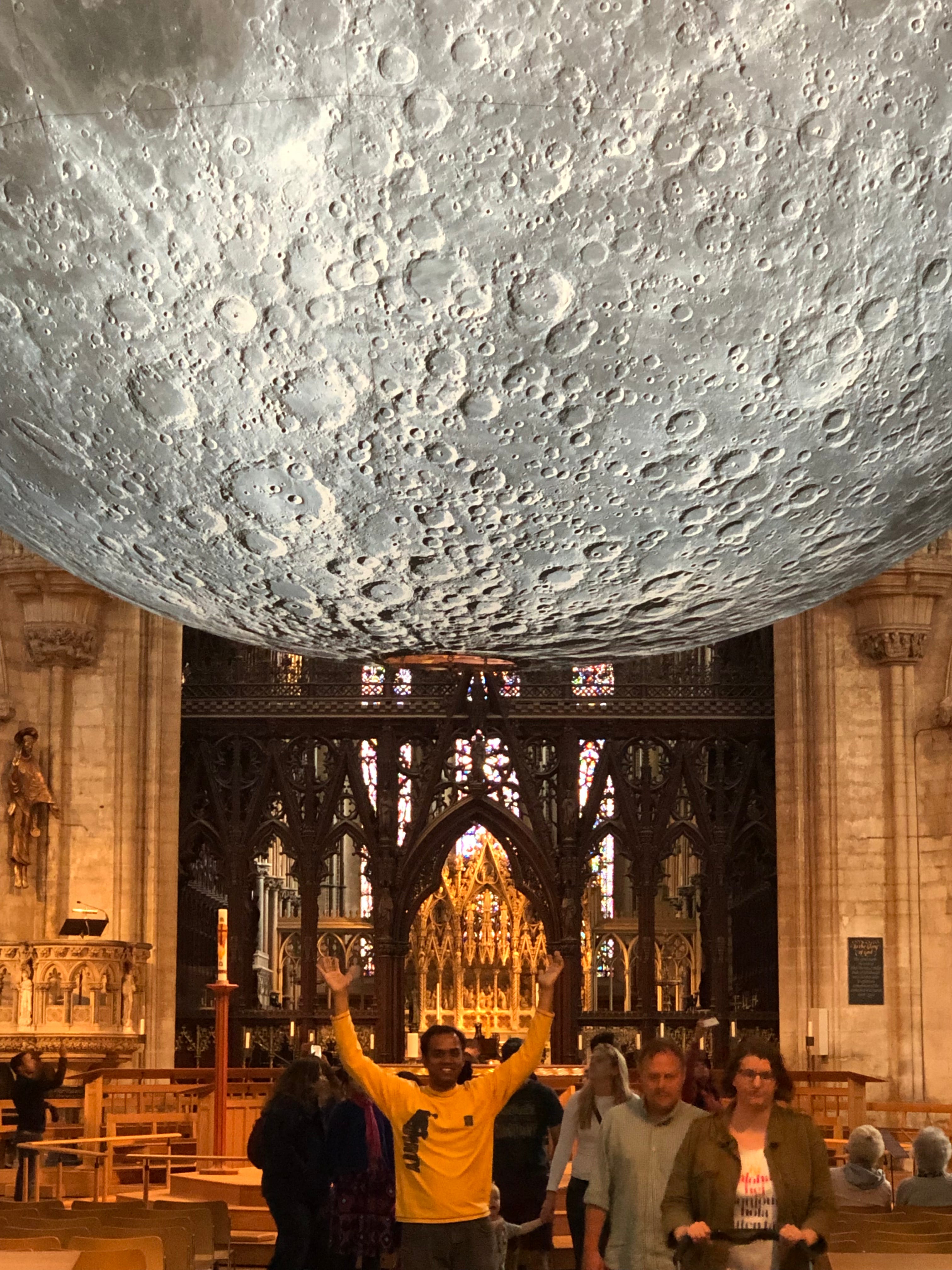
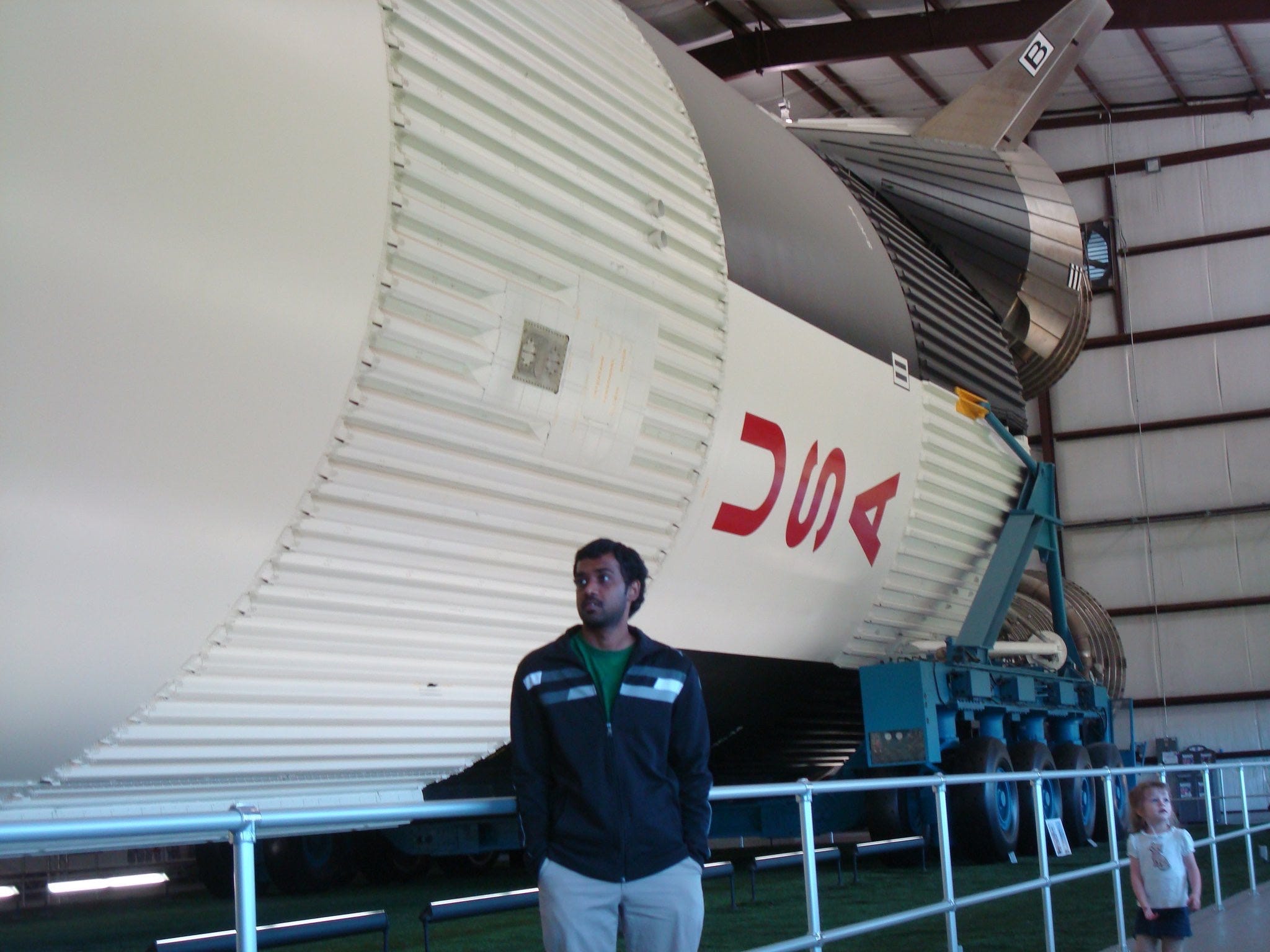
One of those conferences was the International Space Elevator Consortium, held in Redmond. The space elevator concept is one of the canonical applications for carbon nanotubes: a cable running from the equatorial surface of the Earth to a counterweight in geostationary orbit, along which cargo and eventually people could be carried without rockets at all. The physics requires a material stronger than anything humanity currently produces. Nanotubes were, at that point, the only theoretical candidate.
He went to see the state of the art. The year was 2010.
“I went there to see the state of art of nanotube fibres - which is basically that you could hold them in your hand, and they’ll break. I was very disappointed ... .it’s breaking even before it gets to the machine.”
He started asking people what the problem was but he was surrounded by enthusiasts. They were researchers, theorists, engineers who had spent careers wanting the material to work and the answer that came back, again and again, was the same.
“What I found as a common inference from all of them was that nanotubes themselves are very good individually, but when you try to make a bulk structure, and each of the tubes are different, you’re not going to get the same kind of strength or structure that you’re expecting from it. There was difficulty in procuring nanotubes which had a high consistency. Even though you could get certain lab results once, you could not repeat them again because the material was no longer the same. So this was a recurring thing - people said we do not have a repeatable material, and without that, we cannot produce the nanotubes.”
The fundamental problem was consistency. The science of the individual tube was proven but the science of producing ten thousand identical tubes, and then a million, and then enough to build anything with- out of reach.
This became the problem he decided to solve.
What Kroto saw in starlight
The search for a scalable, consistent process narrowed quickly. There were approaches that could make very long individual tubes. There were approaches that could make tubes repeatedly. Very few could do both. Only one had demonstrated the potential for both length and consistency of diameter at something approaching industrial conditions. It had been invented at Rice University in Houston, Texas, just across the state line from Louisiana.
The process is called HiPco. It stands for High Pressure Carbon Monoxide disproportionation. Its raw materials are carbon monoxide and iron. Its origins begin, improbably, with starlight.
Gadhadar tells the history the way a person tells a story they have rehearsed because it matters to them, and the details are the point.
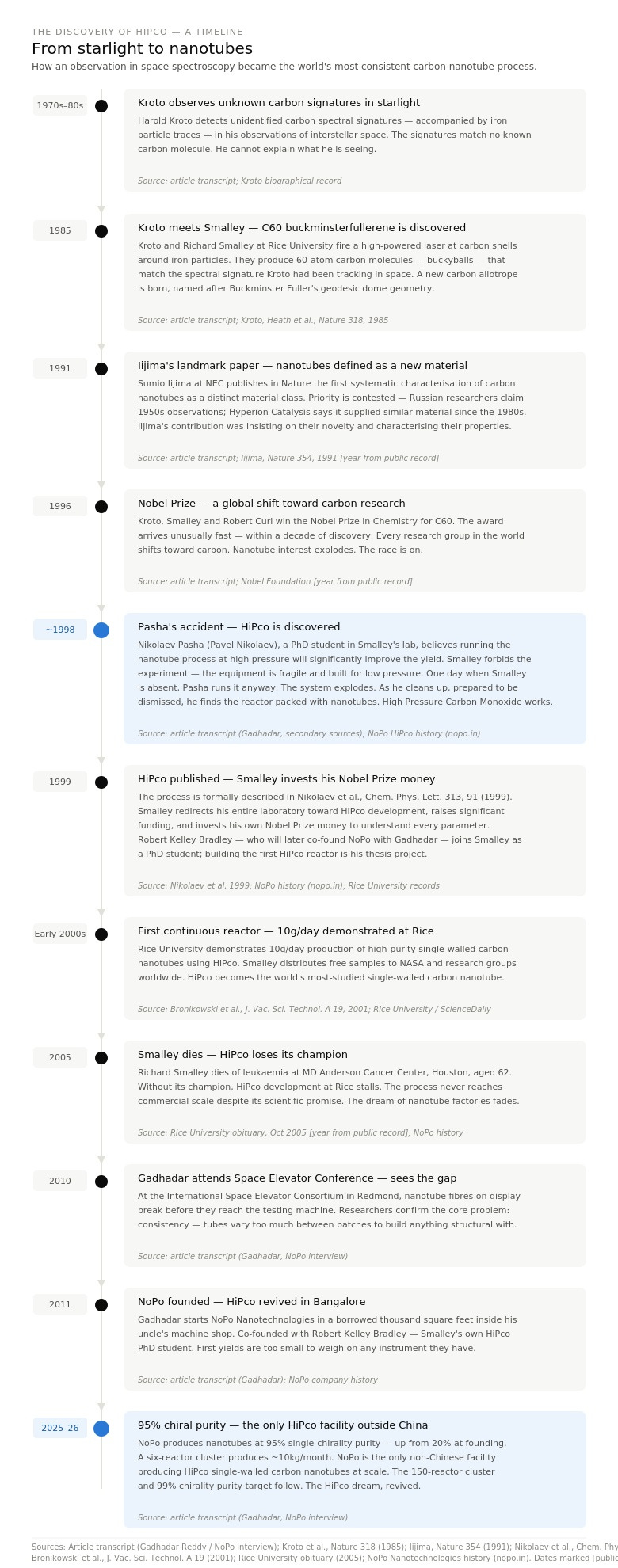
Chemist Harold Kroto had been observing spectral signatures in starlight for years. He kept finding carbon signatures that did not match any known carbon molecule. The spectra also showed iron particles. He could not explain what he was seeing. He encountered Rice University professor Richard Smalley at a conference. Smalley happened to have access to one of the most powerful lasers in the world, and his practice was to fire it at things and publish the results.
“Kroto had a hypothesis that maybe some material was being produced with the presence of iron during supernova explosions. So they decided to fire the same iron particles; make a shell with carbon and direct it to the laser beam and see what happens. And to their surprise, they were actually able to find the same spectral signatures. So that was the first discovery of the fullerene. That’s where they found the C60 molecules.”
What they had produced was a new carbon molecule: sixty carbon atoms arranged in the geometry of a football, the same structure Buckminster Fuller had used for his geodesic domes. They called it buckminsterfullerene. Kroto, Smalley, and their colleague Robert Curl won the Nobel Prize in Chemistry in 1996.
The Nobel came unusually fast, and the chemistry world noticed.
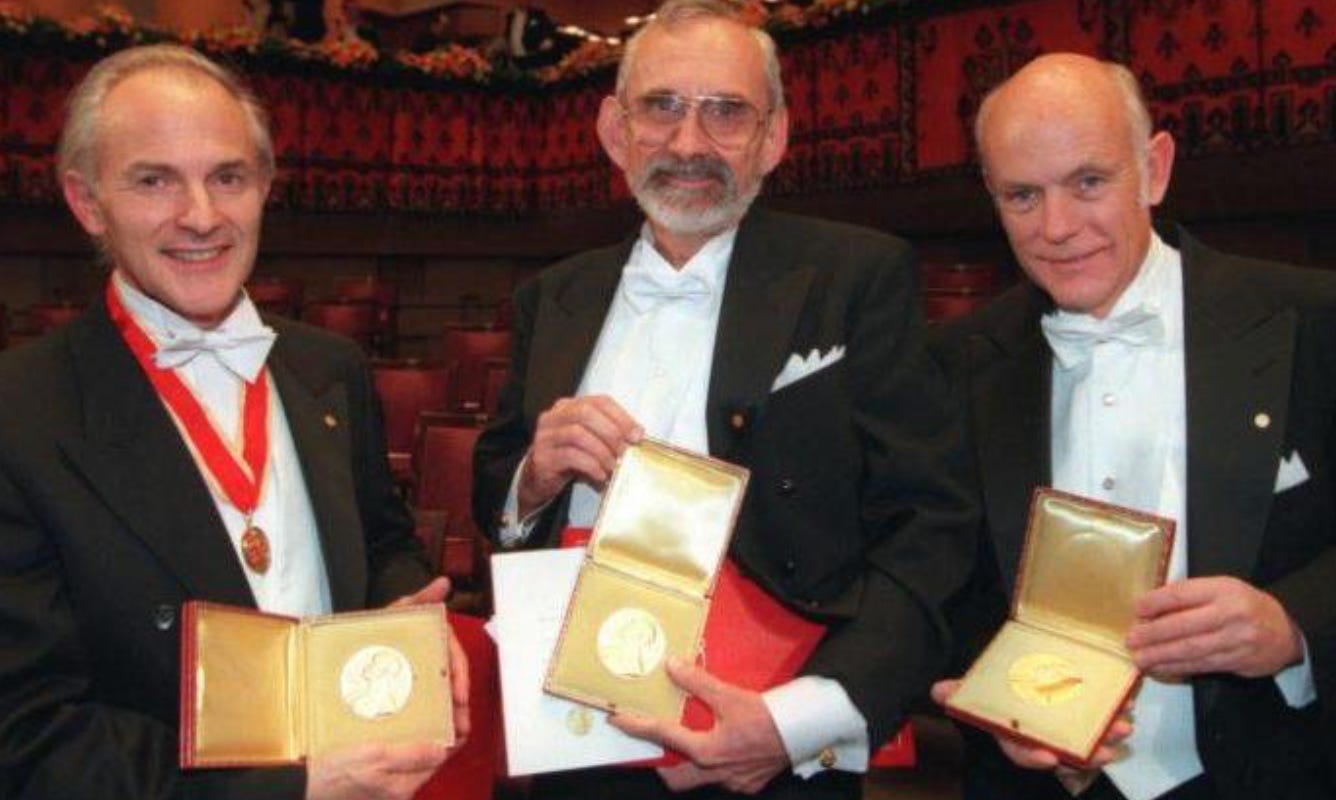
“Within a few years of announcing the C60 results, Smalley, Kroto and Curl won the Nobel Prize. Now this was something that attracted a peculiar interest of a lot of people around the world, because until then, Nobel prizes had gotten to a point where you wait till you’re very old. And this happened within a decade of the discovery. So suddenly everyone was interested, because everyone realised there’s something new here. And carbon being something everyone had known about, suddenly there was interest. So every group suddenly moved towards working on carbon, and everyone was working on fullerenes.”
In the soot of those experiments was laser-blasted carbon in every configuration researchers could think of and people began finding structures that looked like tubes. Long, hollow, cylindrical. A few nanometres across. Russian researchers later claimed they had published observations of such structures in the 1950s. An American company called Hyperion Catalysis said they had been providing something similar for car bumpers since the mid-1980s. The claim to priority is genuinely contested.
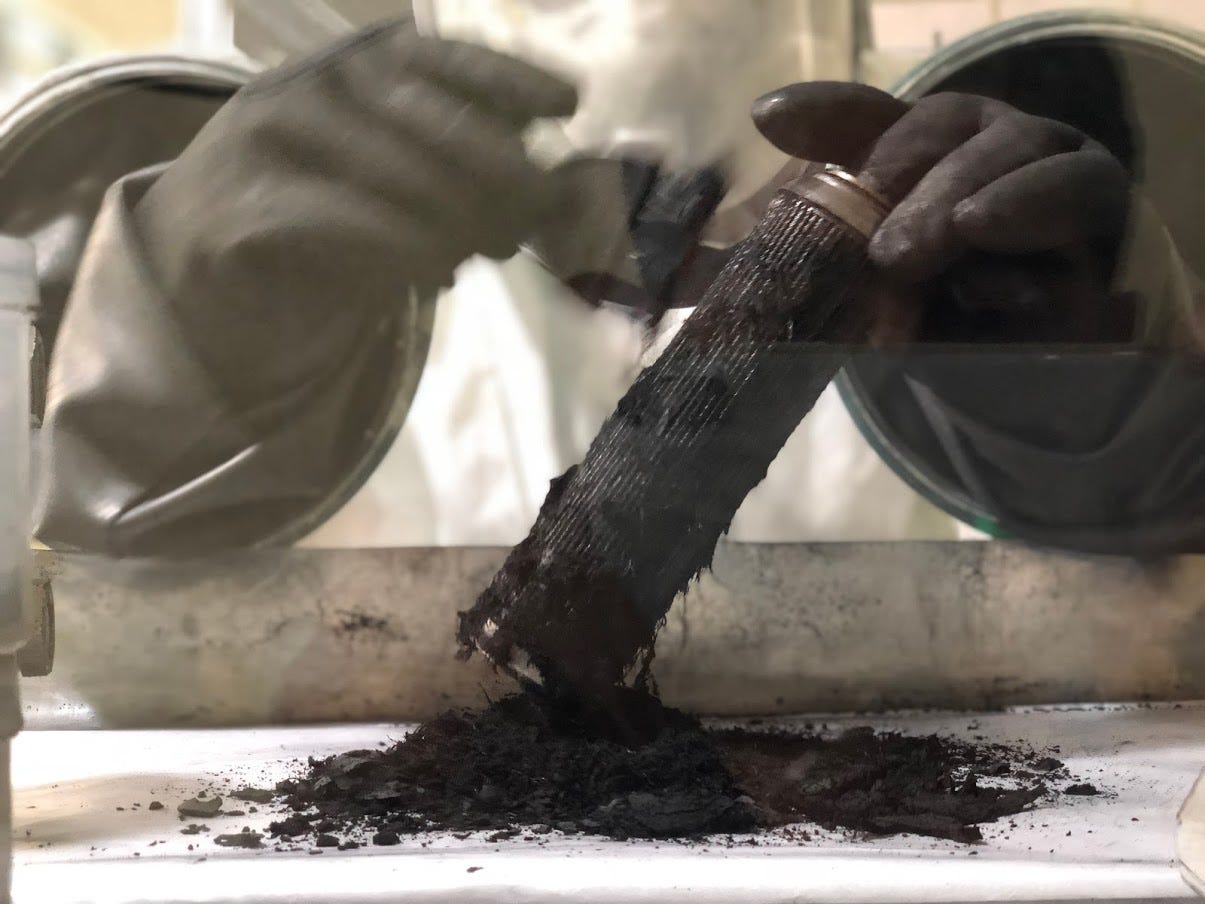
Smalley saw in nanotubes the material that could remake the physical infrastructure of civilization. He committed his laboratory to them and put his Nobel Prize money in.
He began raising serious funding to understand all the parameters of the HiPco process. And it was at this point that Dr. Robert Kelly, who would later become one of Gadhadar’s co-founders at NoPo, joined the group as a PhD student, with HiPco as his specific project.
The discovery of HiPco itself came through an accident that has since taken on the quality of a founding myth. One of Smalley’s PhD students, Pasha, had a strong intuition that running the nanotube-producing process at higher pressures might significantly improve the yield. Smalley told him not to try it. The equipment was fragile, designed for low-pressure operation, and not built for what Pasha was imagining.
“One fine day he did the experiment anyway, and he blew up the system. And so what I hear from secondary sources is that as he was cleaning up his bench, prepared to be let go, he found nanotubes and a lot of them in the system. So that was a discovery of the HiPco process. That’s where it started from.”
Smalley redirected the laboratory entirely. The process that Pasha had accidentally discovered was more productive than anything they had previously achieved.
There is a footnote to the Bangalore end of this history, and Gadhadar tells it with care.
Dr. C.N.R. Rao’s group at IISc had also been working with carbon, producing the same kind of soot, observing the same spike-like structures. The moment Smalley’s fullerene work was announced, research groups around the world began replicating similar experiments, and the IISc group was among them. They appear to have observed what are now recognised as nanotubes. They wrote drafts. They did not publish.
“Between us here - a lot of things in India, in hindsight, they say it was all done long back. But then, publication is the proof at the end of the day. And until that happens, it doesn’t really matter. Even though they’ve done it 5000 years ago, 10,000 years ago - it has to happen and be available. That’s my belief. But they were proud that they had done that, which was amazing. The lesson is that we can’t just observe and forget about it. We really have to publish about that.”
Why the champion matters
Smalley died, and after his death the HiPco work at Rice gradually lost its momentum. The question of why a discovery with such apparent potential failed to find commercial legs is one Gadhadar has thought about at length. He found part of the answer in a book - Advanced Materials in the 21st Century, by Sam Moskowitz - which traces the pattern of how technologies move from discovery to commercialisation across multiple industries.
“This is a really good book. It talks about how different materials and innovations happen all around the world. What is the common thread? How does electronics get invented? Why did it happen in the valley and not anywhere else? How was aluminium invented? How did that discovery and commercialisation process happen? It also has nanotubes as a chapter. For me, that was super fascinating.”
The book’s conclusion, as Gadhadar summarises it, is that every technology needs a champion — someone willing to pursue it past the point where the economics make obvious sense, to bridge the gap between what a material can do in theory and what it costs to produce at scale.
“When a technology is just born, it requires someone to be highly rational to grow it. Imagine you made something very exciting and super cool, but you can’t make enough of it. Because to make enough of it, you need to have large machines. But you need to prove to people that many people will want it. And for many people to want it, you need to put money in to make it. And nobody’s going to give money for that. So now every technology goes through this phase wherein there’s no one to support it. And most often, we just get along with our jobs and be like, okay, fine, someone else will take care of it. What it comes back to is that for any kind of technology, you need someone who can champion it - who can say, no matter what happens, I will make sure this gets to the end line and pursue it, even if it’s irrational at that moment.”
The other part of the Rice story was simpler. They had resources. The approach to difficulty was to spend. What that produced was an expensive solution, not a viable one.
“Their approach to problem solving was, we’ll pour money on the problems — we’ll make it go away with the unlimited credit card. What we realised was that was not a solution that could create an industry-viable solution. It will create a very expensive solution which would not be usable.”
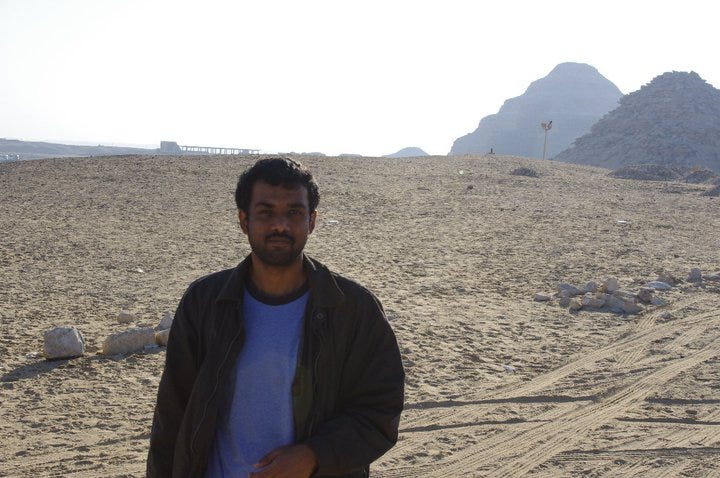
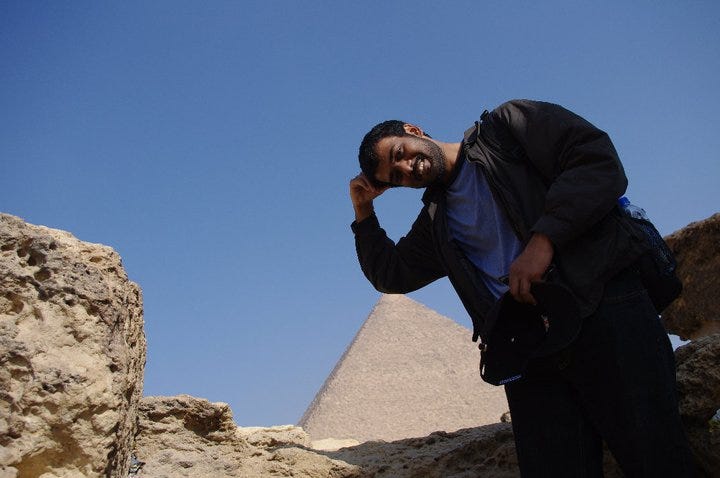
Gadhadar was then done with his stint in the U.S. He came home by way of Cairo.
“I thought I’m going from the world’s most powerful country back to my country. So as a good stop, I decided to stop in Cairo. That was the old world’s most powerful country, so I’ll see that and go and see what happened there.”
He walked through Alexandria. He thought about what it means for civilisations to lose momentum.
Then he flew to India.
When Gadhadar returned to Bangalore and began building what would become NoPo, he was forced by the opposite condition. There was almost no money. Every problem had to be solved from first principles, and frugality turned out to produce something that unlimited credit could not: solutions that actually worked at industrial scale.
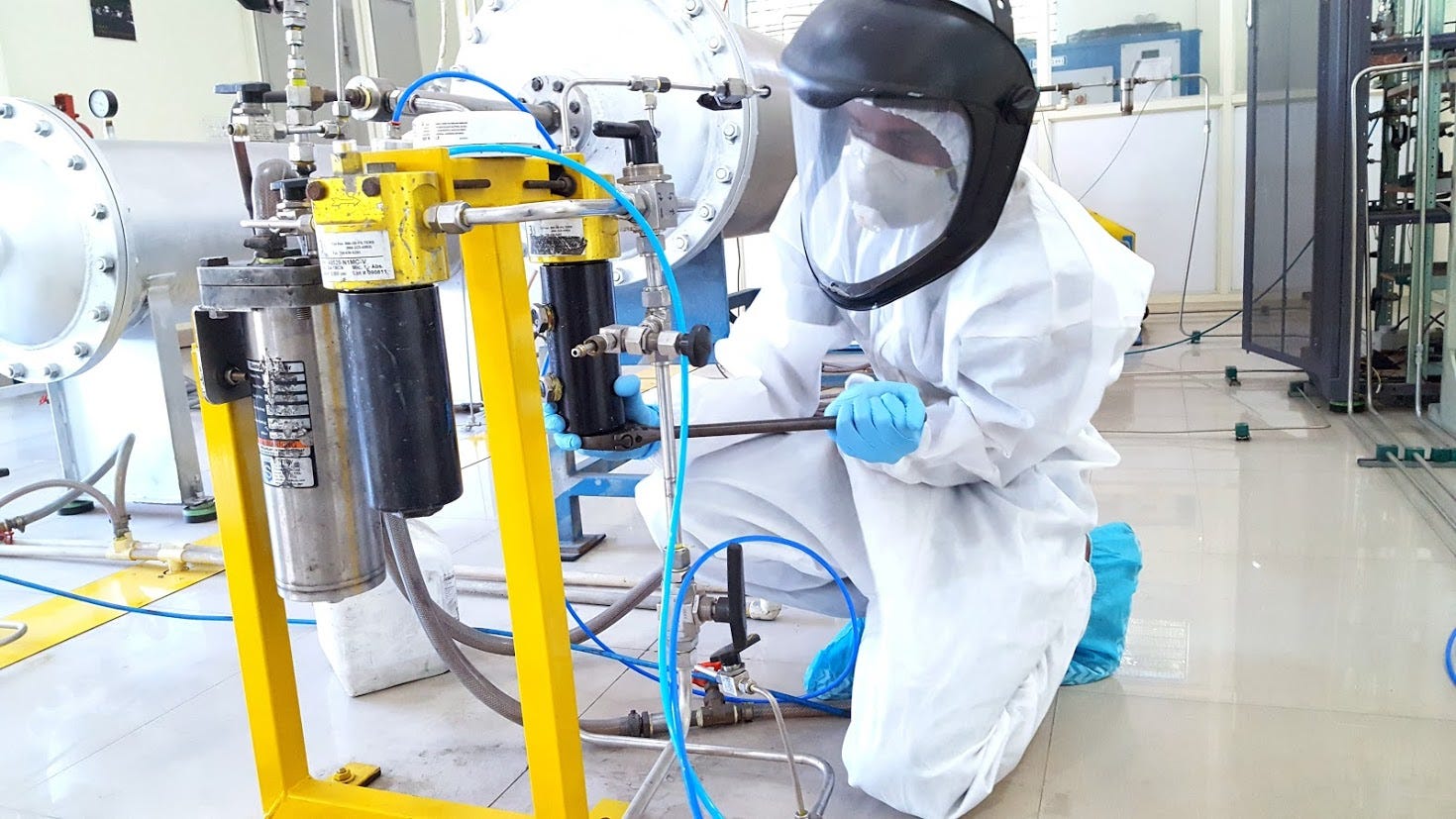
“We were forced by frugality to figure out solutions to the problems, figure out basic things. Who’s the vendor you can actually work with, and does the vendor understand what you’re telling them? And most often it was that we would approach people to help with building them, and we’d get an answer saying that no, it can’t be done, we’ve never seen an application like this. So we’d be forced to actually go ahead and build that.”
Not possible
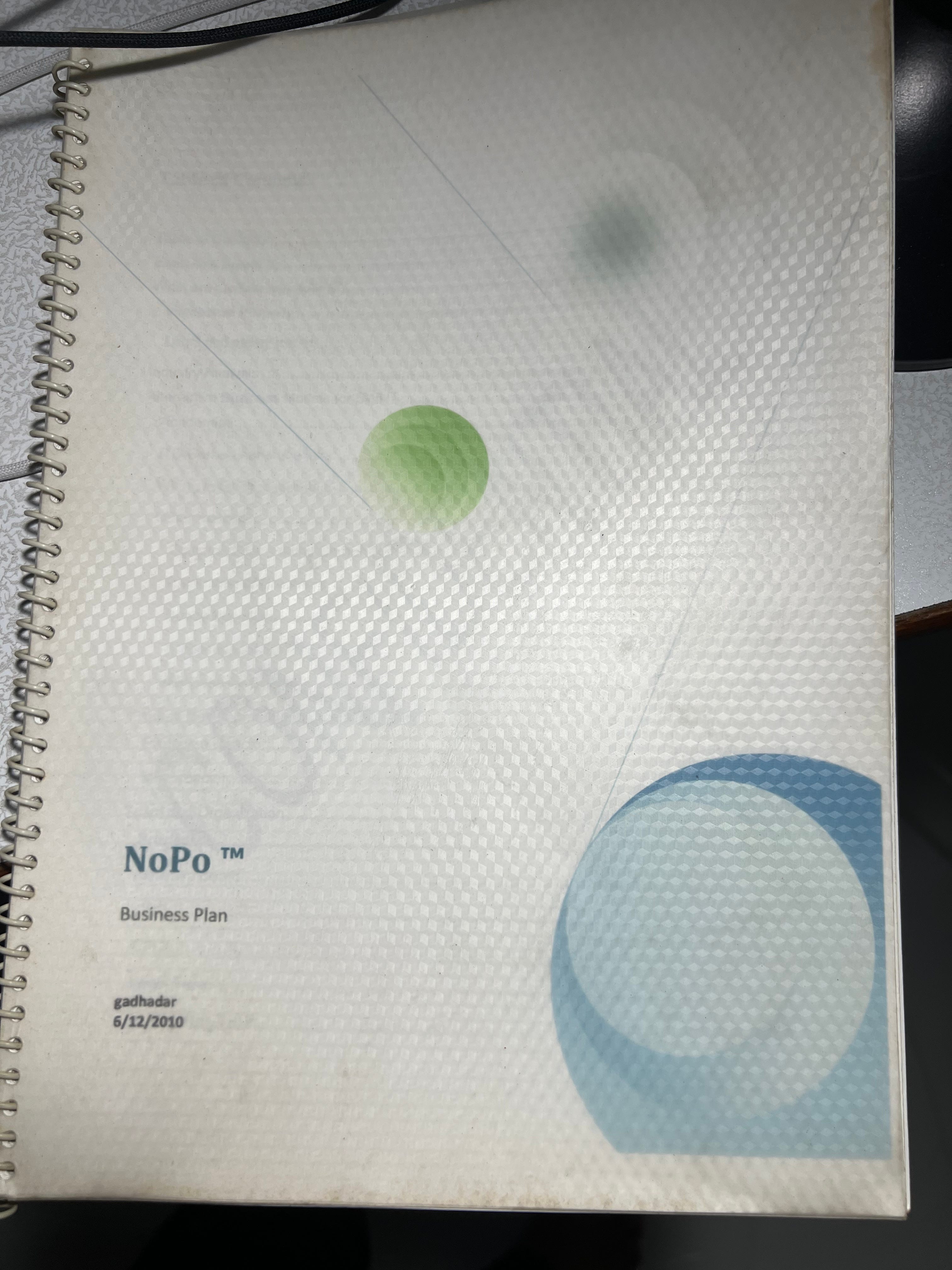
Back in Bangalore, he crossed the country by train and bus and flight, carrying a bound copy of his business plan and a commercialisation feasibility report - both of which he still has - to every government laboratory and institution working on anything adjacent to nanotechnology.
The response was consistent, and he had expected it.
“The IAS officers said: we don’t know what to do with this. This doesn’t fit the process. They were, at least, quite honest about it.”
He went in a slightly different direction, he was looking for the President of India.
“I just showed up in Delhi, looking for Kalam. They said he doesn’t take meetings like that so I went to Chennai. I showed up there and I said, ‘see there’s a newspaper clipping, he’s teaching here, now I want to meet him.’ Of course, they told me that’s not how it work, he’s back in Delhi. I got the wrong times, both times.”
Finally he wrote to APJ Abdul Kalam- the President and an aerospace engineer responsible for setting up India’s space mission- wanting him as a technical advisor. Kalam wrote back and sent a book: The Parent’s Journey, a spiritual text about finding truth in a troubled world. Gadhadar read it immediately and understood the answer it contained: Kalam was already on his own path. There would be no co-founder from that direction.


But the President did connect Gadhadar to a government lab, he applauds.
He had, at this point, approximately one crore rupees to raise and a business plan that had originally budgeted for six and a half. His father, a lawyer who had asked for a printed copy of the business plan to review before making a decision, and then concluded that if Gadhadar did not do this he would regret it and so he may as well be supported, helped organise the pitch.
Gadhadar insisted on presenting to every investor personally, including friends and family.
“My father convinced his friends also to put in some money. But I was adamant that, no, they can’t put in the money until they hear my pitch.”
“My pitch was simple. These are convertible debentures. But under one condition: you are not going to ask for the money back. If it works, it will be good. If it doesn’t, you will forget this money. Only if you are capable of that should you invest.”
Several of them fell asleep during the pitch. He woke them up and kept going. He wanted them to understand the process, the unit economics, and the feasibility. All of it.
The name he chose for the company was the thing people kept telling him: not possible. NoPo. Now Possible.
“Every interaction, every conversation: it cannot happen. So you have to insulate yourself from the negativity and let it pass over. Listen to what you actually want to hear from it. And then work.”
A thousand square feet of borrowed space
There was a machine shop in Bengaluru called Sushti Automations, run by Gadhadar’s uncle Ravi and a partner named Mohan. They were known for handling difficult projects: corrosive materials, super alloys, systems running at a thousand degrees. Gadhadar had no idea what a super alloy was when he first encountered them. He made his case while the family was still gathered for a leaving function before he went to study abroad.
“One of the uncles came by. He was like, I want to do something, I can help out. I went back - see, you told me you want to help me. I want to make nanotubes. Your machine shop.”
His uncle gave him a thousand square feet of rented space within the shop. Then Ravi and Mohan looked at what he was building.
“They came by and said this is not going to work. Whatever you’re doing is nonsense, because you’re not going to have any factory worker here who can operate this, and it’s not scalable.”
That forced a decision that turned out to be consequential. He moved away from ceramic reactor components toward all-metal designs. The reactors became robust enough to be run from a written procedure.
“Our reactors are so sturdy that we can actually get people with diploma degrees to run these systems. Every other system, you need to have PhDs to run them. We do not have to, because we build the systems in such a sturdy manner that you can actually create an SOP and have people run them.”
Having Ravi and Mohan next door turned out to be worth more than the space. They had handled projects for the automotive industry, built soldering systems, worked with materials and tolerances that Gadhadar was only beginning to understand. When a reactor design didn’t make sense to them, he had to make it make sense, which usually meant rethinking it.
The early years had the character of sustained improvisation. Every component that couldn’t be bought was built. Every vendor who said the application was too unusual became a problem to work around. The documentation discipline that resulted in a process that involved writing everything down, building an institutional memory of what worked and why, is still one of the things that distinguishes how NoPo operates.
“What we did was to document everything. The only thing is, as you get the things working, it’s so important where we draw the line between throwing money at the solution versus seeing the solution once and then throwing money at it. It’s a very small change in thinking. You can just end up buying an expensive piece of equipment and then decide that you don’t need it anymore, because we thought it was required two weeks back but now we don’t. Versus being able to test out that hypothesis first.”
The scientific method became, deliberately, the company’s operating method.
“What we do at NoPo right now is we follow the scientific method itself. We go through the same five-step method: stamping the problem, going through a hypothesis, a literature search, experiments, and then analysing the results and coming to conclusions. We bring that into the company’s DNA, and that helps a lot. Even when you’re doing business, you have to follow a scientific method.”
The first yields from the first reactors were too small to weigh on any instrument they had.
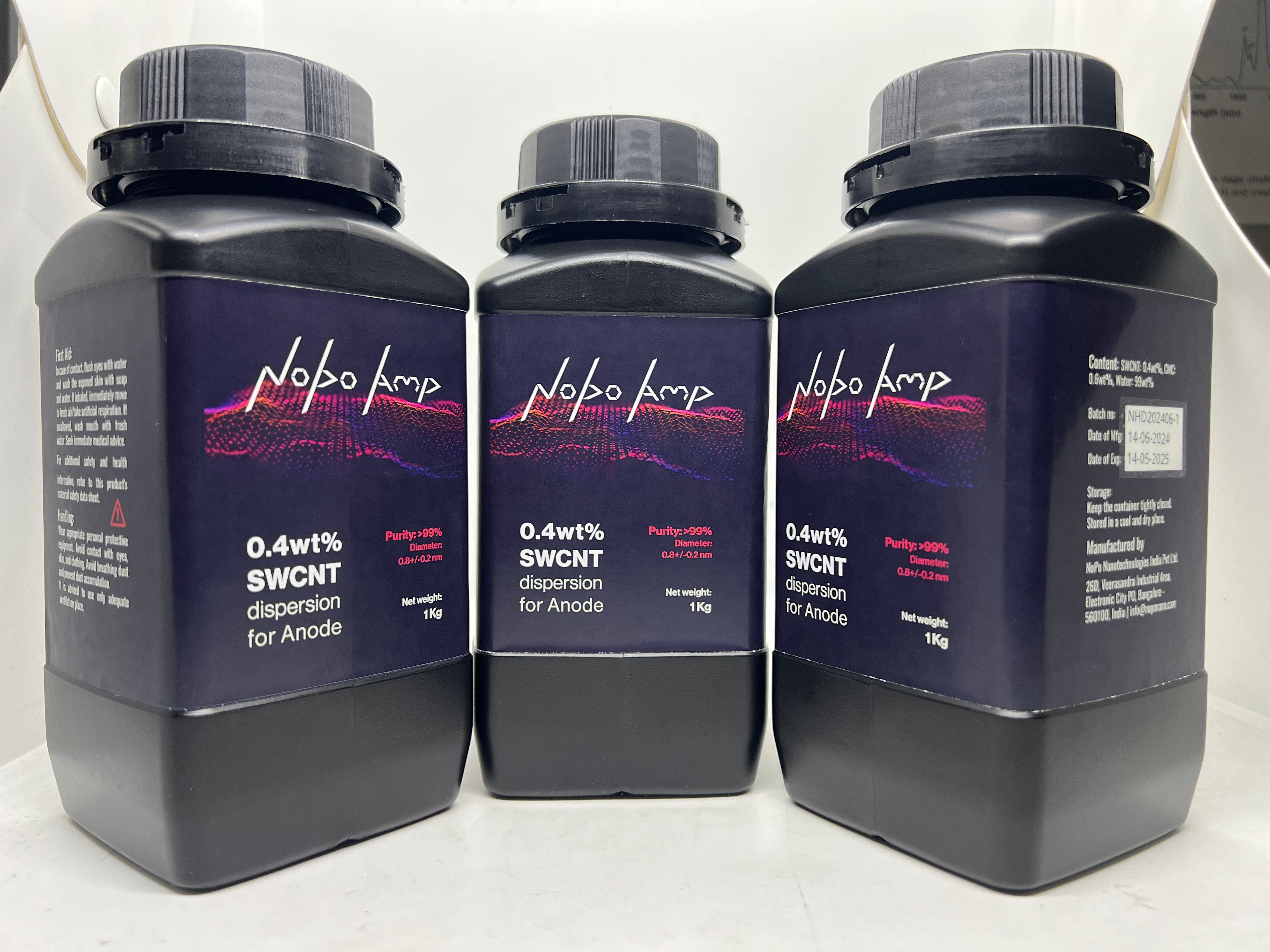
“When it comes to nanotube production, when we first started, it was a few flakes. You could not even measure the mass on it. That’s why I call them a few micrograms. You just do, somewhere you don’t know where it is. We could just get enough to take it under a microscope, to put the Raman on it and get a spectral signature to confirm there was an energy movement. That’s how it started.”
Raman spectroscopy is the standard technique for confirming the presence of carbon nanotubes, producing characteristic spectral peaks that identify the tube structure and quality.
From those first invisible quantities, the production trajectory has followed something close to a Moore’s Law curve, with a doubling time of around four months.

“If I take those micrograms and 120 kilograms - that’s a ten to the power of minus six to ten to the power of six grams. It’s a scale of a million. And if I plot a Moore’s Law curve for this, that’s like a four-month Moore’s Law curve at this point. Very soon you would see an inflection point where suddenly you have nanotubes everywhere, because we’re just so close to that. And that’s actually already happening.”
The most recent cluster of six reactors, launched in January this year, is designed to produce close to ten kilograms of nanotubes a month and supply customers at pilot evaluation stage. The next planned cluster has a hundred and fifty reactors.
What a single atom changes
The HiPco process works by disproportionating carbon monoxide in the presence of iron particles at high pressure. The iron acts as a catalyst. Carbon monoxide molecules split, and the carbon atoms precipitate out onto the iron particles in the form of tubes. The diameter of the tube is governed by the diameter of the iron particle at the moment of nucleation.
Keep the iron particles consistent and you get consistent tubes. That sentence is doing enormous work in the context of what NoPo is building.
“Nanotubes are super tiny. We talk of something that’s two lakh times smaller than a hair strand. When I talk of deviations in the process by which we produce nanotubes, we are trying to keep it within an atom in deviation within the diameters. Now, so an atom - one extra atom and one less atom - that’s what you’re looking at. Imagine what you’re trying to do is to reduce that deviation to a zero-atom deviation. Like you produce all tubes of the exact same diameter, exact same size. And doing that gives you an exact same twist also, because the diameter decides the twist. And this twist is called the chirality of the nanotube.”
For most applications such as conductivity enhancement in batteries, polymer composites and water filtration membranes, a distribution of chiralities is acceptable. For transistor-level electronics, it is not. Chirality is a property of carbon nanotubes that determines whether the tube conducts electricity or acts as a semiconductor. A semiconductor device made of nanotubes needs tubes of a single chirality, because mixed chirality gives you a mix of metallic and semiconducting behaviour and the device cannot function as intended.
NoPo has been working toward this precision for years. The target purity for transistor-level applications is ninety-nine percent. They recently crossed ninety-five.
“We were at like about 20% for a long time. From there, we moved to 40. And then recently, we made a breakthrough that took us directly to 90%. We have managed to produce nanotubes and then purify them, wherein more than 95% of the tubes are of the exact same diameter with the exact same twist.”
The jump from forty to ninety came in a single development step. He describes this without ceremony. It is characteristic of how he talks about the work generally: results are stated, difficulties are acknowledged, the next problem is already framed.
The purity work connects directly to a customer conversation that is already under way. One of the world’s largest semiconductor manufacturers has been exploring technology nodes beyond current silicon electronics. If nanotubes of a specific diameter and chirality can be produced at sufficient purity, they can function as a complete transistor, operating with the same control electronics as silicon but at a scale silicon cannot reach.
“These guys had done a lot of work around it, but they couldn’t find a source of this material — of this very special band gap and diameter. Now this is something that we have been able to crack. We’ve been able to produce that specific diameter tubes with a specific band gap. The advantage of this is, at a purity level of 99% we can actually use that in devices. That’s the purity goal we have, and we are just about to hit 95%.”
The iron content is a related variable. In molar terms, iron accounts for about 1.5% of what comes out of the reactor which sounds small until you convert it to weight, at which point it becomes thirty percent. For applications that can tolerate iron, that is acceptable. For electronics, it has to be removed entirely. NoPo has developed the removal process.
“For some applications, iron is not good. They don’t want it. But for some applications it’s very good. So now what we have done is also to remove iron for certain applications where we completely take it out - and now in these kinds of electronic applications, then what we try to also do is from the nanotubes that we have, we’re trying to take one specific type of nanotube out of it and then enrich that particular diameter of tubes.”
The applications come before the structure
The question of what to do with the material, which market to address before the vision of rockets and space, was one that took years to resolve properly. The list of potential nanotube applications in the research literature runs to over a hundred. Gadhadar and the early NoPo team wrote them all down and then faced the obvious problem: starting everywhere means starting nowhere.
“Obviously, starting at all of them is meaningless - it doesn’t get us anywhere. Now, as we were looking through this, we started listing out all the applications of the material, and we listed them by quantities. Let’s start with something that you can do with a very tiny amount of material. Then you scale that to more. Where can you sell that, and so on.”
Water filtration came up early. The diameter at which nanotubes work best for filtration, around 0.8 nanometres, is a diameter that NoPo’s material naturally produces. Research publications had suggested nanotube membranes could be up to a hundred times more effective than conventional filtration.
“In water filtration, improvements are measured in percentages — single digit percentages. And this was talking of something that was like unimaginable with that. So we were like, okay, so if you’re able to crack this, there should be something really good.”
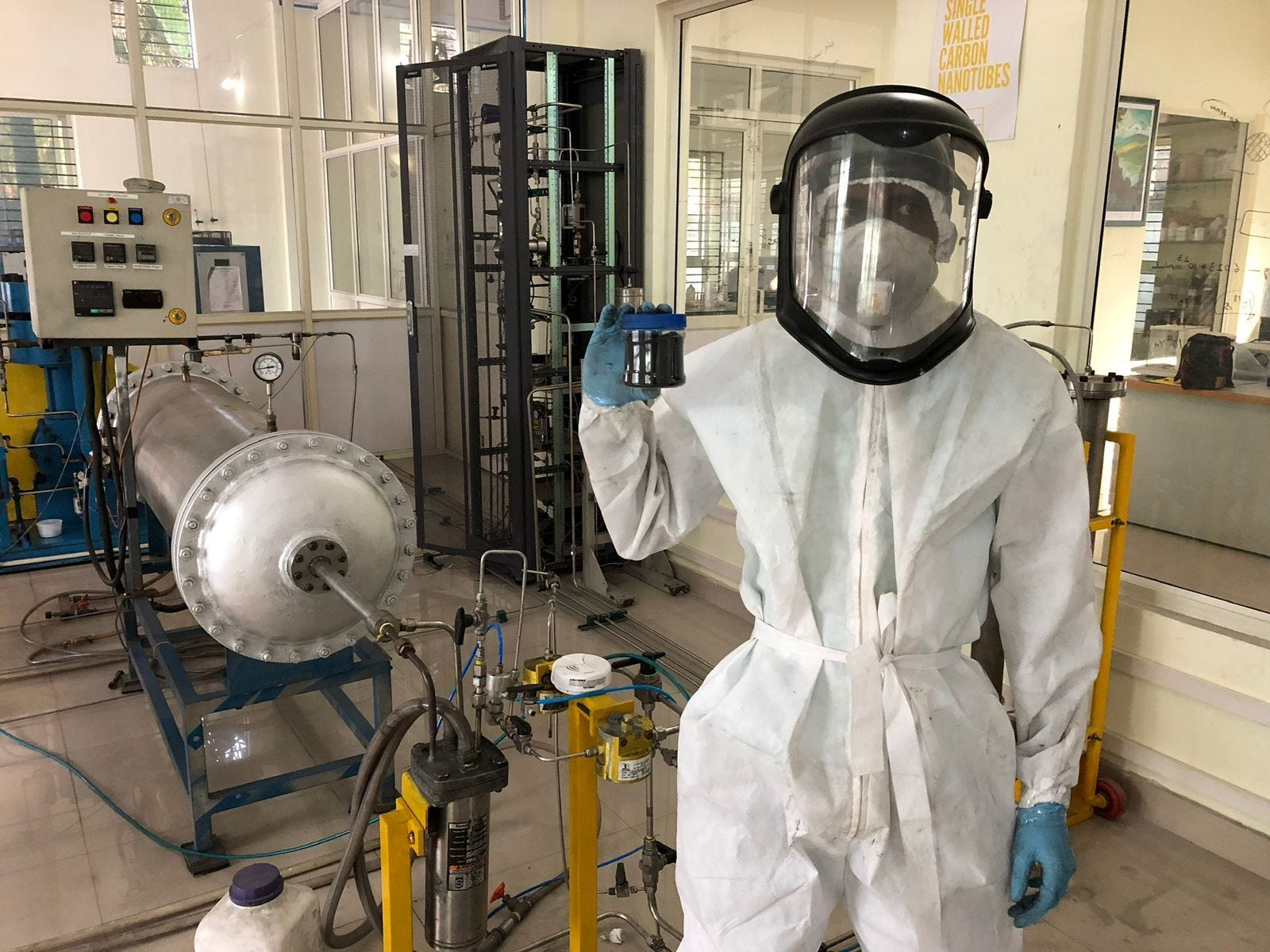
They won grants from the Karnataka government through the Elevate programme, from NITI Aayog, and from the Indian Navy through the IDEX programme to develop filtration membranes for diesel, grey water, and drinking water. The work produced a membrane that Gadhadar says is currently three times more effective than anything on the market, with strong antifouling characteristics. This year, it has been shortlisted for the XPrize water scarcity challenge.
The commercial breakthrough came from a different direction. Arunima Patel joined as co-founder in 2022, after selling her diagnostics company to Manipal Hospitals. She brought a commercial discipline that the company had been missing, and her first action was to stop the team from jumping immediately into solving every problem a customer mentioned.
“First thing we did was to stop doing that - and then have someone with the problem see how big of a problem it is. Is it worth solving, or if someone else can solve it? And are we really the only ones who can solve it? If there is someone else who can solve it, and if it’s much cheaper, there’s no point in us jumping into solving it. That suddenly freed up more bandwidth.”
The market study she commissioned identified batteries as the real commercial opportunity. Every lithium-ion battery made today uses some form of carbon additive. Single-walled nanotubes, specifically, have been found to solve a persistent problem in silicon-anode batteries and would dramatically improve energy density if the cracking problem could be solved.
“All of us want batteries with higher capacities - we want our phones to last much longer. That means same volume, same weight, more capacity. One way to achieve this is to improve the capacity of the anode. When you use just graphite, it has a capacity of, say X. When you use silicon, that becomes 6X. Now people know this. People have put silicon in it. But they also figured that silicon has this weird problem - it cracks when it cycles up and down. So it so happened that people also found that when you add single-wall nanotubes, that cracking stops completely and goes away. And in fact, it improves the cycling rate. It gives you a much faster charging battery and a higher capacity battery and a lighter battery at the same time. So now this was like a holy grail solution.”
Polymers followed as the second major application. The problem single-walled nanotubes solve in polymer systems is conductivity, specifically, creating a conductive network through a material without changing its other properties. The conventional solution is carbon black, added at thirty percent by weight. Multi-walled nanotubes reduce that to five to ten percent. Single-walled nanotubes, at NoPo’s diameter range, achieve the same result at between 0.1 and 0.5 percent.
“You add a very tiny amount of material that creates that entire conductive network, and you don’t have to change the properties of the material. Other properties like colour and flexural texture and all that. So industries are currently our biggest markets for now.”
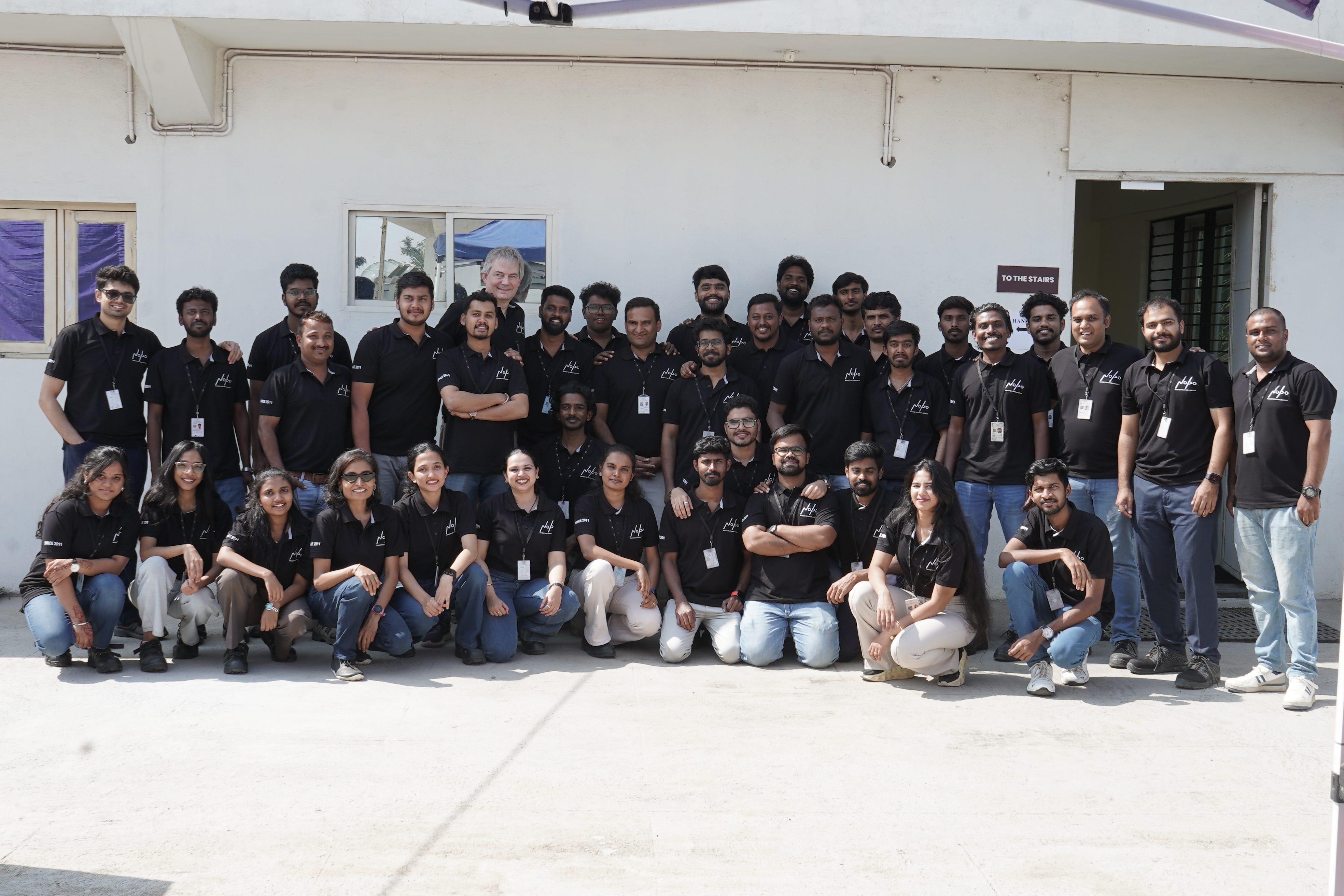
After Arunima’s arrival, NoPo completed its first funding round, bringing in Inflexor, Axel Merck, and three angels. The scale-up that followed was aggressive: from a single reactor producing about twenty-five grams a month, NoPo has added reactors that collectively produce the equivalent of more than twenty of the original size, with throughput per reactor increased by forty times.
The country that doesn’t trust itself
The cultural question - why did the science not come from India, why was it not commercialised when it was observed - is one Gadhadar has his own answer to, arrived at not through abstract reasoning but through a fellowship at Oxford, where he attended a programme called CRISP as part of the Chevening scholarship, and encountered a trainer who studied how cultures interact.
The trainer had developed a classification system called LMR that mapped different countries on a set of behavioural dimensions. During the session, Gadhadar took the assessment himself.
“Based on a lot of test parameters, I’m completely incompatible with India; in all of these areas, I’m incompatible.”
What he realised through this was that in the Indian context, listening is often read as weakness.
“If I’m listening all the time, I’m considered weak in India, that I don’t know anything. So if you start talking more loudly, people will be like, okay, fine, you know something. So until then, for me, the general approach is: listen properly, completely, and then talk. But when I have to converse- if I classify the person as someone who is generally the same basic characteristics that I can classify as within the country, then I have to change my mode into being a person that matches them more closely so that you can get things done.”
He does not particularly enjoy the performance of it but has chalked it up as a business necessity.
“The surprising thing is, you have to wear a different personality when you’re talking to a Japanese person, someone from Finland, someone from Germany. And for me, the other thing was to ask: why is it easier for me to interact with people in the US? When I did that, I found it’s much closer. They match more closely to how I am.”
The deeper answer he gives to why India does not publish, does not commercialise, does not trust, is trust itself.
“I think we are highly under-confident. We don’t trust ourselves and we don’t trust each other. So if you see another Indian in a faraway place, most often the reaction is you’ll walk away, unless you can recognise them very well. Somehow we are ingrained in a culture that is very low on trust. Either people are scared of sharing it, because they’re like, someone will steal away my thing or there’s no confidence. That’s what I see often.”
He watched this from the inside during the years he spent approaching vendors to build reactor components. The standard answer was that the application was too unusual, and the responsibility for any failure would not be theirs. He built the components himself. Even the gas compressors. Covid accelerated some of these decisions, since supply chains were disrupted and waiting three months for a US vendor to come and look at a problem was not an option.
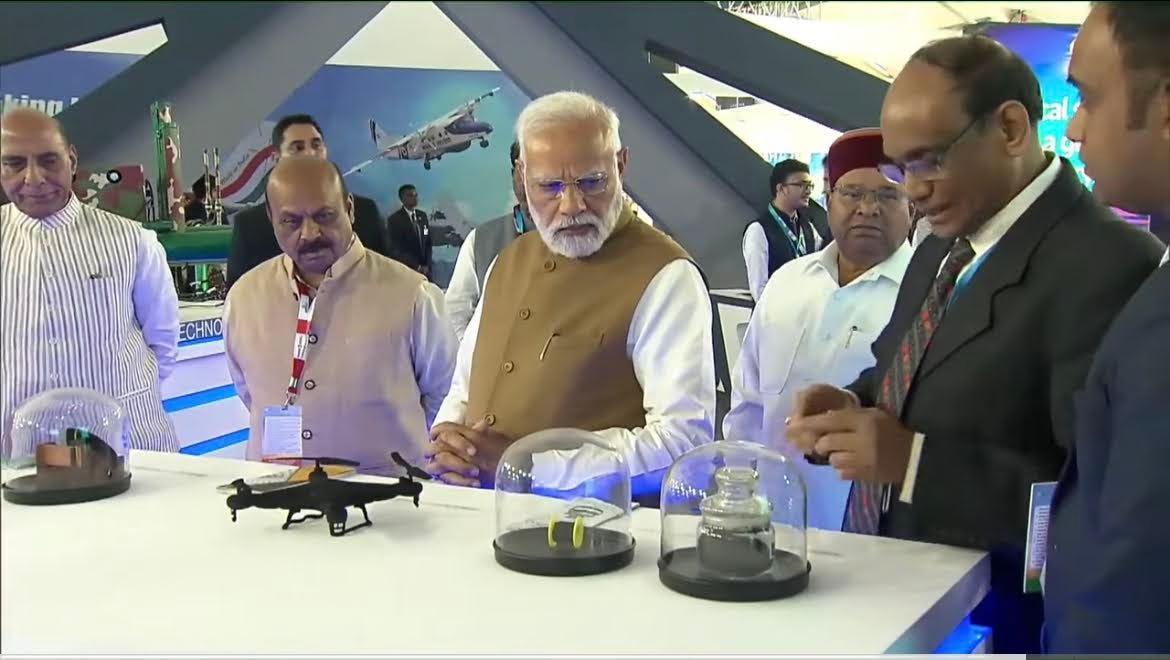
He has also watched this pattern shift. The credibility that Kelly’s connection to Smalley provided, the fact that NoPo could say it had been co-founded by someone who trained under a Nobel laureate, opened doors in India that would otherwise have remained closed.
“When I had to approach any scientist here, it was Kelly being in the US, and Smalley like having guided him, that at least opened doors for me here. People will be like, it’s Smalley, we have heard his name, seen fullerenes, and there’s a foreigner here. So it’s more legitimate. And that did help. And over time, a lot of Smalley’s colleagues and friends started admiring this work saying his dream is being fulfilled in India, and whatever he envisioned, that’s now happening. So that gained a lot of credibility from people who had worked with him.”
The spaceship question
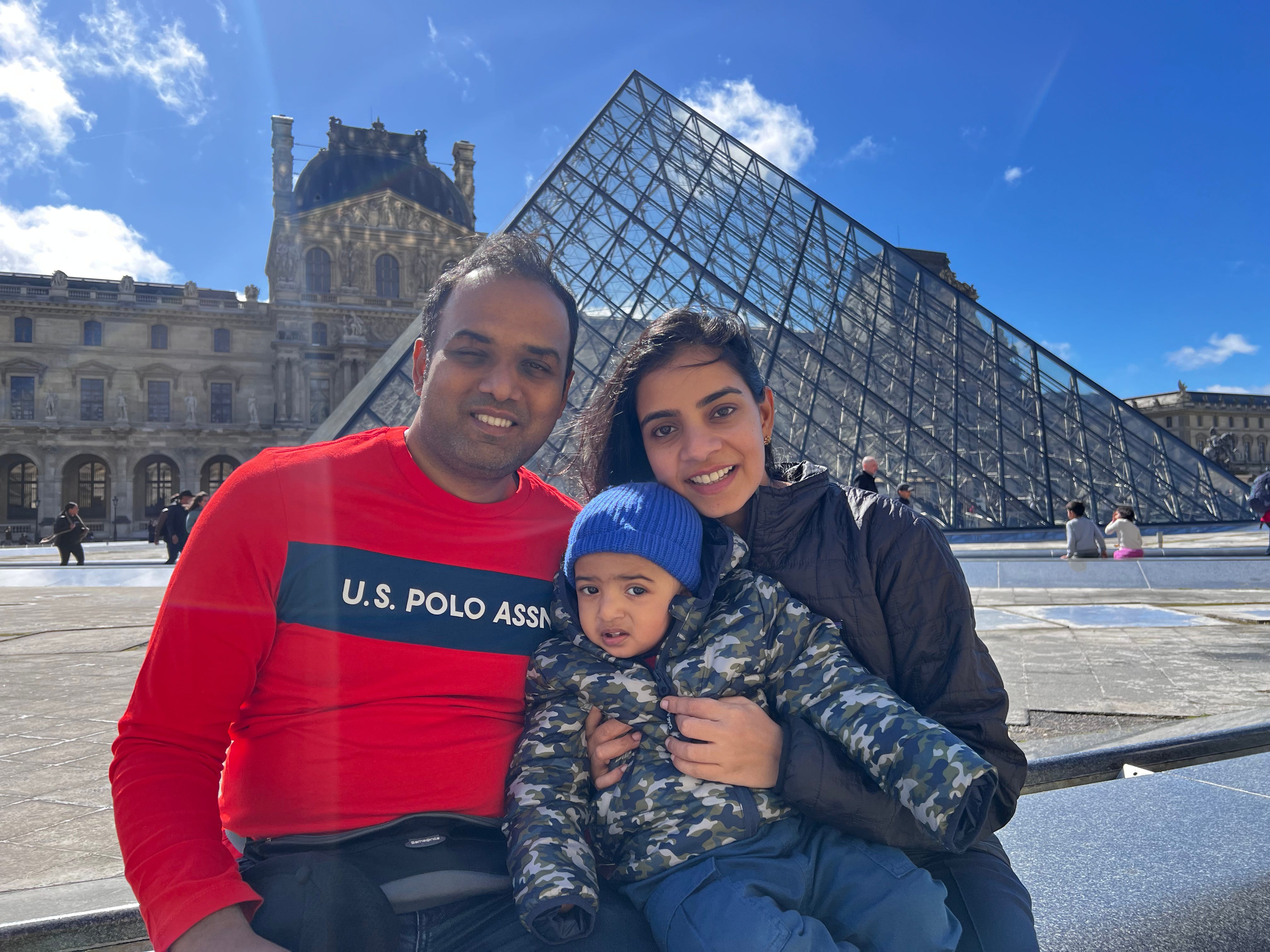
By the time his wife Harshitha asked the question, in 2021, the nanotube work had produced real results, real enough that they had decided to get married in the middle of it, which Gadhadar mentions as a matter-of-fact milestone alongside the technical ones.
She asked him something simple.
“She said you keep talking about space, and you’re making nanotubes, and where is the space aspect of it? When is space going to happen?”
He said he needed help to think it through properly. She offered to help. She is a civil engineer.
“I said okay, so I need help with this and she offered to help out. And so we started a company that works on the spacecraft itself. It’s called Vrisva Space. She said, okay, that sounds exciting.”
The logic he presented was that building in space and building on the ground draw on the same engineering principles. She found this persuasive. Vrisva Space is now a separate entity, though it operates out of the same building as NoPo, which means Gadhadar can see the rocket prototypes from across the corridor.
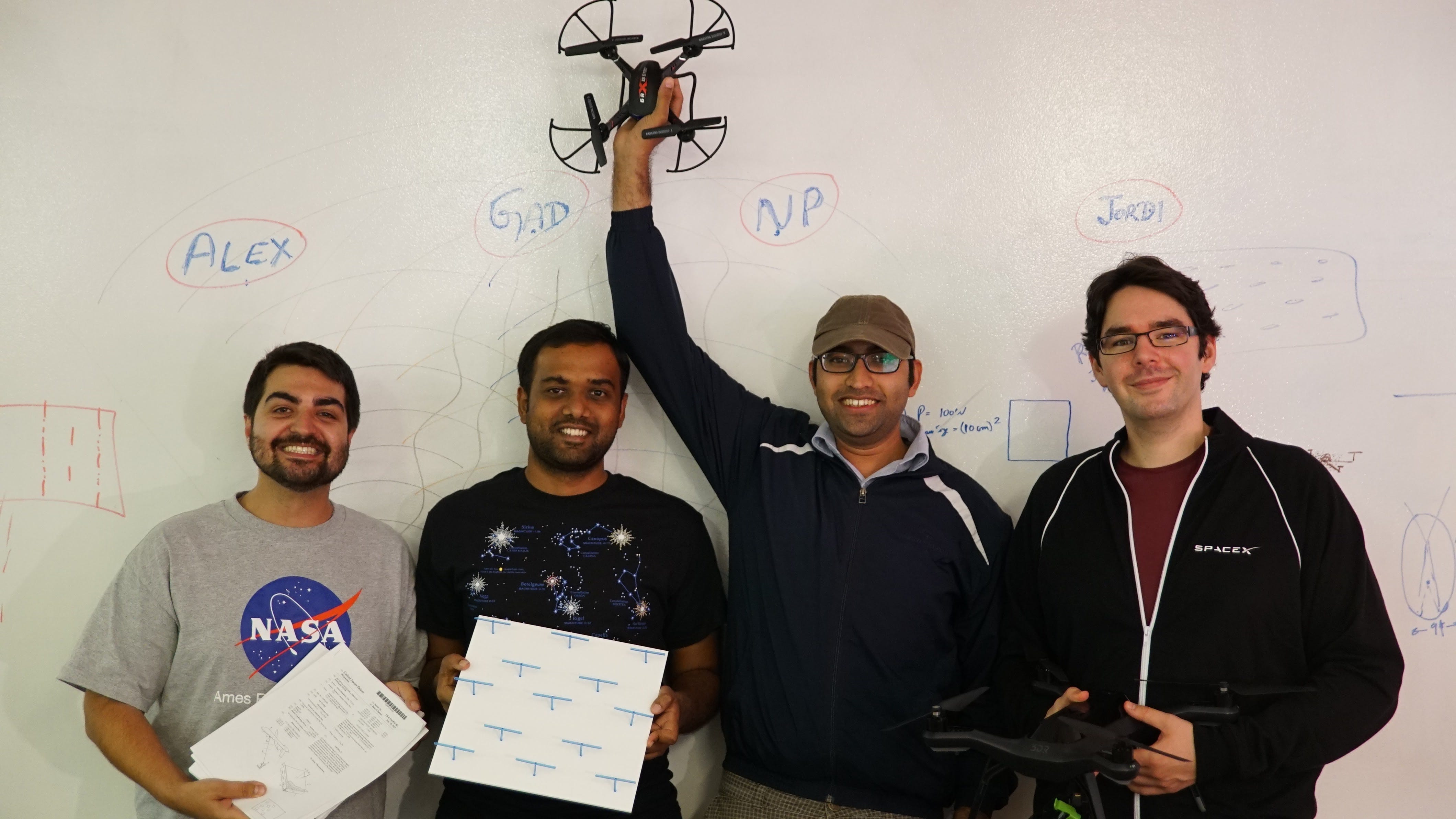
The company’s first product is a motion simulator. They needed to understand what it feels like to travel in a spacecraft, couldn’t find a manufacturer who made what they needed, and built their own. Vishwa Space now produces two, three, five, and six degree-of-freedom motion platforms. ISRO is in conversation about using one for a space flight programme. Several private space companies have also expressed interest.
The specific spacecraft Gadhadar has in mind for the third phase of the plan is a single-stage-to-orbit vehicle, a rocket that takes off as a single piece and lands again, no stages dropped. It has been the holy grail of rocketry for decades because the structural mass problem has been unsolvable with existing materials. A single-stage vehicle needs to be less than twelve percent structural mass by weight to carry meaningful payload to orbit. Current materials can’t get there.
“Realistically, what nanotubes will do to a spacecraft is to enable one class of spacecraft that has always been the holy grail - which is to have a single stage to orbital vehicle. This is hard with existing materials, because the vehicle will have to be less than twelve weight percent for it to have payloads and stuff. As against the structural mass of more than eighteen to twenty-four percent today on a per-stage basis.”
His target payload for the vehicle is a full container load: thirty tonnes. At that scale, the structural mass of the rocket in nanotube composite is in the range of two to three hundred tonnes, which means the production capacity NoPo is building toward is not incidental to the space goal but directly dictated by it.
“Then this time for the space company, I decided to take a different approach. Space has always been about burning as much money as possible. Let’s see if we can build a space company that can actually also build out technology and generate revenues, and can be something that does that. Because all of the space agencies talk about how much value they have created for the world.”
When the material becomes the mission
Gadhadar’s estimate for when structural nanotube composites will be ready to change the mathematics of spacecraft design is around 2030 to 2031. The reasoning is commercial as much as technical: at that point, the price per kilogram has come down enough that saving a kilogram of structural weight on a geosynchronous orbit mission saves around forty thousand dollars in launch cost, and the material cost is low enough that the trade makes sense.
The singularity university period when he attended a programme around 2014 reinforced a way of thinking about this timeline that he has carried since. The argument, as he took it, was that exponentials govern almost everything: that Moore’s Law is not a semiconductor-specific phenomenon but a description of how any technology matures when the right conditions exist.
“With singularity, the thought process that got ingrained in me was: look for exponentials in everything. Because exponentials seem to rule everything. Imagine bacteria in a petri dish - they’re going to keep multiplying and grow exponentially until the resources are completely utilized. The extreme viewpoint from that group is that everything in the universe seems to follow an exponential pattern, and they are the norm rather than anomaly. So Moore’s Law is not just limited to electronics. Even industrialisation, computers, robots, batteries and solar cells - any field - everything has its Moore’s Law. The only thing that differs is the time frame in which the doubling happens.”
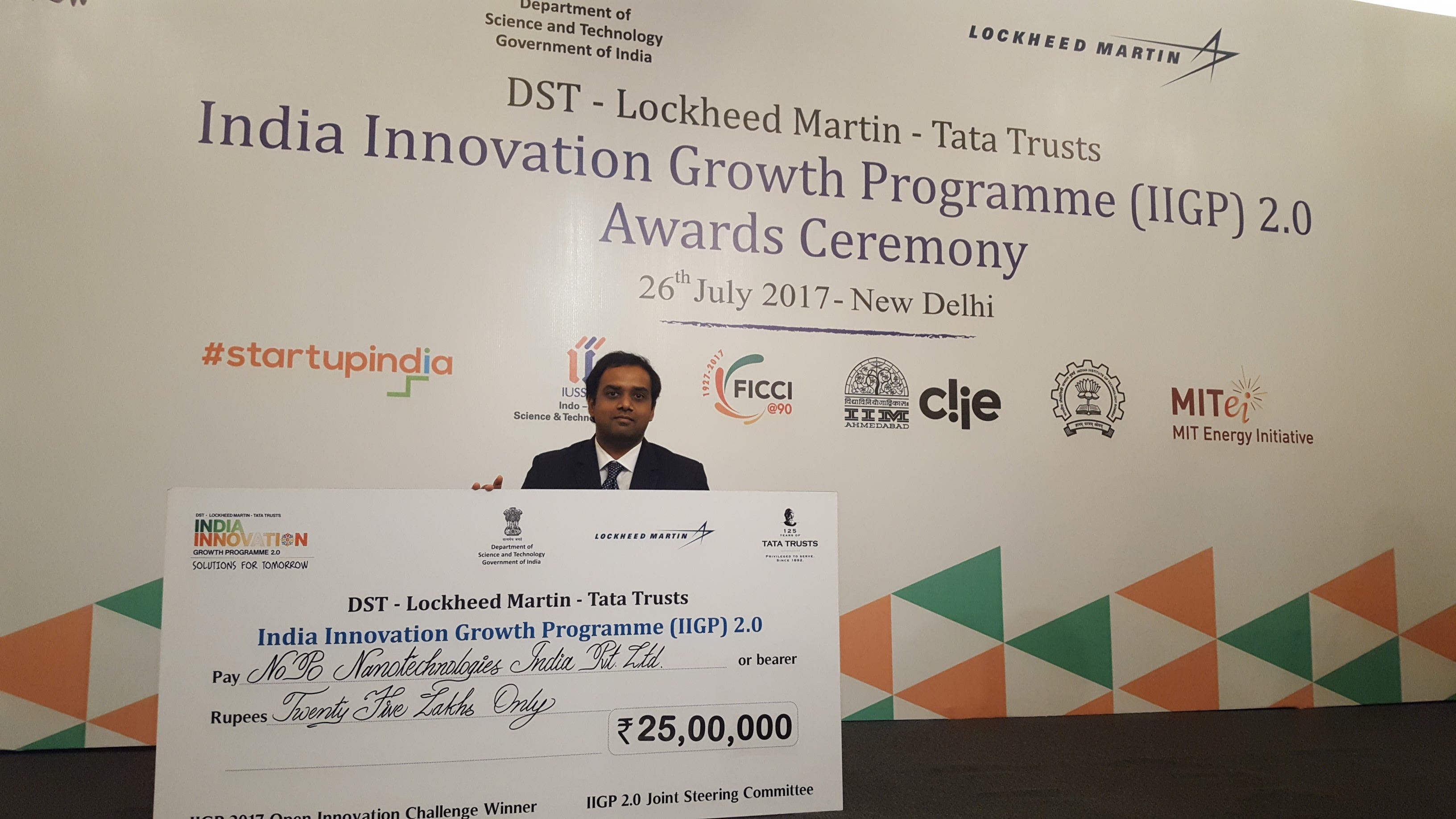
Around the same period, NoPo won the IGP 2.0 competition and was taken to MIT as part of it, where Gadhadar attended a class with Bill Aulet on disciplined entrepreneurship. The question of which product to build, from a list of a hundred possible applications, finally had a framework.
The plan that began as a three-phase diagram in a teenager’s head : make the material, build the rocket, go to Mars- is now two companies in the same building: NoPo making the material, Vishwa Space designing the vehicle, and the question about determinism still open.
“For me, it’s like realising the end goal by staying focused on it and building it out. For me, it proves which model explains how things work? Is it one or the other? And so that’s what is in it for me. So that means it continues driving till that happens.”
He started with the argument that a ten-year-old could have his outcomes determined by his own choices rather than by fate. He chose a goal absurd enough that reaching it would be proof. He has spent thirty-odd years building the material science to make it possible.
Whether life is determined or not, he has not yet resolved. But he has concluded that the only way to find out is to keep working.
“Space being the goal always- it always keeps coming back and pulling me to check if the direction is still right, or if you have veered off somewhere. And what do we need to do to get a course correction to get back.”
He’s checking.
Safe harbor
This article reflects the interviewee’s views, which are his own and do not necessarily represent the positions of any other entity or institution mentioned. Some technical claims are his figures and recollections. Readers making investment, research, or policy decisions on the basis of this material should verify independently.
Methodology note
This story is based on an extensive interview with Gadhadar Reddy, co-founder of NoPo Nanotechnologies and Gagan Agrawal, founder of Planet Material Labs was also present on the call. Quotes have been edited for grammar and clarity from a rough machine transcription of the call; the speaker’s voice and meaning have been preserved throughout. This is NOT a paid article.
Well written!